IMPLICATOR
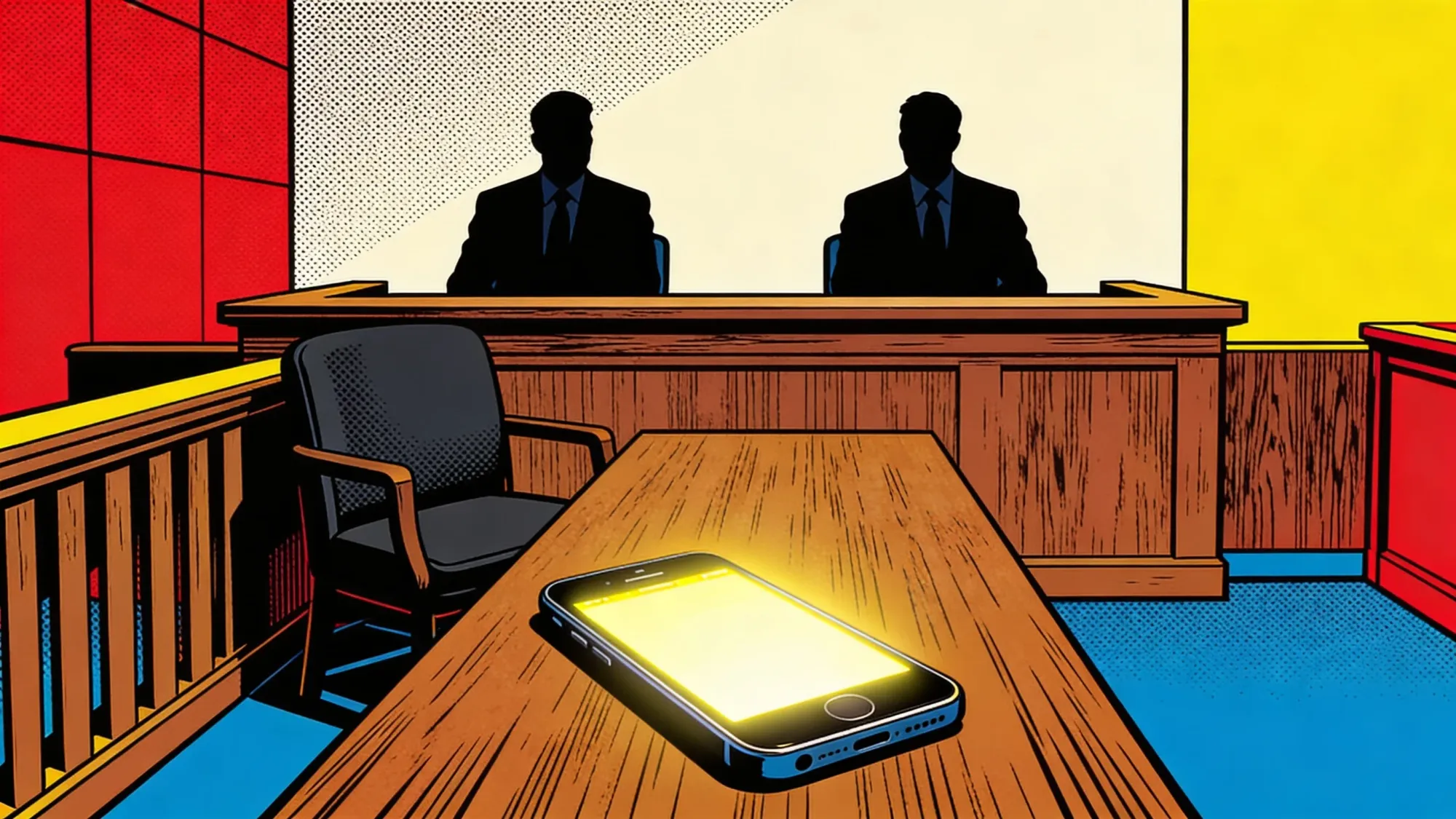
Elon Musk's $134 billion lawsuit against OpenAI collapsed on Monday after less than two hours of deliberation. An Oakland jury threw out the suit on the simplest possible ground, finding it was filed too late under California's statutes of limitations. Sam Altman walks out clean. So do OpenAI president Greg Brockman, the company itself, and Microsoft. U.S. District Judge Yvonne Gonzalez Rogers accepted the advisory verdict from the bench, said the panel had "substantial evidence to support the jury's finding," and warned Musk's lawyers that she would likely dismiss any appeal "on the spot."
Key Takeaways
- A federal jury in Oakland threw out Elon Musk's lawsuit against OpenAI and Microsoft in under two hours on Monday, ruling all claims time-barred.
- Judge Yvonne Gonzalez Rogers accepted the advisory verdict from the bench and warned she would dismiss any appeal 'on the spot.'
- Musk sought up to $134 billion in disgorgement, removal of Sam Altman and Greg Brockman, and an unwinding of OpenAI's 2025 for-profit restructuring; none of it survives.
- The verdict clears a major legal obstacle to OpenAI's IPO and lands days before SpaceX is expected to make its own prospectus public.
AI-generated summary, reviewed by an editor. More on our AI guidelines.
What the jury decided
After a three-week trial in the Northern District of California that put six billionaires on the witness list, jurors concluded that the charitable-trust claim against Altman, Brockman, and OpenAI fell outside its statutory window. Microsoft's aiding-and-abetting exposure went down on the same ground. Gonzalez Rogers had split the case into a liability phase and a remedies phase; the no-liability finding canceled the remedies hearing that had been on her Monday calendar.
Steven Molo, who led Musk's legal team, rose from the lectern to tell the court he was preserving his client's right to appeal, though he had not yet decided whether to file one. Musk himself was absent when the clerk read the verdict; CNBC reported that counsel for OpenAI and Microsoft celebrated with hugs and back slaps as they left the courtroom.
Get Implicator.ai in your inbox
Strategic AI news from San Francisco. No hype, no "AI will change everything" throat clearing. Just what moved, who won, and why it matters. Daily at 6am PST.
No spam. Unsubscribe anytime.
Why timing decided the case
The jury never had to reach the merits. It had to clear a threshold first: three years to bring a charitable-trust claim from the date of any alleged breach, and two years for an unjust-enrichment claim. Musk did not sue until 2024. The OpenAI co-founders had been debating a for-profit conversion since at least 2017, and the company stood up its for-profit arm in 2019, per testimony summarized by NBC News.
Musk, on the witness stand for three days, said he had relied on Altman's assurances that OpenAI would remain a nonprofit. He testified that he only "became fed up" in 2023, when Microsoft committed $10 billion to OpenAI's for-profit operation for intellectual-property rights and a share of future profits. Gonzalez Rogers had already signaled where she stood on the broader logic of the case. "This entire trial is a gigantic irony," she told Musk's lawyers last week, in an exchange about xAI, his own for-profit AI company, that Vanity Fair recounted.
Remedies Musk wanted and will not get
The price tag on Musk's amended complaint was up to $134 billion in what his lawyers called "ill-gotten gains." He wanted that money redirected from OpenAI and Microsoft to OpenAI's nonprofit. He also wanted Altman and Brockman removed from leadership and the 2025 restructuring of OpenAI's for-profit arm unwound. None of it survives Monday's verdict. Musk had told the court that any award should flow to "the OpenAI charity," not to him personally.
OpenAI's lead trial attorney, William Savitt of Wachtell Lipton, told jurors that Musk's $38 million in donations between 2015 and 2017 were never restricted as a charitable trust. Savitt also argued that the for-profit pivot was the only way to fund a competition against Google DeepMind, and reminded the panel that Musk had once proposed folding OpenAI into Tesla under his own control.
What comes next
The verdict comes as both billionaires push their companies toward record public offerings. In late March, OpenAI raised $122 billion at a valuation above $850 billion, according to CNBC. Musk's SpaceX, valued at $1.25 trillion after its February merger with xAI, confidentially filed for an IPO in April and is expected to make its prospectus public this week.
Musk's lawyers said Monday they had not yet decided whether to appeal. The California attorney general, which earlier declined to join the suit on the grounds that it did not serve the public interest, was not a party to Monday's outcome and remains the most plausible state-level challenger of any future OpenAI restructuring.
Frequently Asked Questions
Why did the jury rule against Musk?
The nine-person jury found that Musk's breach-of-charitable-trust and unjust-enrichment claims were filed outside California's statutes of limitations: three years for the trust claim and two years for unjust enrichment. Musk did not sue until 2024, even though OpenAI's for-profit arm was established in 2019.
What was Musk seeking in the lawsuit?
Musk's amended complaint asked the court to redirect up to $134 billion in what his lawyers called 'ill-gotten gains' from OpenAI and Microsoft to OpenAI's nonprofit, to remove Sam Altman and Greg Brockman from leadership, and to unwind the 2025 restructuring that built out the for-profit arm. He told the court any award should go to the OpenAI charity, not to him.
Can Musk appeal the verdict?
His lead counsel Steven Molo preserved the right to appeal but said he had not yet decided whether to file one. Judge Yvonne Gonzalez Rogers warned in court that she would likely dismiss any appeal 'on the spot,' signaling little appetite for further proceedings.
What happens to OpenAI's for-profit structure now?
It stands. The verdict cancels a remedies hearing that would have considered unwinding the 2025 restructuring. The California attorney general earlier declined to join Musk's suit on the grounds that it did not serve the public interest, leaving no current institutional challenger to OpenAI's corporate structure.
How does the verdict affect OpenAI's IPO plans?
It removes a significant legal cloud. OpenAI raised $122 billion in late March at a valuation above $850 billion, per CNBC. The Monday ruling lets the company push toward a public offering without the threat of a court-ordered restructuring or executive removal.
AI-generated summary, reviewed by an editor. More on our AI guidelines.
Free AI briefing · Weekdays
The AI stories that matter, sourced and explained.
Join the Morning Briefing. It goes out every weekday at 4:45 a.m. Pacific, with later sends for the East Coast, Berlin and Tokyo.
Free when you sign up: The Paperclip Compendium, our tested guide to running AI agents.
Free. Unsubscribe in one click.

Marcus Schuler
Editor-in-Chief and founder of Implicator.ai. Former ARD correspondent and senior broadcast journalist with 10+ years covering tech. Writes daily briefings on policy and market developments. Based in San Francisco. E-mail: editor@implicator.ai