IMPLICATOR
San Francisco | April 23, 2026
Google Cloud split its eighth-generation TPU into separate training and inference chips on Wednesday at Cloud Next 2026. Per socket, Nvidia's Rubin still wins. Per gigawatt, Google just locked Anthropic into a million-TPU commitment and Meta into a multibillion-dollar rental deal. The benchmark is no longer the fight. Inference margin is.
In Tokyo, Sony AI's Ace robot beat elite table-tennis players under close-to-official rules. The breakthrough is real. It also arrives on a sensor-rich court that makes physical AI stronger and less portable than the headlines suggest.
And on GitHub, the agent-hype cycle keeps maturing into actual tools. Memory layers, governance audit trails, voice pipelines, SRE agents, faster inference. The demos are now shipping as products.
Stay curious,
Marcus Schuler
Know someone drowning in AI noise? Forward this briefing. They can subscribe free here.
Google's TPU 8 Still Trails Rubin Per Chip, But Locks In Anthropic's Gigawatts
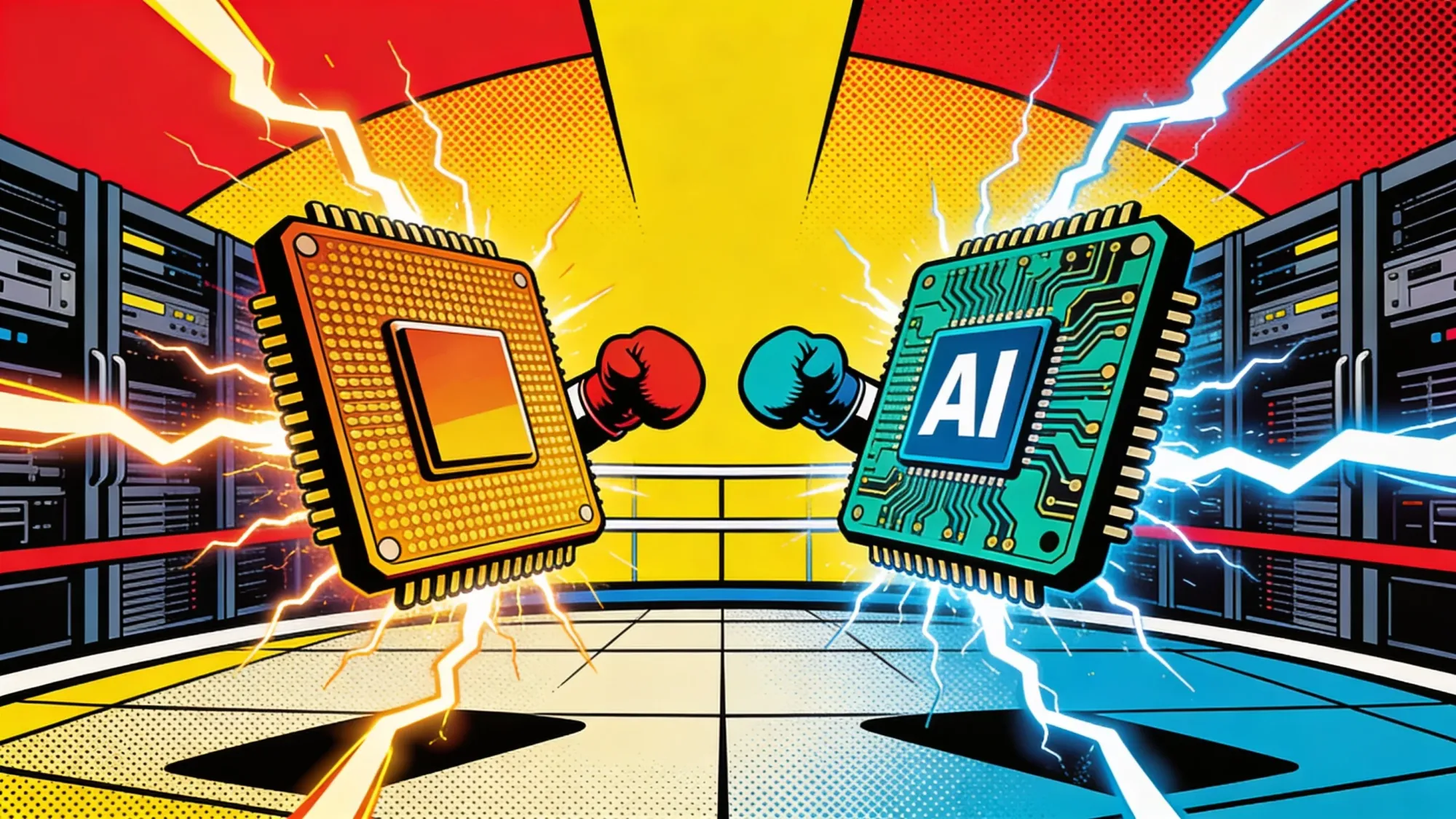
Google Cloud split its eighth-generation TPU into separate training and inference chips Wednesday at Cloud Next 2026. Per socket, Nvidia's Rubin still wins on FP4 compute, bandwidth, and NVLink. Google isn't fighting on the spec sheet anymore.
TPU 8t is the new training chip, built around a 9,600-chip superpod. TPU 8i is the inference chip, tripling on-chip SRAM to keep KV caches close on reasoning and agent workloads. Per socket, the comparison against Rubin isn't close on compute or bandwidth, and MLPerf still has no TPU 8 entries to verify Google's pod-scale claims.
Google doesn't need them yet. Anthropic has committed up to one million TPUs and roughly 3.5 gigawatts of 2027 capacity through Broadcom's April SEC filing. Meta reportedly signed a multibillion-dollar TPU rental deal. Thomas Kurian kept selling Nvidia Vera Rubin NVL72 racks on the same stage and signed Thinking Machines Lab to a GB300 contract. Google is capturing cloud compute margin, whichever chip the customer picks.
Why This Matters:
- Nvidia's pricing power rested on scarcity of the next gigawatt. With Anthropic and Meta capacity locked to TPU, that scarcity erodes lane by lane.
- Enterprises paying for inference route high-volume serving to whichever chip is cheapest per million tokens, and TPU 8i was built for exactly that bill.
Reality Check
What's confirmed: Google unveiled TPU 8t and TPU 8i at Cloud Next 2026; Anthropic's commitment covers up to 1M TPUs and roughly 3.5 GW per Broadcom's April SEC filing.
What's implied (not proven): Google's "80% better inference performance per dollar" vs Ironwood is a Google-supplied number with no independent MLPerf v5.1 verification.
What could go wrong: TorchTPU and vLLM TPU migration still breaks on unsupported attention variants, LoRA adapters, and custom CUDA kernels; inference lane migration may be slower than cloud economics imply.
What to watch next: MLPerf v5.2 submissions, the first non-Anthropic/Meta TPU 8 customer disclosure, and whether Nvidia's Q2 data-center gross margin contracts year-over-year.


The One Number
405%. SK Hynix's operating profit jumped 405.5% year-over-year in the first quarter to 37.61 trillion won, or roughly $25.4 billion, the company disclosed in a regulatory filing Thursday in Seoul. Revenue rose 198% to 52.58 trillion won, both numbers setting all-time quarterly records and nearly doubling the previous high.
The Korean memory maker holds 57% of the high-bandwidth memory market and supplies HBM for Nvidia's forthcoming Vera Rubin platform, putting it at the chokepoint of the AI buildout. For context, TSMC's Q1 net profit, the comp every chip analyst quoted last week, rose 58%, an order of magnitude smaller.
SK Hynix said demand has broadened from HBM into conventional DRAM and NAND as agentic AI workloads multiply inference cycles, and Chairman Chey Tae-won has warned the wafer shortage will persist until 2030.
Source: Korea Times, April 23, 2026
Sony AI's Ace Robot Beats Elite Table-Tennis Players, But Under a Sensor-Rich Court

Sony AI's Ace robot beat elite table-tennis players under close-to-official rules, then racked up wins against touring professionals. The breakthrough is real. The caveat is the court.
Ace plays on a surface instrumented with high-frame-rate cameras and ceiling-mounted tracking rigs that feed ball trajectories to the robot at resolutions no human opponent receives. The match physics work. The portability does not. Physical AI depends on the instrumentation around it as much as the intelligence inside it, a dependency Sony's press photos tend to crop out.
Why This Matters:
- Benchmark precision is a genuine research frontier, but buyers evaluating humanoid pitches from Tesla, Figure, and Unitree now have a reference point for how much of the intelligence lives in the environment, not the robot.
- Sony's path points toward licensed sensor-suite-plus-robot stacks for sport and training, not the plug-and-play consumer humanoid the hype cycle keeps promising.

AI Image of the Day

Prompt: a woman sitting with a huge raccoon --chaos 10 --ar 3:4 --sref
Five GitHub Projects Flag the Agent Build Shifting to Memory, Governance, and Voice
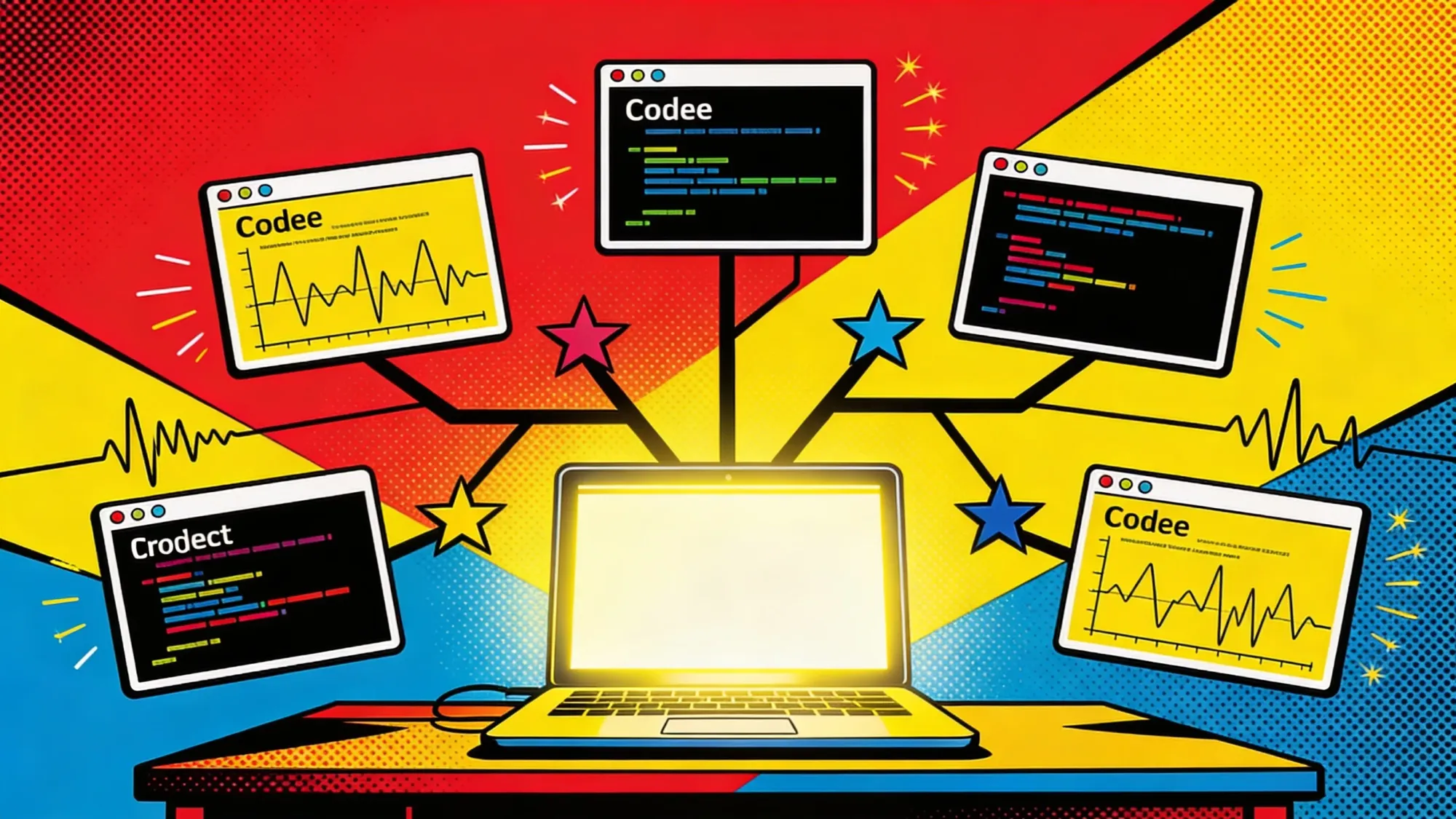
Repo Radar's weekly scan flags Claude-Mem, Evolver, Voicebox, OpenSRE, and DFlash. Memory, governance, voice, incident response, inference speed. After a year of agent demos, the commit graph is shifting to agent infrastructure.
Claude-Mem (65,543 stars) adds a persistent memory layer to Claude Code. Evolver, this week's Repo of the Week, turns self-improving agent loops into inspectable Gene, Capsule, and EvolutionEvent diffs with git-aware rollback. Voicebox (22,353 stars) is a local-first voice synthesis studio with cloning and a timeline editor. OpenSRE builds AI incident agents against real logs, traces, and runbooks. DFlash is speculative-decoding research for inference teams chasing throughput.
Why This Matters:
- A year of agent demos produced demos. This week's repos are the first open wave that addresses what happens after the demo: persistent state, audit trails, and cost per token.
- For engineering leaders, Evolver is the strategic bet. If agents mutate prompts and skills in production, "who changed what" becomes the governance primitive no vendor currently owns.

🧰 AI Toolbox
How to Run Your Entire Desktop by Voice with NovaVoice
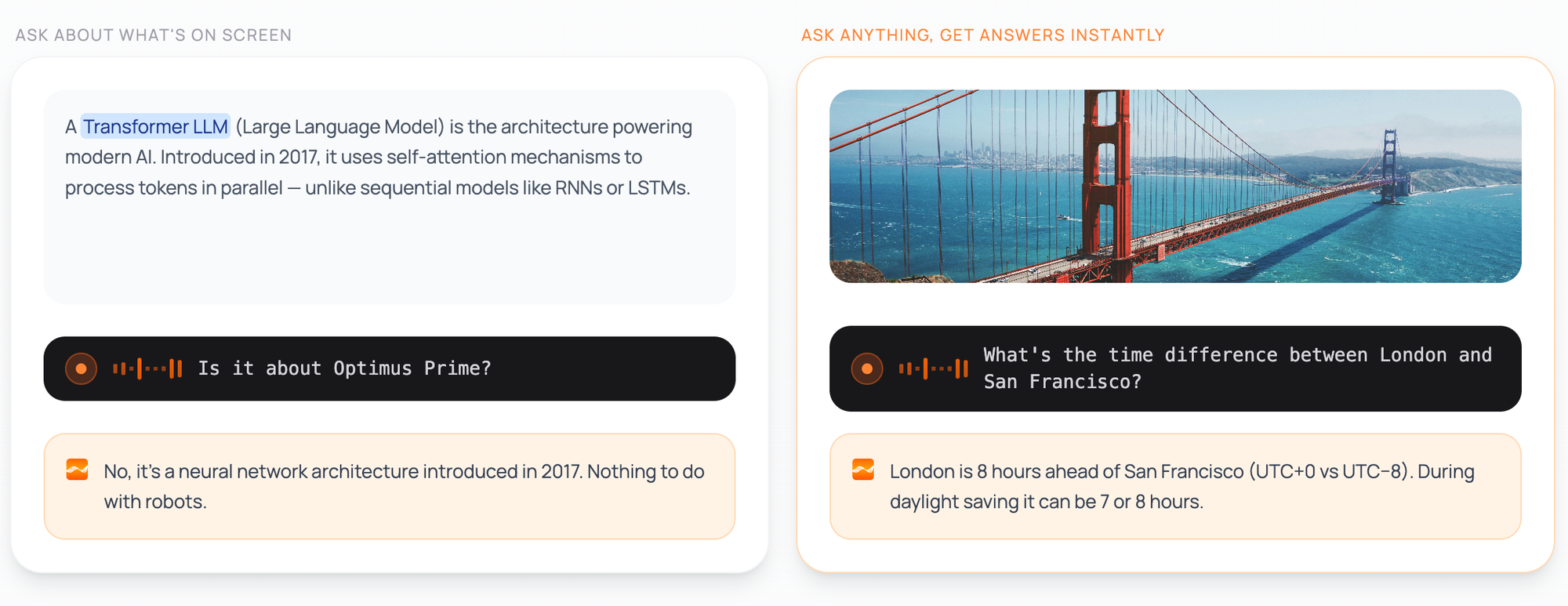
NovaVoice is a voice OS for Mac, Windows, and Linux that writes, answers questions, and executes commands across every app on your computer. Speak into your email client and it formats a professional message; dictate into Notion and it writes clean Markdown. A hotkey voice assistant answers questions without switching to a browser, and cross-app commands like "Ask Maria in WhatsApp if design is ready" open the app, find the contact, and draft the message. Custom dictionary learns your contacts, addresses, and shortcuts.
Tutorial:
- Download NovaVoice from novavoice.app for your OS and grant microphone plus accessibility permissions
- Click into any text field and hold the hotkey to dictate, NovaVoice detects the app and formats output accordingly (Markdown in Notion, formal tone in Gmail)
- Hit the assistant hotkey from anywhere and ask a question by voice: "Translate this paragraph to German" or "What is the capital of Peru?"
- Use a cross-app command: "Ask Maria in WhatsApp if the design is ready" and NovaVoice opens WhatsApp, finds the contact, and drafts the message
- Add entries to your custom dictionary for contacts, addresses, loyalty numbers, and phrases you use often
- Say a shortcut trigger like "email Maria" or "insert home address" and NovaVoice expands it without spelling anything out
- Toggle Whisper Mode in shared spaces to dictate at low volume without losing accuracy
What To Watch Next (24-72 hours)
|
||
|
||
|
🛠️ 5-Minute Skill: Turn a Half-Remembered Dream Into a Read on What You're Avoiding
4:47 a.m. You wake up drenched, heart hammering, certain you were just running through your old high school basement chasing a fox that kept turning into your boss. The fragments are dissolving. You open Claude.
Your raw input:
Old high school basement at night, chasing a red fox that kept becoming my boss. A flooded staircase I had to climb to find car keys I'd lost. A bird in the corner saying "you forgot" in my late father's voice. Mood arc: panic, resignation, anger. Pre-bed: deadline tomorrow, skipped dinner, two glasses of wine, an hour scrolling news.
The prompt:
Interpret these dream fragments through a Jungian lens. Then give me a practical read on what unresolved thing in my actual life this is flagging. No mystical fluff. Look for the emotional pattern. End with one concrete thing I should do today before noon.
The output:
Read: Boss-as-fox plus paternal voice plus lost keys is a classic avoidance loop. The flooded staircase is the obstacle you decided to power through instead of name.
Flag: Tomorrow's deadline isn't the problem. The conversation you haven't had with your boss is.
Before noon: Send the two-sentence email you've been drafting in your head for three weeks.
Why this works:
Asking "what does my dream mean" gets you a horoscope. Asking for an emotional pattern plus one concrete action turns the residue into something you can act on before the second cup of coffee.
What to use:
Claude. It sits with the symbolism without spinning a fortune-cookie. ChatGPT defaults to disclaimers and listicles whenever anything dream-shaped lands.
📖 AI Alphabet
|
P
|
📖 AI Alphabet Parameter A parameter is one of the internal values a model learns during training. Together, those values shape how the model makes predictions or generates content. |
AI & Tech News
Chinese AI Tool Finds 1,000 Previously Unknown Software Flaws
China's 360 Digital Security Group says its AI vulnerability-hunting agent surfaced roughly 1,000 previously unknown bugs, including critical flaws in Microsoft Office. The disclosure points to AI's accelerating role in both offensive and defensive security research.
30,000 Samsung Workers Rally for 15% of Chip Division Profits
Tens of thousands gathered outside Samsung's main chip facility in South Korea demanding that 15% of the division's operating profits go to employees. The union estimates the share at $27 billion, or roughly $400,000 per worker, against 2026 division projections.
Commerce Secretary Confirms Nvidia H200 Chips Still Blocked From China
Howard Lutnick told reporters Nvidia has not sold any H200s to Chinese customers because Beijing has not approved the purchases. The H200 was designed as a workaround to US export limits and now awaits dual-government clearance.
Tencent Unveils Hy3-Preview, First Flagship Model Under Former OpenAI Researcher
Tencent's new 295-billion-parameter Hy3-preview comes in smaller than its predecessor HY2's 400 billion, a deliberate move toward efficient, deployable models. Yao Shunyu, a former OpenAI researcher now running Tencent's AI Lab, led the project.
GitHub Turns On Client-Side CLI Telemetry by Default
GitHub began collecting pseudonymous telemetry from CLI users on April 22, enabled by default. The company says data stays on the client machine and opt-out instructions are documented, but privacy advocates flagged the silent rollout within hours.
TSMC Breaks Ground on Arizona Chip Packaging Plant for 2029 Opening
Senior VP Kevin Zhang confirmed TSMC's first US advanced-packaging facility will open by 2029. The plant extends the CHIPS Act-backed Arizona buildout from wafer fab into the higher-margin packaging stage Taiwan has long owned.
Microsoft Ships Copilot's Agentic Features to GA in Word, Excel, PowerPoint
Microsoft turned on agentic Copilot by default for Microsoft 365 Copilot and Premium subscribers across desktop and mobile. The feature lets Copilot run multi-step drafting, analysis, and presentation tasks without constant user input.
SpaceX Discloses In-House GPU Manufacturing Plans in S-1 Filing
SpaceX's SEC filing classifies GPU production as a "substantial capital expenditure", with no dollar figure attached. The move positions Starlink and satellite AI workloads behind custom silicon rather than merchant Nvidia supply.
Bain Capital Seeks $5 Billion Sale of Bridge Data Centres Stake
Bain is offering more than 40% of Singapore-based Bridge Data Centres in a deal valuing the company at $5 billion, sources told Reuters. The transaction signals continued private-equity appetite for Asian AI data-center exposure.
Microsoft Pauses Carbon Removal Contracts, Freezing the Market
Microsoft halted negotiations with multiple carbon-removal developers as part of an internal climate-strategy review, Bloomberg reports. The pullback from the industry's largest corporate buyer is rippling through startups whose 2026 forecasts assumed Microsoft volume.
🚀 AI Profiles: The Companies Defining Tomorrow
Denki wants to make financial audits run like code. Two brothers in their 20s, both first-time founders, are taking on a Big Four workflow that has not changed in decades. 📊
Founders
Brothers Felipe Jin Li (24, CEO) and David Jin Li (20, CTO) founded Denki in 2025 and went through Y Combinator's Fall 2025 batch. Felipe did PhD research in explainable AI at University College London after earlier time at McKinsey. David studied computer science at Imperial College London and built financial data pipelines at MacroHive, used by hedge funds. Headquartered in San Francisco. Two-person team as of Q1 2026, hiring engineers and auditors with new capital.
Product
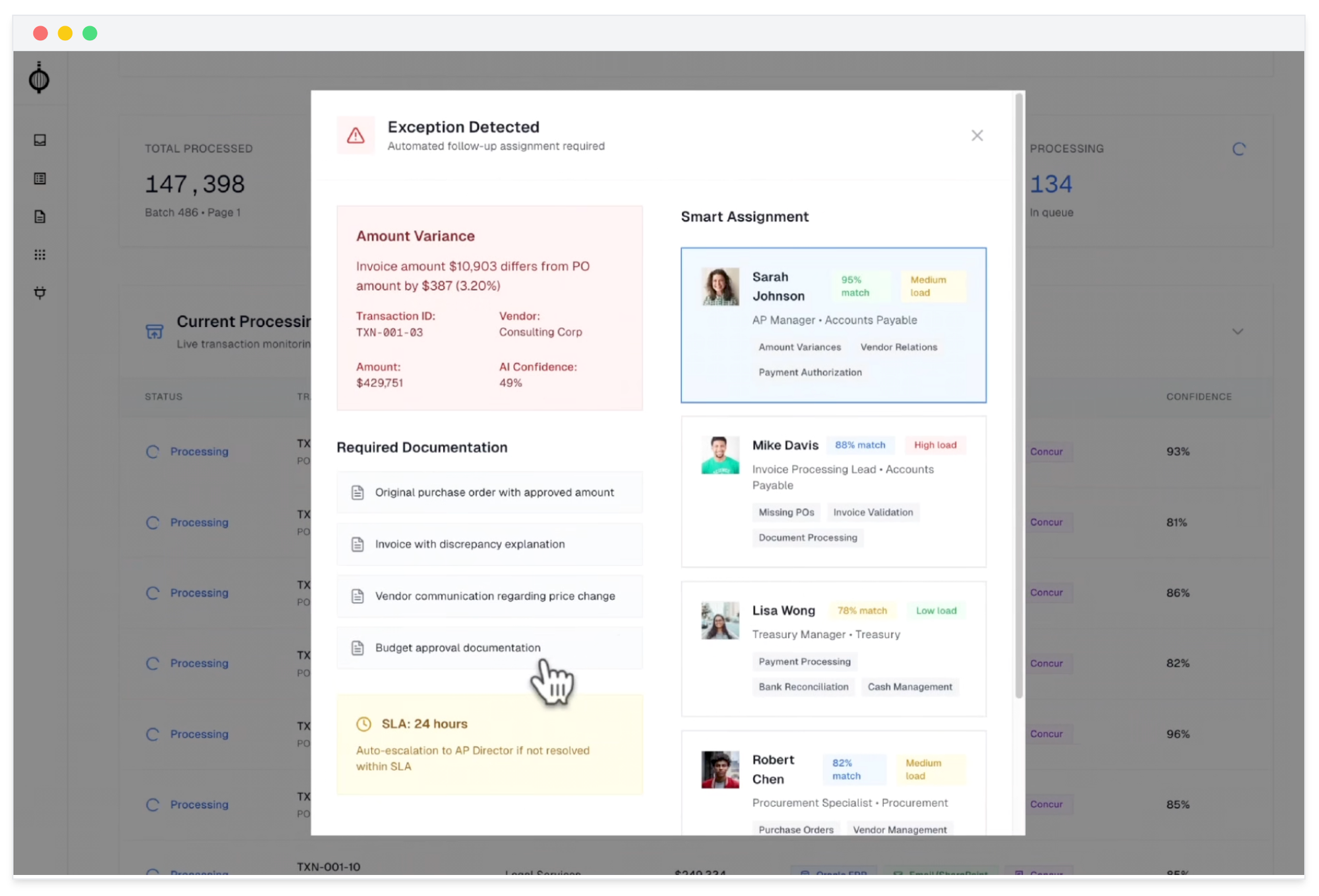
Denki builds AI software for internal auditors at public companies, automating the evidence-heavy manual processes that dominate compliance with SOX 404, BSA/AML, and similar regulations. The pitch is "audits that run like code": deterministic, reviewable, and ship-able on a schedule rather than scrambling every quarter. Target customers are finance and compliance teams at US-listed companies facing rising audit costs and shrinking CPA talent pipelines.
Competition
Fieldguide, featured by Implicator in February, owns the AI-for-audit-firms category. EY, PwC, Deloitte, and KPMG all have internal AI efforts for their own audit practices. Basis handles AI for accountants more broadly. Denki's wedge is the in-house audit function at public companies, a buyer distinct from the Big Four firms those companies hire externally.
Financing 💰
$4.1 million seed, co-led by Base10 Partners and Shine Capital, with participation from Y Combinator and 20VC.
Future ⭐⭐⭐
A vertical AI thesis in a market no one disputes is painful, led by technical founders who understand both the AI and the finance. The risk is the classic YC audit-tech trap: internal audit departments are slow, budget-constrained, and often answer to the Big Four auditors Denki is indirectly disrupting. Execution and the first lighthouse customer will decide this one. 📊
🔥 Yeah, But...
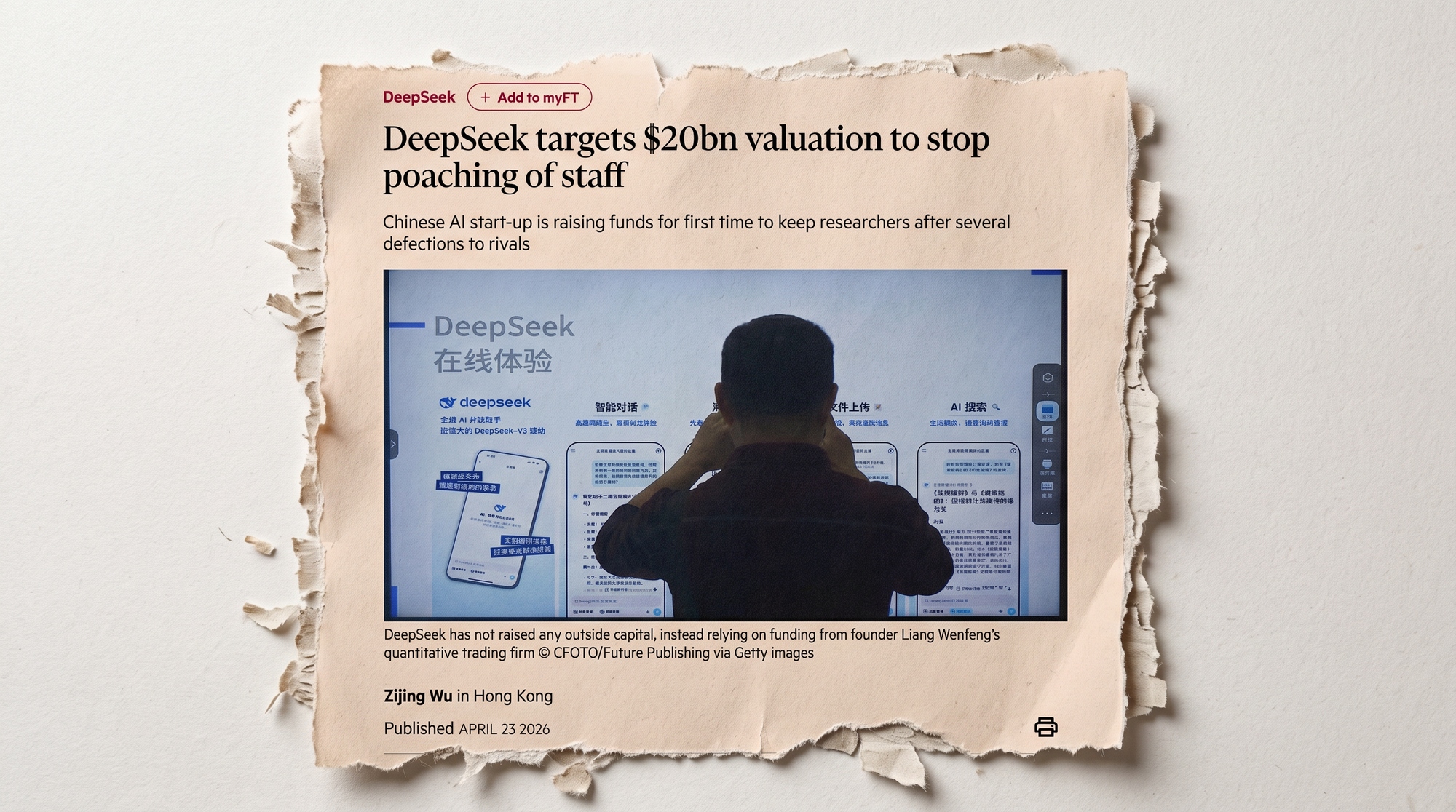
DeepSeek, the Hangzhou AI lab whose founder Liang Wenfeng spent 2025 publicly refusing outside capital and calling commercialization a distraction, is now courting a small group of strategic investors at a $20 billion valuation, the Financial Times reported Wednesday.
The target is a "nominal figure in the low hundreds of millions of dollars," an order of magnitude smaller than peers: Moonshot is valued at $18bn, MiniMax at $34bn, Zhipu at $58bn.
The motive is not capex but retention. A leading author of the R1 paper left for ByteDance, a model-training veteran decamped for Tencent, and stock options, which typically make up the majority of an AI researcher's salary, cannot clear without a valuation. Liang is also considering a share buyback as a fallback.
Sources: Implicator, April 22, 2026 | Financial Times, April 23, 2026
Our take: The purest "we're doing this for the research, not the money" company in AI is raising money because, it turns out, researchers also want money.
Liang spent a year telling reporters DeepSeek didn't need outside capital, wasn't interested in valuation, and would run on trading-firm cash and mission alignment.
Then Guo Daya left for ByteDance, Wang Bingxuan left for Tencent, and someone in finance did the math on how a stock option without a strike price is just a piece of paper. Now Liang is "considering a share buyback to establish a valuation," which is not refusing a valuation, it is doing the paperwork twice. The idealism survives. Just with a 409A attached.
Free AI briefing · Weekdays
The AI stories that matter, sourced and explained.
Join the Morning Briefing. It goes out every weekday at 4:45 a.m. Pacific, with later sends for the East Coast, Berlin and Tokyo.
Free when you sign up: The Paperclip Compendium, our tested guide to running AI agents.
Free. Unsubscribe in one click.

Marcus Schuler
Editor-in-Chief and founder of Implicator.ai. Former ARD correspondent and senior broadcast journalist with 10+ years covering tech. Writes daily briefings on policy and market developments. Based in San Francisco. E-mail: editor@implicator.ai