IMPLICATOR
San Francisco | Wednesday, April 22, 2026
SpaceX bought a $60 billion option on Cursor, with a $10 billion floor fee if it walks. The deal arrives weeks before a June IPO marketed at up to $1.75 trillion. Cursor's compute, talent, and now its price all point at one rocket company.
Anthropic quietly cut Claude Code from its $20 Pro plan this week. No press release, just a documentation edit. Amazon's cumulative $25 billion check cleared the same week. The terminal-dwellers who built the brand are now politely informed their work is complete.
Meanwhile OpenAI shipped ChatGPT Images 2.0 with reasoning baked in. A 242-point Arena lead, the largest gap ever recorded. Image generation just stopped being a rendering problem.
Stay curious,
Marcus Schuler
Know someone drowning in AI noise? Forward this briefing. They can subscribe free here.
SpaceX Buys $60 Billion Option on Cursor With $10 Billion Floor, Two Months Before IPO
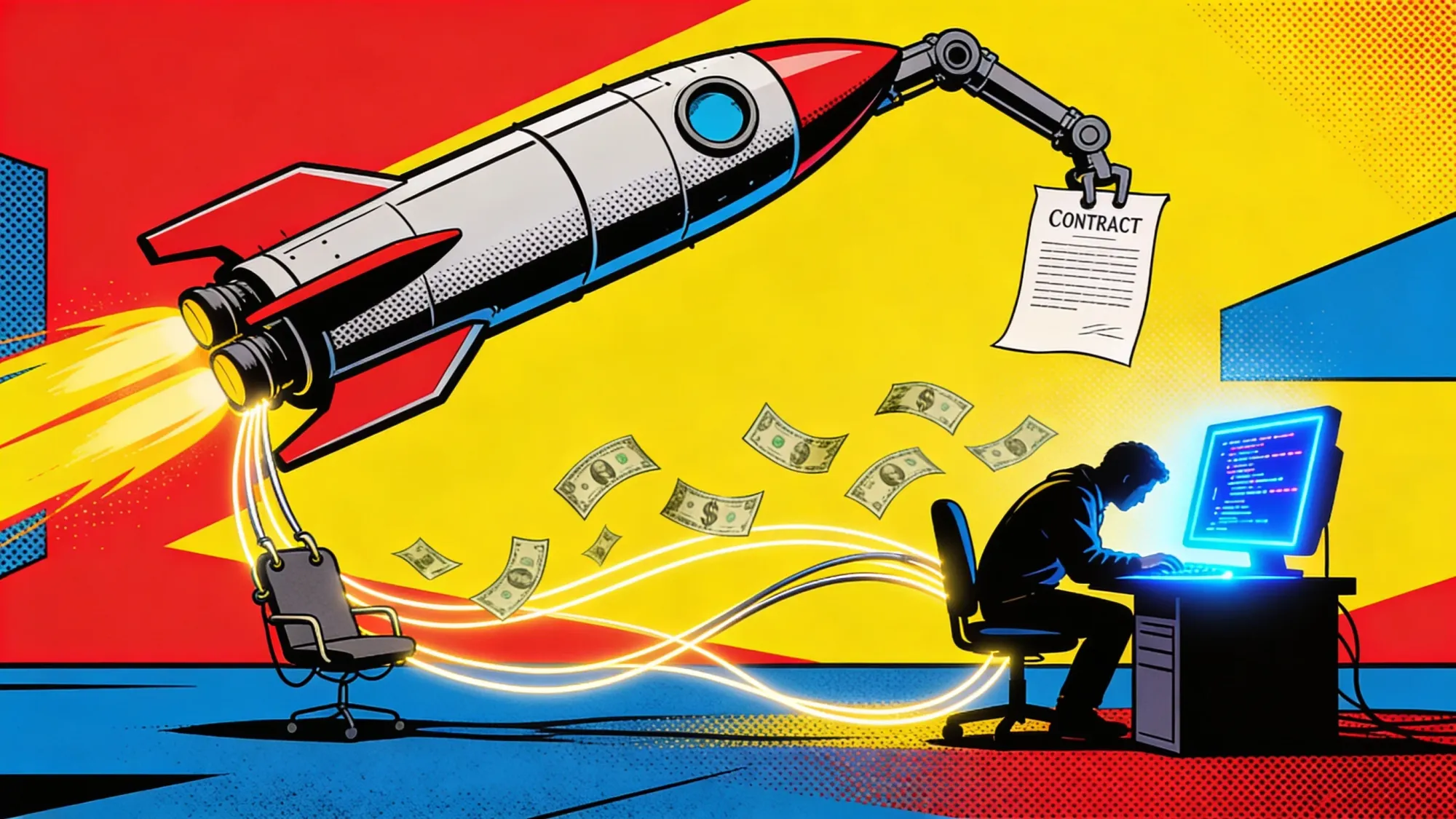
SpaceX disclosed Tuesday a $60 billion option to acquire AI coding startup Cursor by year-end, with a $10 billion floor fee if it walks. The disclosure landed weeks before SpaceX's planned June IPO at up to $1.75 trillion.
The structure is unusual. A ten-billion-dollar "partnership fee" is not a normal breakup clause. It is a floor under any scenario in which SpaceX declines. Cursor closed a $2 billion funding round two days earlier at over $50 billion pre-money. Andreessen Horowitz, Nvidia, and Thrive Capital co-led. The option puts a modest premium on a price the venture market had already set.
The compute and talent had already moved. xAI, absorbed into SpaceX in February at a $1.25 trillion valuation, has been renting GPUs to Cursor for Composer 2.5. Cursor's two top engineering leads joined SpaceX in March. Tuesday's disclosure simply named a direction the company was already walking. With Cursor on the balance sheet, SpaceX goes public as an applied-AI firm with launch capacity, not the reverse.
Why This Matters:
- The IPO prospectus gains a working code-generation product with $6 billion projected ARR by year-end, not just satellites and rockets.
- A $10 billion floor fee is the price Cursor pays for a year of independence, even if SpaceX walks away from the option.
Reality Check
What's confirmed: SpaceX has the right to acquire Cursor for $60 billion by year-end 2026, or pay a $10 billion partnership fee. Cursor's $2 billion funding round closed days earlier at over $50 billion pre-money, with Andreessen Horowitz, Nvidia, and Thrive Capital co-leading.
What's implied (not proven): That SpaceX needs a live AI revenue line in the prospectus, and Cursor's compute is already deep enough inside SpaceX to make the close inevitable.
What could go wrong: Anthropic, OpenAI, and Google compress Cursor's enterprise margin before any close lands, leaving SpaceX paying a $60 billion mark for a fading lead.
What to watch next: Whether SpaceX prices the IPO before or after exercising the option, and whether Cursor's $6 billion year-end ARR projection holds through the Q3 print.
The One Number
$60 billion — SpaceX's option price to acquire Cursor by year-end 2026, more than double the coding assistant's $29.3 billion valuation from November. Cursor is now projected to hit a $6 billion annualized run rate by December, six times its level ten months ago. If SpaceX walks away from the option, Cursor still collects a $10 billion partnership fee.
The deal runs against an April funding round that priced Cursor above $50 billion pre-money on a $2 billion raise, and lands two months before SpaceX's planned June IPO targeting a valuation between $1 trillion and $1.75 trillion with a $75 billion capital raise.
Elon Musk's February merger of xAI into SpaceX, struck at $1.25 trillion, remains the template: consolidate the AI stack inside the rocket company before the public tape opens, and let the IPO price what is left.
Source: Implicator.ai, April 21, 2026
Anthropic Quietly Removes Claude Code From $20 Pro Plan as Amazon's $25 Billion Lands
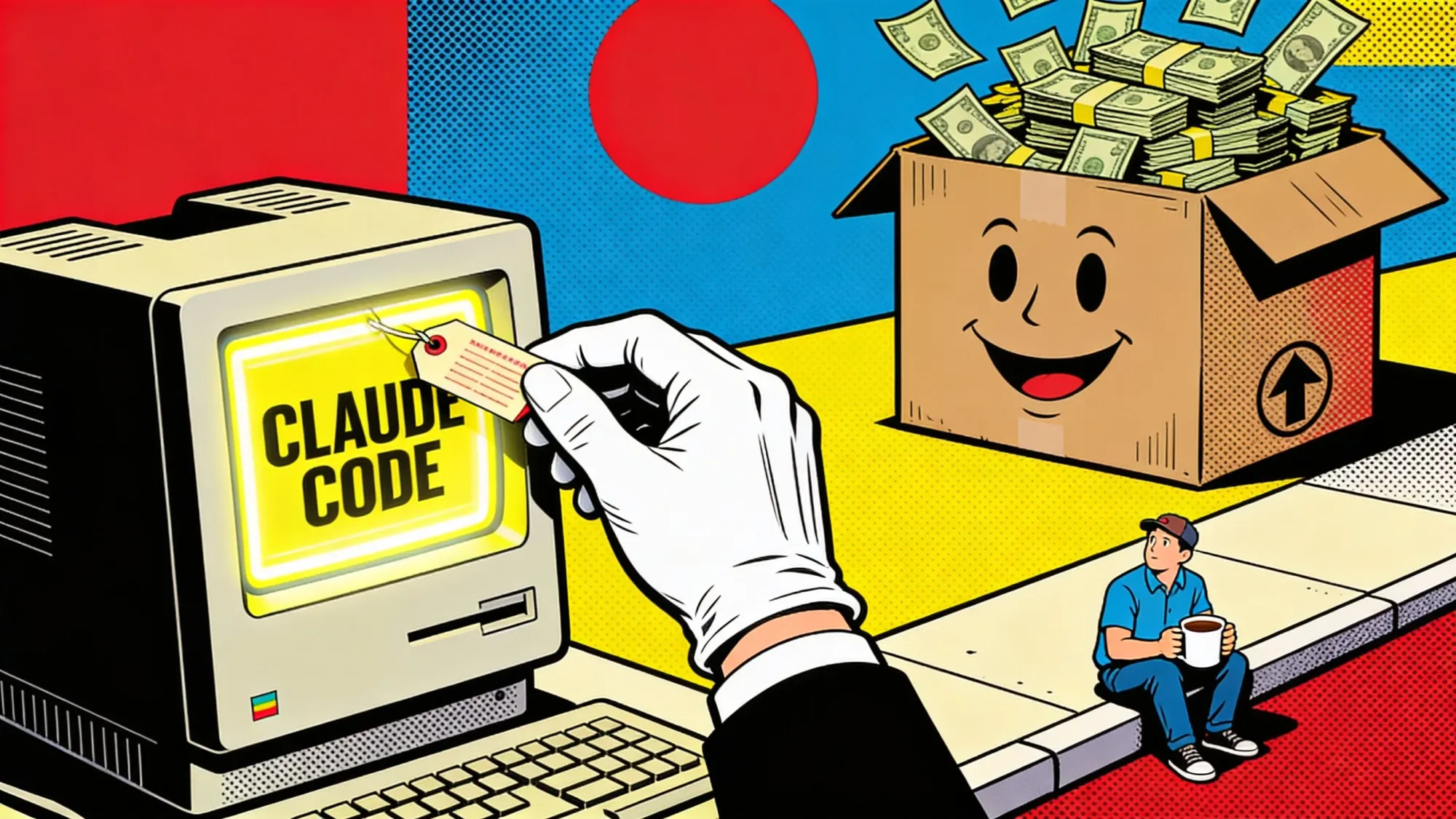
Anthropic stopped listing Claude Code on its $20 Pro plan this week. No press release, no changelog, no customer email. The Claude Code support page now names the $100 and $200 Max tiers only.
The change follows a pattern. Earlier this month Anthropic cut OpenClaw from subscriptions after discovering one power user burned $5,000 a day in API-equivalent compute on a $200 Max plan. Amazon's cumulative investment in Anthropic reached a reported $25 billion the same week the page changed. The terminal-dwellers who turned Claude Code into a category were paying twenty dollars a month. With AWS now anchoring revenue, the math no longer requires them.
Why This Matters:
- Indie developers pulled Claude Code into the public conversation through tutorials, GitHub stars, and YouTube reviews. Anthropic no longer has to subsidize that channel.
- The signal to the next free-tier developer cohort: AI lab generosity has a half-life, and that half-life shortens as enterprise revenue grows.
AI Image of the Day
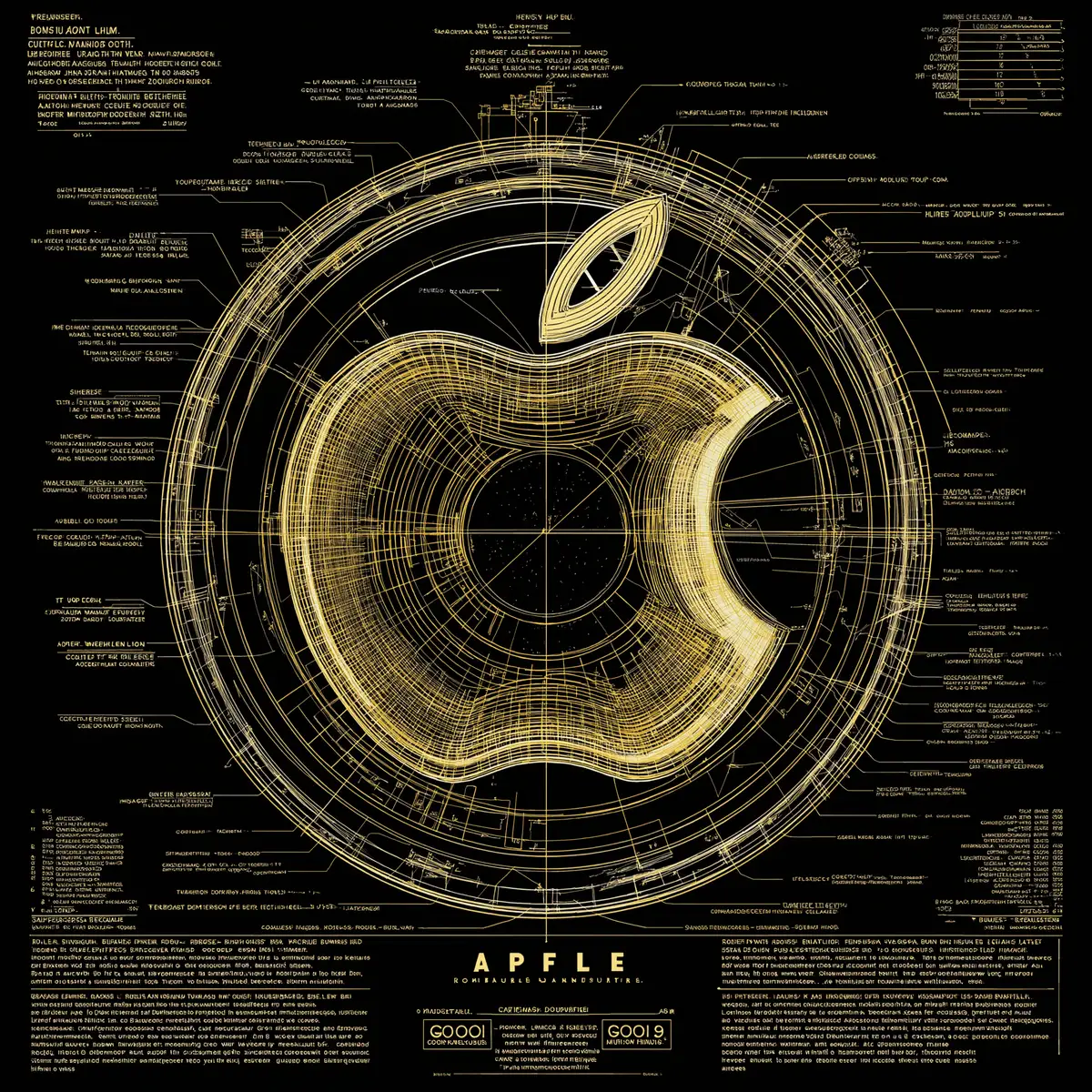
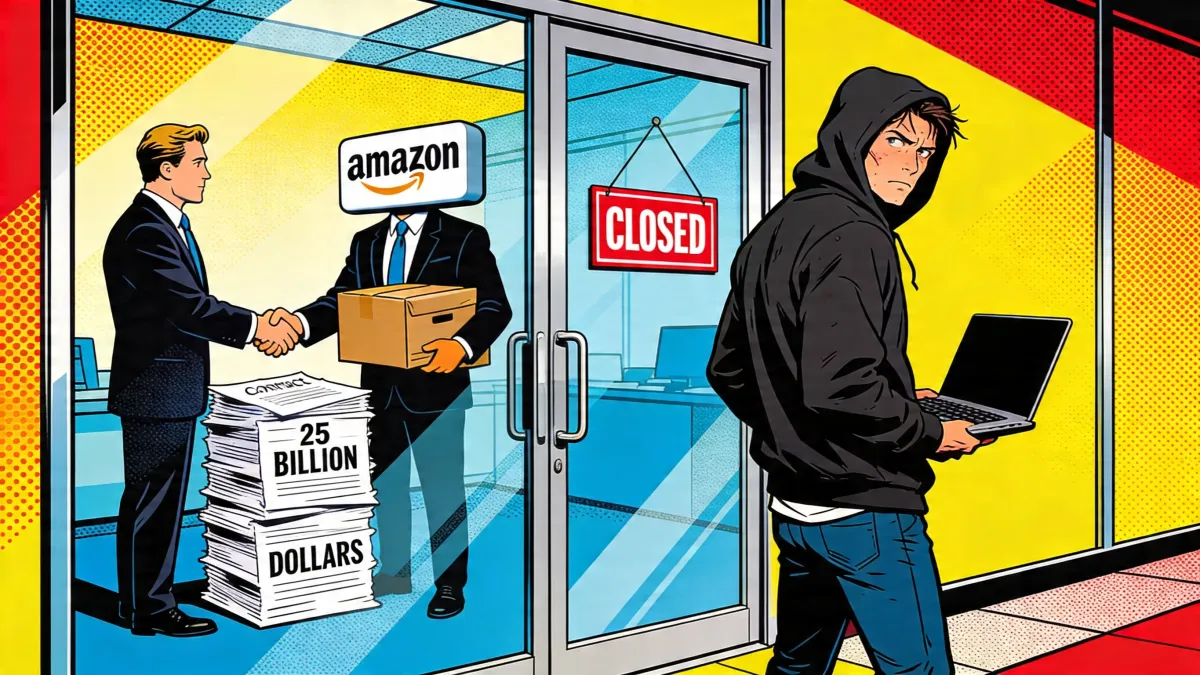
Prompt: The original diagram from image_58.png, with numerical labels '8', '3', etc., in place, is rendered with precision. All text, including 'Rob Janoff' (single 'f'), 'Apple Inc', '1977', and the full 'REFERENCE' block of text is perfectly clear and legible, verbatim as in image_58.png. The depth of field is sharp on the text and diagram, with thin golden-yellow lines tracing the entire circular construction, identical to the annotation in image_1.png, explicitly showing the path. Small text on its separate dark metal plaque: 'APPLE LOGO: CIRCULAR CONSTRUCTION (original) - TOP-DOWN - NATURAL --chaos 35
OpenAI Ships ChatGPT Images 2.0 With Reasoning Mode, 242-Point Lead on LM Arena

OpenAI released ChatGPT Images 2.0 on Tuesday, a reasoning-capable image model that scored 1,512 on LM Arena's Text-to-Image leaderboard. The 242-point lead over Google's Nano Banana 2 is the largest gap between number one and number two ever recorded.
The architectural shift is the story. Where rivals compete on pixel quality, OpenAI built image generation into the same reasoning stack that powers ChatGPT. The model can read uploaded files, search the web, and produce eight consistent images from one prompt. High-quality output costs $0.21 per image via API. ChatGPT's 900 million weekly active users now reach the new model from inside the chat window they already use. Adobe, Canva, Midjourney, and the agency billable hour all sit downstream.
Why This Matters:
- The 242-point Arena gap is the first time a single update has redrawn an image-quality benchmark by more than a model generation in one day.
- Reasoning over rendering is a different competitive vector. Adobe and Canva built their pricing on tools that assume the model is the bottleneck, not the prompt.
🧰 AI Toolbox
How to Run Teams of Humans and AI Agents Side by Side on One Org Chart with Offsite
Offsite is a live org chart where humans and AI agents sit as nodes and collaborate in real time. You can bring in external agents like Claude Code, OpenClaw, HeyGen, or anything MCP-compatible, or spin up new agents directly inside Offsite. Every message and handoff flows across the chart visually, so you click an edge to watch a conversation unfold. Real-world actions require human approval by default. Currently in early Alpha.
Tutorial:
- Request access at teamoffsite.ai and create your workspace
- Add human teammates and agents to the org chart, positioning them under managers like a traditional team
- Connect external agents through MCP (Claude Code, OpenClaw, HeyGen) or create a new agent inside Offsite with a role and access scope
- Send a task to any node: "Draft a product launch plan, coordinate with design, and schedule kickoff"
- Watch the conversation flow across the chart in real time, clicking any edge to read the underlying dialog
- Review and approve any agent action that touches the real world (emails sent, money moved, code deployed) before it executes
- Trace a finished task back through the full chain of handoffs to see exactly which agents and humans contributed
URL: teamoffsite.ai
What To Watch Next (24-72 hours)
|
||
|
||
|
💡 5-Minute Skill
Turn Three Months of Dating Into a Birthday Gift That Is Not a Candle
It is Wednesday. Her birthday is Saturday. You have been dating thirteen weeks. You are staring at a tab with a scented candle, a tab with concert tickets for a band she has never mentioned, and a tab with a bottle of wine. All three say "I panicked." You have $150 and three days.
Your raw input:
What I know about her: product manager, 31, mentioned her favorite bookstore never has Charles Portis in stock, reshared a Paris patisserie's Instagram twice, keeps saying she "needs to try" the ramen place on Fillmore, hates scented candles on principle, her plans Saturday are dinner with me. Budget $150. Three months in, so thoughtful but not "I have picked a ring" serious.
The prompt:
Based on these specifics, pick one gift that proves I have been paying attention. Rules: under $150, references something she actually said, not generic (no flowers alone, no wine, no candle), fits three months of dating. Give me the gift, a one-line note to include, and one backup in case the first is out of stock. No explanation of why it is thoughtful. Decide.
The output:
Gift: Out-of-print hardcover of The Dog of the South by Charles Portis, Powell's online, $48. Plus a small enamel pin of a croissant from the Paris patisserie she reshared, $18.
Note: "You said nobody writes sentences like Portis anymore. Found one. Happy birthday."
Backup: A prepaid reservation for two at the Fillmore ramen place, for a Tuesday two weeks out.
Why this works:
Generic gifts at three months say "I do not know you yet." Extravagant ones say "I have decided this is serious before we talked about it." The prompt forces specifics you already told it and lands in the observed-but-not-overreaching zone. It also gives you a note, so you do not freeze at the card.
What to use:
Claude is best at weighing tone, the line between thoughtful and mildly stalkerish. ChatGPT works if you are explicit about the relationship stage. Do not paste private texts into any model you are not comfortable with; summarize the specifics yourself in one paragraph.
📖 AI Alphabet
|
M
|
📖 AI Alphabet Multimodal AI Multimodal AI can work across more than one type of input or output, such as text, images, audio, or video. That lets one system read, see, hear, and respond across formats. |
AI & Tech News
South Korea Sentences Former Samsung Researcher to 7 Years for Leaking HBM Tech to China's CXMT
A South Korean court handed down a seven-year prison term to a former Samsung Electronics researcher for transferring high-bandwidth memory process technology to China's ChangXin Memory Technologies. The conviction is the heaviest IP-theft sentence yet in the HBM race and lands as US export controls tighten around advanced memory.
Microsoft Faces £21 Billion UK Cloud-Licensing Class Action After Tribunal Greenlight
A UK competition tribunal cleared a £21 billion ($28B) collective claim accusing Microsoft of overcharging British customers who run Windows Server on AWS, Google Cloud, and Alibaba Cloud. It is now one of the largest competition cases in UK history and an early test of how aggressively the new tribunal will treat hyperscaler licensing.
OpenAI Briefs U.S. Agencies and Five Eyes Allies on GPT-5.4-Cyber
OpenAI has spent the past week walking federal officials, state governments, and the UK, Canada, Australia, and New Zealand through the capabilities of GPT-5.4-Cyber, its offensive-and-defensive cybersecurity model. The pre-deployment briefing pattern mirrors what Anthropic did with Mythos in early April; both labs are running the same playbook of telling governments first and shipping second.
SK Hynix Commits $12.85 Billion to New South Korea Advanced-Packaging Plant for HBM
SK Hynix announced a 19 trillion won (about $12.85 billion) investment in a new advanced-packaging fab, with construction starting this month. HBM remains the single binding supply constraint on AI training capacity, and SK Hynix is racing to lock in the multi-year capex that Samsung and Micron have already pre-committed.
OpenAI Anchors $1.5 Billion AI-Deployment Joint Venture With Private-Equity Sponsors
OpenAI is committing up to $1.5 billion to a new joint venture with private-equity firms, starting with a $500 million equity check, to embed its models into PE portfolio companies. The structure is unusual: a model developer underwriting deployment capital so its software lands inside hundreds of mid-market businesses simultaneously.
Lehigh Valley Chip Revival Stalls as Trump Semiconductor Policy Reversals Hit
Efforts to restart chip manufacturing in Pennsylvania's Lehigh Valley, the birthplace of US semiconductor production, have stalled after the Trump administration's abrupt CHIPS Act revisions left promised federal funds uncommitted for the past year. The freeze maps onto a wider pattern of domestic-fab projects pausing while Asian capex commitments accelerate, including SK Hynix and ASM the same week.
ASM International Guides Q2 Revenue €100M Above Consensus on AI Build-Out
The Dutch deposition-tools maker said it expects Q2 revenue of about €980 million versus the €886.8M consensus, citing strong demand from foundries expanding for AI workloads. ASM is the second European chip-equipment supplier this month to call out an AI capex inflection in its forward guidance.
TikTok's $38 Billion Brazil Data Center Faces Local Pushback in Semi-Arid Coast
TikTok's plan for Latin America's first hyperscale campus, $9.5B in the first phase and $38B over the program, is drawing environmental opposition over water use in a coastal stretch already classified as semi-arid. The location decision exposes the same energy-and-water tradeoff that paused OpenAI's Stargate UK rollout this month.
Cyber Insurers Move to Cap Payouts on AI-Driven Losses and "LLMjacking"
QBE, Beazley, and other major underwriters are proposing limits on cyber-policy payouts tied to AI use and a newly named "LLMjacking" attack surface where adversaries hijack large language models to bypass enterprise controls. The carve-outs land just as enterprise AI deployment outpaces governance, and the price of insuring the gap is rising fastest of all.
Anker Unveils "Thus" Compute-in-Memory Chip, Soundcore Earbuds Get It First
Anker introduced Thus, a compute-in-memory silicon design built to run AI workloads directly on consumer hardware, with Soundcore earbuds as the launch device. The bet is that on-device AI moves from phones to the long tail of accessories, and that the company that owns the audio dock owns the next interface layer.
🚀 AI Profiles: The Companies Defining Tomorrow
Ricursive Intelligence is building a loop where AI designs the chips that power the next generation of AI. The founders wrote the paper that made it possible. 🔁
Founders
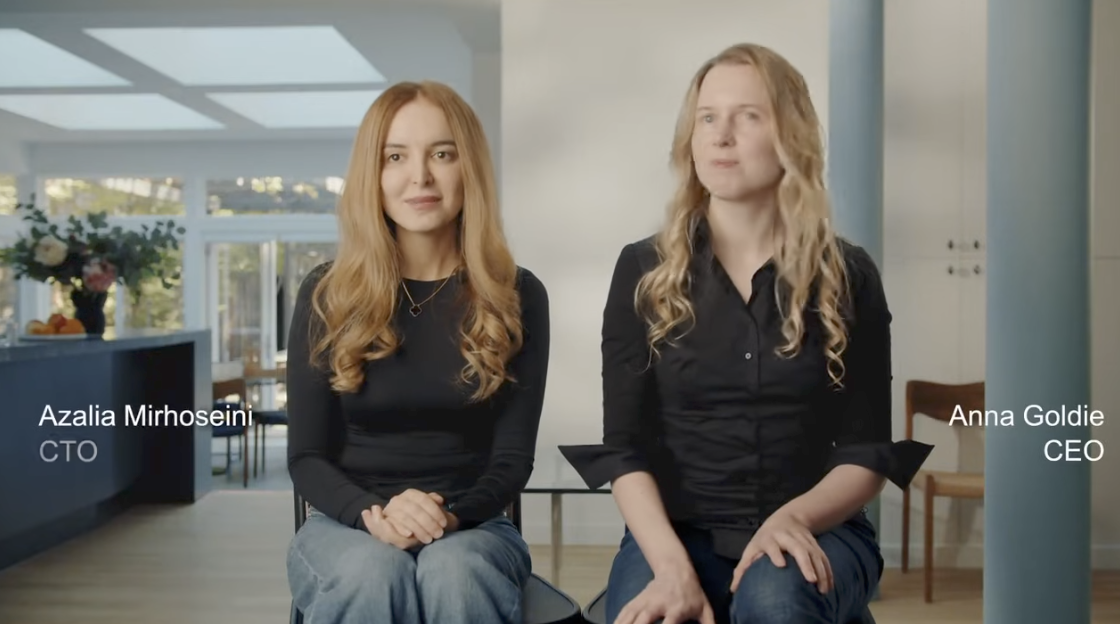
Dr. Anna Goldie and Dr. Azalia Mirhoseini, co-creators of AlphaChip, founded Ricursive Intelligence in late 2025. AlphaChip was the Google DeepMind research that proved reinforcement learning could design semiconductor floorplans faster than human engineers. Google has used it to lay out every generation of TPU since. Headquartered in the Bay Area. The spelling is intentionally "Ricursive," not "Recursive," for trademark differentiation.
Product
The thesis is a recursive self-improvement cycle: AI designs better silicon, which runs better AI, which designs better silicon. The company is building systems that compress chip design cycles from months to days, then using those chips to train models that push the next round of design improvements. Customers have not been disclosed. The closest analog is the internal loop Google already runs with TPU, now offered as a frontier lab product.
Competition
Synopsys and Cadence own electronic design automation and have embedded AI into their flagship tools. Startups like Chips2Go and Silimate chase vertical slices. Ricursive competes less on tools and more on the self-improving-chip thesis, which overlaps uncomfortably with the AI-safety debate about recursive self-improvement. No direct peer operates at this ambition level with this credibility.
Financing 💰
$300 million Series A announced January 26, 2026, at a $4 billion post-money valuation, led by Lightspeed Venture Partners. DST Global, NVentures (Nvidia's venture arm), Felicis Ventures, 49 Palms, Radical Ventures, and Sequoia Capital joined. Total funding reaches $335 million, including a $35 million seed at $750 million in December 2025. The Series A priced less than two months after the seed, a rare double-markup.
Future ⭐⭐⭐⭐
The AlphaChip co-creators are as credentialed as frontier-lab founders get, and Nvidia's participation signals strategic alignment rather than threat. The risk is existential: if recursive self-improvement works, the loop runs away from the people holding the equity. If it stalls, $4 billion is a lot to pay for a specialized EDA tool. 🔁
🤨 Yeah, But...
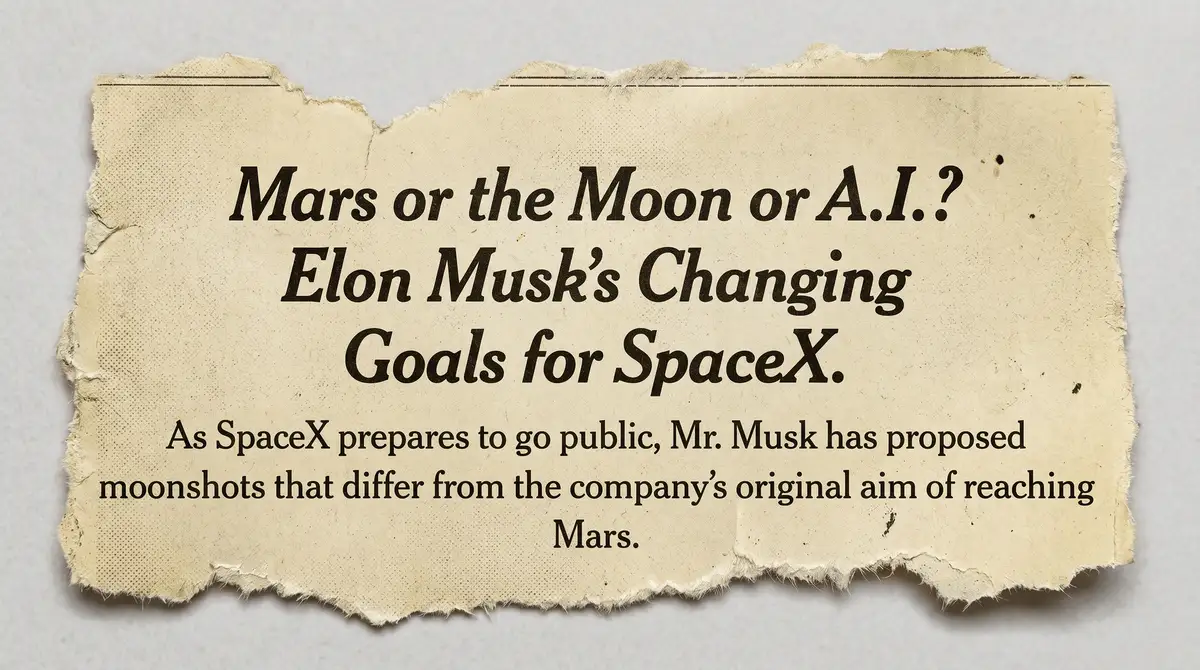
The New York Times reported Wednesday that Elon Musk has spent the past six months steering SpaceX away from its founding mission of putting humans on Mars, replacing it with orbital AI data centers, moon-based factories, and a lunar AI chip plant. The Hawthorne cafe mural of a Martian settlement remains. Musk still wears the "Occupy Mars" t-shirt. Investor Ross Gerber, whose firm holds SpaceX shares, called the new business plan "hallucinogenic" and said Musk "has lost his mind."
Sources: The New York Times, April 22, 2026
Our take: A man who built his company on a single, unwavering planetary destination has, six months before the largest IPO in tech history, decided the destination was a suggestion. The cafe mural stays. The "Occupy Mars" t-shirt stays.
At a recent internal meeting about lunar AI factories, Mars came up once, near the end. Boston College's Brian Quinn, asked how shareholders should value a leader whose mission rotates with the press release calendar, settled on "people believe him or want to believe him." That is the phrase you use for horoscopes.
Investors visiting Hawthorne next week will see the mural one last time before the prospectus arrives. After that, Mars becomes a steppingstone to whatever Musk posted on X that morning.
Free AI briefing · Weekdays
The AI stories that matter, sourced and explained.
Join the Morning Briefing. It goes out every weekday at 4:45 a.m. Pacific, with later sends for the East Coast, Berlin and Tokyo.
Free when you sign up: The Paperclip Compendium, our tested guide to running AI agents.
Free. Unsubscribe in one click.

Marcus Schuler
Editor-in-Chief and founder of Implicator.ai. Former ARD correspondent and senior broadcast journalist with 10+ years covering tech. Writes daily briefings on policy and market developments. Based in San Francisco. E-mail: editor@implicator.ai