IMPLICATOR
San Francisco | Tuesday, April 21, 2026
Tim Cook steps aside after fifteen years and a 10x market cap run, handing the machine to hardware chief John Ternus. Tidy on paper, awkward in practice. Cook stays as executive chairman, Srouji gains silicon turf, and Ternus inherits the question Apple never answered: what a surprising AI-era product from Cupertino looks like.
Meanwhile Jeff Bezos writes his second-act check. Project Prometheus, his physical-AI lab, is closing a $10 billion round at $38 billion. JPMorgan and BlackRock anchor, with a $100 billion holding-company pitch waiting behind it.
The founder of one of capitalism's most disciplined cost machines is now patron of an industry that cannot say who owns its bill. Today's PRO brief walks ten levers and the missing owner.
Stay curious,
Marcus Schuler
Know someone drowning in AI noise? Forward this briefing. They can subscribe free here.
Apple Names John Ternus CEO After Tim Cook's 15-Year, 10x Market Cap Run
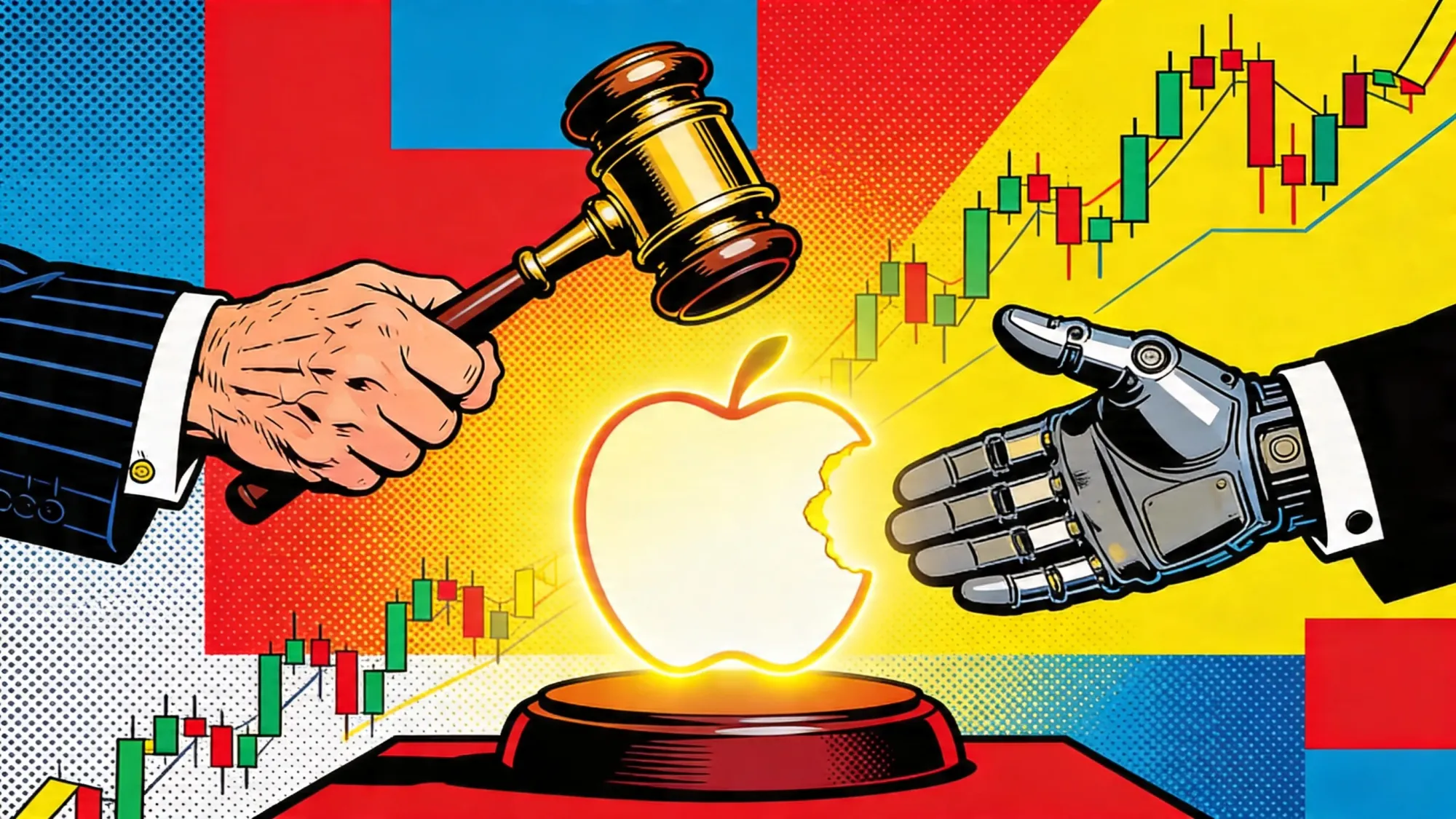
Apple named hardware chief John Ternus CEO Monday, handing the $4 trillion machine to its most precise engineer. Tim Cook stays as executive chairman. The handoff is engineered, not disruptive.
Ternus inherits an operating system built for stability: supply chains with near-zero variance, a product cadence the market trusts, a services business at record margins. Johny Srouji gains expanded authority over hardware and chip strategy, a signal silicon remains the moat. But the transition exposes what Cook never solved. Apple has not shipped a category-defining AI product in three years. Vision Pro underperformed. The Siri overhaul slipped twice. Cook's $600 billion U.S. spending commitment to the Trump administration now sits on Ternus's desk.
The message: Apple believes AI will be won by manufacturing discipline, not model frontier. That thesis holds only if engineering rigor can still produce surprise. Ternus gets the tightest operating machine in tech. He also gets the riddle Cook left unsolved.
Why This Matters:
- Apple's AI strategy now hinges on whether precision engineering can outpace model velocity at OpenAI and Google.
- A stable Ternus handoff buys eighteen months of predictability while silicon plays catch-up on the model layer.
Reality Check
What's confirmed: Ternus becomes CEO, Cook transitions to executive chairman, Srouji gains expanded hardware and silicon authority. Apple's market cap is $4.01 trillion, up from $350 billion when Cook took over in 2011.
What's implied (not proven): That engineering discipline will beat model-frontier velocity at OpenAI, Anthropic, and Google in the next AI product cycle.
What could go wrong: Ternus inherits the $600 billion Trump spending commitment without Cook's White House relationships, and tariff renegotiation risk sits on day one of the new job.
What to watch next: June's WWDC keynote, the first product slate Ternus gets to shape, and whether the long-rumored Siri overhaul finally ships.

The One Number
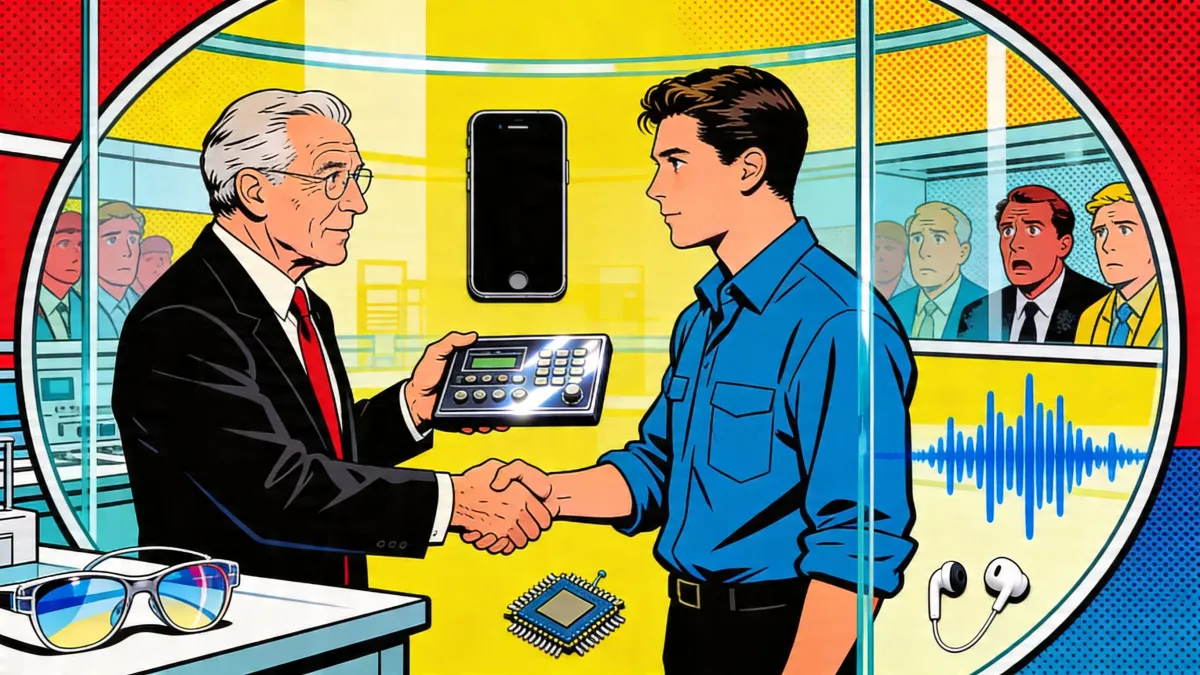
10x — Growth in Apple's market capitalization during Tim Cook's 15-year run as CEO, from just under $350 billion when he took over on August 24, 2011 to $4.01 trillion today, the morning Cook handed the top job to hardware chief John Ternus and stepped into the executive chairman role.
That valuation roughly matches Britain's entire economy, the world's fifth largest, though Silicon Valley peers Alphabet and Nvidia have since pulled ahead in the AI cycle. Fiscal year 2025 net income hit $112 billion, eight times the September 2010 result, a 699% improvement.
Cook added about 200 retail stores, including 50 in mainland China where Google and Meta were largely shut out of the consumer arena. Apple's installed base topped 2.5 billion active devices in January. The iPhone average selling price climbed from $712 in 2011 to $1,070 in 2025, per IDC. Cook's $600 billion U.S. spending commitment last year, struck with the Trump administration to avert iPhone import tariffs, now becomes Ternus's promise to keep.
Source: Bloomberg, April 21, 2026
Bezos's Prometheus Closes on $10B Round at $38B for Physical AI Bet
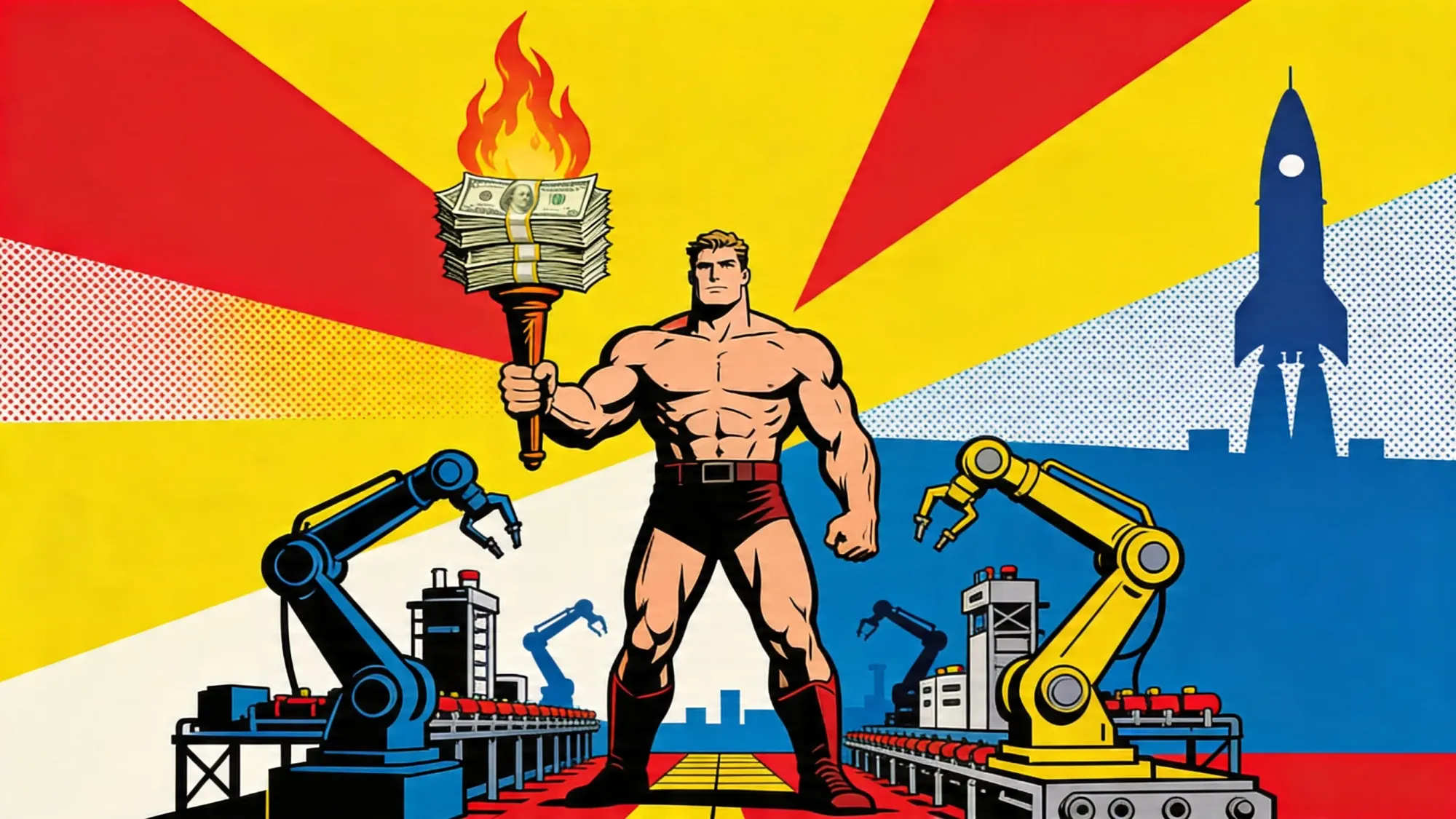
Jeff Bezos's secretive physical-AI lab Project Prometheus is closing a $10 billion round at a $38 billion valuation, per the FT. JPMorgan and BlackRock anchor the deal.
Total capital crosses $16 billion in five months, a pace only Anthropic and OpenAI have matched. The stated mission is AI for industry: factories, logistics, energy, materials. The unstated mission is a $100 billion holding company built on the assumption that physical work is the next AI frontier, not chatbots.
Bezos is rebuilding the Amazon playbook for a different domain. Heavy capital. Long horizons. Vertical ownership of infrastructure competitors treat as plumbing. The frontier labs already ran the easy play. Prometheus starts from a position few can match.
Why This Matters:
- Prometheus opens a second front in AI funding, distinct from the OpenAI-Anthropic model race.
- Bezos raising $10 billion in a single round resets the ceiling for anyone trying to catch up on industrial AI.
AI Image of the Day

Prompt: Photorealistic studio boudoir portrait of a woman, elegant sensual pose, refined lingerie, professional studio photography, ultra-realistic human skin texture with visible natural pores, soft cinematic studio lighting, shallow depth of field, medium shot, luxury editorial aesthetic, 85mm lens, RAW photo look.
Claude Code Loses Half Its Context Before First Keystroke, Nobody Owns the AI Bill
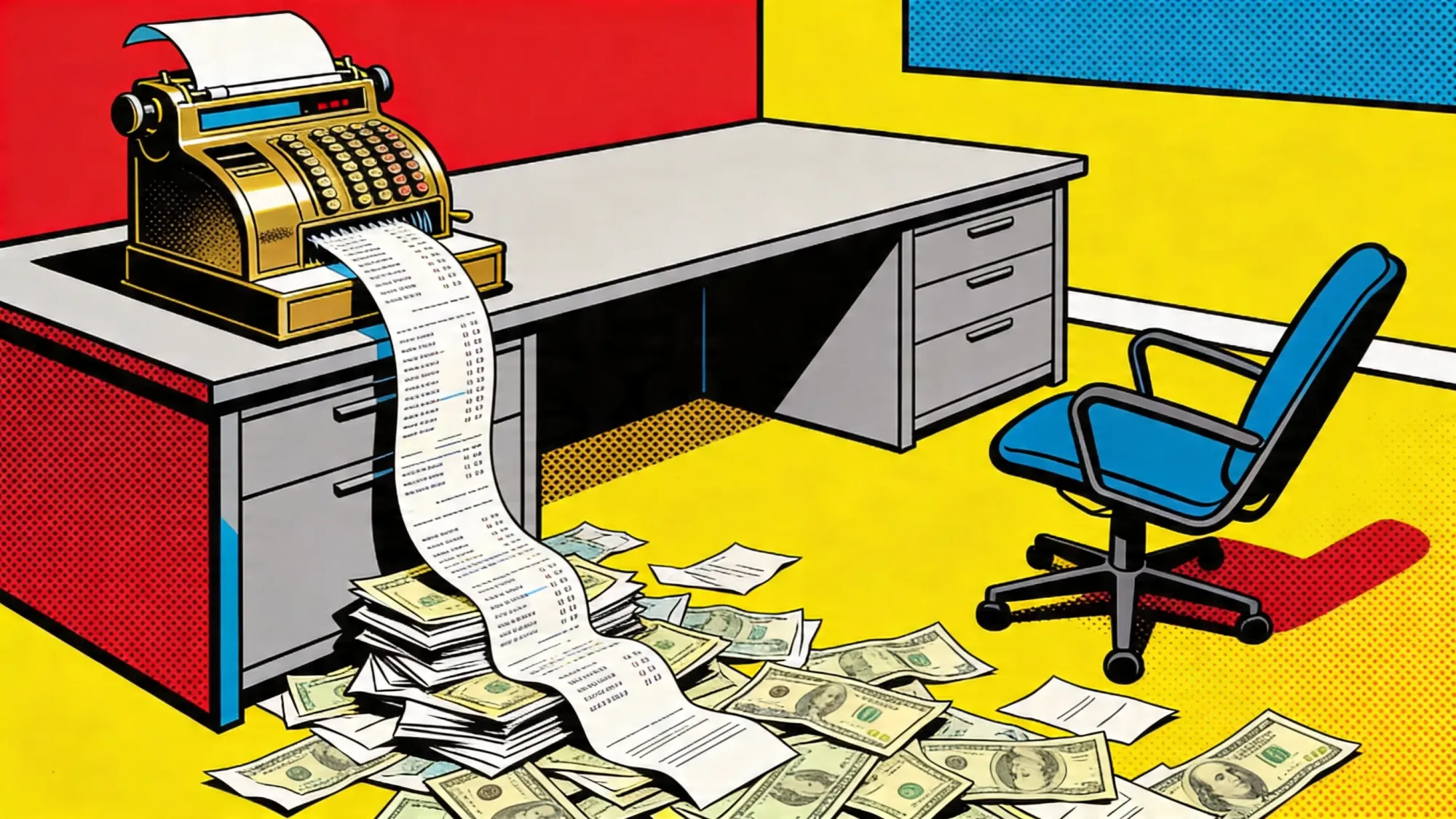
A cold Claude Code session loses 50.6% of its 200K context window to overhead and autocompact reserve before you type. One environment flag, MAX_THINKING_TOKENS=10000, has been documented to halve a $150 daily bill.
Developer Damian Galarza's line-by-line trace showed MCP servers alone add 26,500 tokens per session. Morph LLM benchmarks show Claude burns 3.2x to 4.2x the tokens of OpenAI Codex for a 1.4-point SWE-bench Pro spread. McKinsey's 2026 State of AI survey found only 17% of boards oversee AI governance at all. The tools exist. The owner does not.
Today's PRO brief walks ten free levers, the three buyer profiles, and why the cloud-cost conversation from 2010 keeps repeating inside every company with an AI invoice.
Why This Matters:
- Enterprises running production AI without a gateway and meter stack are overpaying by 2x or more, with no accountable owner inside the company.
- Labs have no incentive to ship first-class meters, because the gap between what the tools can do and what gets installed is where their margin lives.
🧰 AI Toolbox
How to Capture Every Meeting Without a Bot Joining the Call with Fathom 3.0
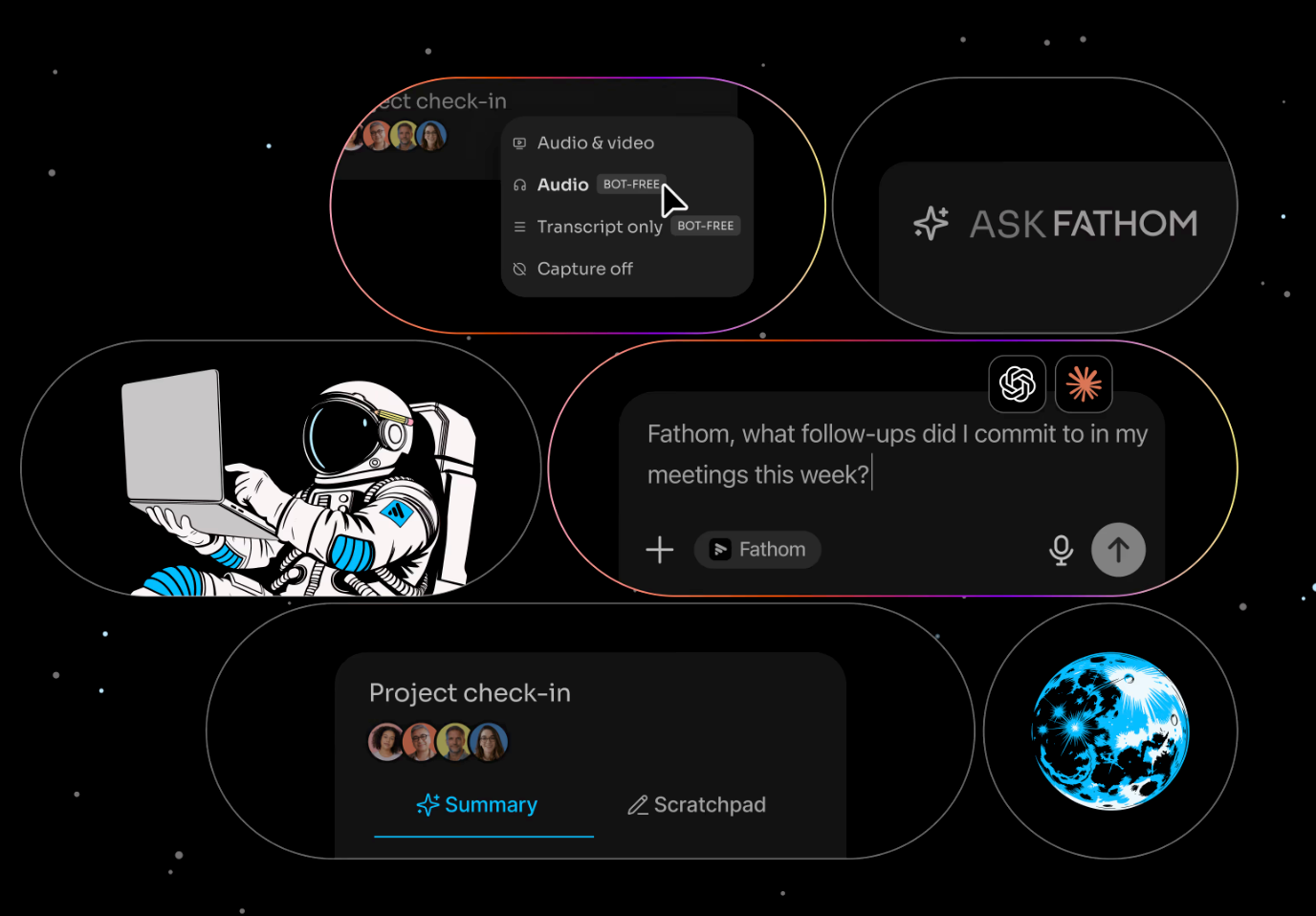
Fathom 3.0 adds a bot-free capture mode that records audio and transcripts directly from your laptop without sending a bot into the call, so clients and interviewees never see "Fathom Notetaker" as a participant. The new Ask Fathom feature searches across every meeting in your account, not just one at a time, and the platform now integrates with Claude and ChatGPT through a public API and MCP server. Live summaries update as the call unfolds. Free tier includes unlimited meetings.
Tutorial:
- Download Fathom from fathom.ai for Mac or Windows and sign up with your work email
- In Settings, choose your capture mode: full bot (video + audio), audio + transcript only, or transcript-only for the most discreet option
- Start any call on Zoom, Google Meet, Microsoft Teams, or Slack Huddles, Fathom captures without joining
- Open the in-meeting scratchpad during the call to jot notes that get merged with the AI summary after
- Connect Fathom to Claude or ChatGPT using the MCP server so your LLM can pull meeting context automatically
- After the call, ask Ask Fathom a question that spans months: "What did every customer say about pricing in Q1?" and get a sourced answer
- Push action items to your CRM, Slack, or task tool through the public API without leaving Fathom
URL: fathom.ai
What To Watch Next (24-72 hours)
|
||
|
||
|
💡 5-Minute Skill
Turn Monday's Meeting Graveyard Into Tuesday's Three Deliverables
It is 8:47 AM Tuesday. Monday had seven meetings, two finance emails flagged TODO, and a Slack thread on Q2 hiring. You said yes to things. You cannot remember what. One hour until the next call.
Your raw input:
Monday calendar items, key Slack threads I was in, and the two emails marked TODO. My role and the deliverables already on the books this week.
The prompt:
Read yesterday's meetings and threads. List every commitment I made with an implied deadline. Split into three buckets: (1) ship this week, (2) push a week with a polite heads-up, (3) I agreed in the moment and should not have. Draft the one-line back-out for bucket 3. No summaries, just the list.
The output:
This week: Budget reforecast to finance by Friday. Revised Q2 OKRs for VP review by Thursday.
Push a week: Vendor shortlist memo. Skip-level 30-day plan ("draft coming Tuesday so we can workshop it live").
Back out: "Thinking about it more, the CRM migration scope belongs with [Name]'s team given the data-model work involved. Happy to advise."
Why this works:
Over-committing is how competent people become unreliable. The prompt makes you honest Tuesday about what you agreed to Monday, with a clean script for the one thing you should not have signed up for.
What to use:
Claude catches the implicit "yeah, I'll handle that" commitments that never make the shared doc. ChatGPT works if you paste a tighter summary. Do the audit before you open Tuesday's inbox.
📖 AI Alphabet
|
M
|
📖 AI Alphabet Model A model is the core AI system that has learned patterns from data. It is the engine that turns an input, like a prompt or image, into an output. |
AI & Tech News
Apple reorganizes hardware under Johny Srouji around five focus areas
Bloomberg reports Apple has merged hardware engineering and hardware technologies into a single unit under senior VP Johny Srouji, organized around five strategic pillars per an April 20 internal memo. The reshuffle lands the same day Ternus was named CEO, and is the clearest signal yet that silicon is the moat Apple is fortifying first.
Uber found liable in second consecutive bellwether assault trial
A North Carolina federal jury held Uber liable for a 2019 driver-committed sexual assault, the company's second straight loss in the first two of more than 3,000 pending federal suits. Negligent hiring and supervision are the theories juries keep accepting, which raises the operational price of every driver onboarded at scale.
Victory Giant jumps 57% on Hong Kong debut after $2.6B IPO
The Chinese PCB maker, recently identified as an Nvidia supplier, closed its Hong Kong trading debut up roughly 57% after the biggest HK IPO of the year. The pricing is the clearest read on how Asia equity markets are valuing AI-infrastructure attach points that sit one layer below the GPU.
Air Force scraps RTX's GPS III follow-on ground-control contract
Bloomberg reports the US Air Force has terminated RTX's contract for the next-gen GPS ground segment, citing years of schedule slips and cost overruns. Responsibility shifts to an alternate acquisition path, and every ground-control bidder that lost the original competition just got a second window.
UK proposes statutory smartphone ban in England state and independent schools
The government is amending the Children's Wellbeing and Schools Bill to turn advisory guidance into a legally enforceable ban, per The Guardian. Schools gain confiscation and sanction authority, and the policy sets the template other European capitals will study.
Ofcom opens formal Telegram probe over child sexual abuse material
Reuters reports the UK regulator is investigating Telegram under the Online Safety Act, citing evidence the platform is being used to distribute CSAM and groom minors. Private encrypted channels are the choke point; fines or enforcement action are on the table if Ofcom finds systemic moderation failure.
WSJ maps the scale of Cambodia's cybercrime scam empire
A Wall Street Journal investigation details hundreds of fraud centers operating across Cambodia with political and law-enforcement protection, running romance, investment, and tech-support scams at global scale while enslaving foreign workers. The piece is the most thorough public accounting yet of a criminal supply chain already distorting fintech and identity-verification economics.
Canva's Melanie Perkins lays out enterprise and AI strategy on The Verge
Perkins told Nilay Patel that Canva is investing in proprietary models, scaling enterprise sales, and deliberately avoiding head-on fights with frontier labs. Token pricing and ecosystem-complement positioning are the two lines that matter for anyone pricing Canva against Adobe and Affinity.
Synthflow AI partners with 8x8 to ship agentic voice AI into the contact center
The Berlin-based voice-AI startup is integrating into the 8x8 Contact Center stack to automate self-service across voice, chat, and digital channels. Synthflow says it has handled 65 million voice interactions for customers including Freshworks and Thryv, with plans to resell through the 8x8 Appstore.
Inoreader adds AI layer for summaries, topic clustering, and sentiment
The reader platform is pitching its new intelligence features at analysts and newsrooms who want AI on top of their existing RSS pipeline rather than a new app. The approach inverts the typical AI-product framing: keep the inbox, change the brain behind it.
🚀 AI Profiles: The Companies Defining Tomorrow
Eridu wants to rebuild the networks inside AI data centers, and veterans who sold three previous companies for billions are running it. 🌐
Founders
Drew Perkins co-founded Lightera Networks (sold to Ciena for over $500 million) and Infinera (IPO'd, then sold to Nokia for $2.3 billion in 2025). He helped create the Point-to-Point Protocol that became a TCP/IP building block in the 1980s. Mike Capuano and Omar Hassen round out the team. Hassen came from Broadcom and Marvell, the chipmakers that dominate networking silicon. Eridu was founded in 2024 and emerged from stealth in March 2026.
Product
Eridu is building a clean-sheet network switch designed for AI workloads, spanning silicon, systems, and software in one stack. The target is the "network wall" bottleneck: GPUs and accelerators now finish work faster than the network between them can move data, leaving expensive silicon idle. The company claims an order-of-magnitude leap in performance, radix, and efficiency for scale-out and scale-up AI architectures. Early applications are hyperscale training clusters and neocloud buildouts where networking is the tax on every dollar of GPU spend.
Competition
Arista Networks dominates AI cluster networking with a $120 billion market cap. Cisco looms at $250 billion. Juniper (now part of HPE), Nvidia's Spectrum-X line, and whitebox vendors from Celestica and Accton compete for the same racks. Aria Networks, featured by Implicator on April 8, chases the chip-agnostic open-SONiC play. Eridu's bet is that a clean-sheet silicon design, not better firmware on existing switches, is the path through the network wall.
Financing 💰
$200 million oversubscribed Series A, total raised $230 million. Investors include John Doerr, Socratic Partners, Matter Venture Partners, Hudson River Trading, Capricorn Investment Group, SBVA, MediaTek, Bosch Ventures, TDK Ventures, Eclipse Ventures, and TSMC's VentureTech Alliance.
Future ⭐⭐⭐⭐
Founders with three prior multi-billion-dollar exits in networking are the rarest asset in the infrastructure class. The oversubscribed Series A signals investor conviction that the AI networking stack needs a rebuild, not an upgrade. The risk is timeline: Arista has five years of AI-customer relationships and a reference architecture every hyperscaler already uses. 🌐
🤨 Yeah, But...
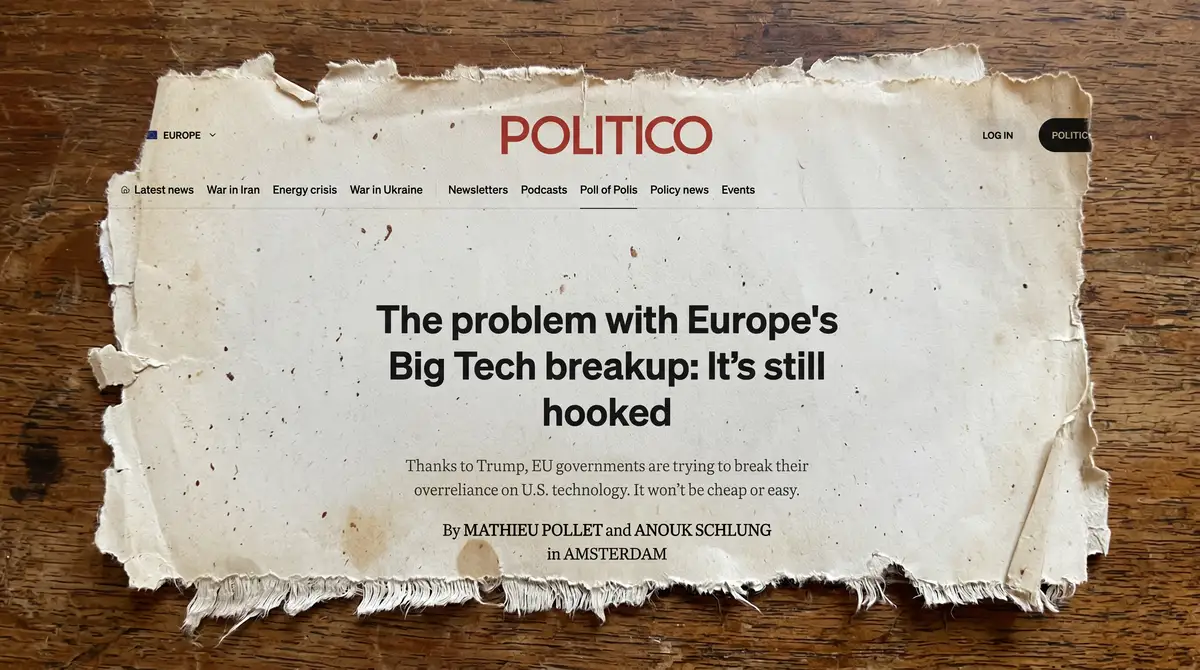
European governments are trying to unplug from U.S. tech over fears that Donald Trump could weaponize their dependence. Amazon, Microsoft, and Google run 70% of the EU's cloud and 80% of European corporate enterprise software spending goes to U.S. vendors.
Amsterdam's digital sovereignty chief Alexander Scholtes, who spearheaded the city's multiyear break from U.S. software, spoke to Politico while holding a Microsoft-loaded tablet and said he still relies on Big Tech "all the time." Schleswig-Holstein, the first European state to attempt a full exit, migrated 40,000 accounts off Outlook and saved €15 million on licenses, but judges now report a 10-20% productivity hit because the replacement email client does not have a working spell checker.
Amsterdam is targeting 30% European cloud services by 2030 and full independence by 2035. Brussels will propose its own sovereignty package on May 27. (Politico Europe, April 20, 2026)
Our take: Europe's escape plan from Microsoft is being drafted by men holding Microsoft tablets and scheduled for completion in 2035, by which time Donald Trump will have been out of office for six years.
Schleswig-Holstein went first, migrating forty thousand accounts off Outlook and saving fifteen million euros, which sounds handsome until you find out that judges now lose a fifth of their working day because the replacement email client lost its spell checker. Search warrants are going out with typos.
Amsterdam, meanwhile, is in no rush, plotting a "responsible" exit stretched over nine years. The continent that invented the printing press, the mechanical clock, and the scheduled railway will break up with American software at the pace of a Dutch canal renovation. Microsoft does not need a calendar invite to pull the plug.

Marcus Schuler
Editor-in-Chief and founder of Implicator.ai. Former ARD correspondent and senior broadcast journalist with 10+ years covering tech. Writes daily briefings on policy and market developments. Based in San Francisco. E-mail: editor@implicator.ai