IMPLICATOR
San Francisco | Monday, April 20, 2026
The Pentagon labeled Anthropic a supply-chain risk in February. Axios now reports the NSA is running Anthropic's Mythos anyway. The spy agency that fights wars signed up for the thing its own boss blacklisted. Contractors are stuck between the memo and the production system.
Berlin wants industrial AI carved out of the EU AI Act before the August 2 deadline. Germany has pledged to quadruple AI compute by 2030. Factory demos are concrete. Brussels paperwork is not.
And Yann LeCun told Dario Amodei to stop forecasting labor markets. Amodei says half of entry-level white-collar jobs go in five years. BLS shows 4.3% unemployment. Anthropic's own tracker finds no gap between exposed and unexposed occupations. The mass shock has not arrived.
Stay curious,
Marcus Schuler
Know someone drowning in AI noise? Forward this briefing. They can subscribe free here.
NSA Uses Anthropic's Mythos Model While Pentagon Keeps Supply-Chain Risk Label

The National Security Agency is running Anthropic's restricted Mythos model. The Pentagon, which the NSA sits inside, still calls Anthropic a supply-chain risk.
Axios reported Sunday that the NSA has access to Mythos Preview, the unreleased Anthropic model that found 181 working Firefox exploits and a 27-year-old OpenBSD TCP flaw in testing. Project Glasswing lists twelve named partners, including AWS, Apple, Cisco, CrowdStrike, Google, JPMorgan, Microsoft, Nvidia, and Palo Alto Networks, plus more than forty additional organizations with access. The exact NSA use case is not public. Most other Glasswing users run defensive scans against their own systems.
The contradiction sits on top of a February fight in which Defense Secretary Pete Hegseth demanded Anthropic allow Claude for "all lawful purposes," Anthropic refused on mass surveillance and autonomous weapons, and the Pentagon then blacklisted the company as a supply-chain risk. Contractors are now being told to avoid commercial activity with Anthropic while the agency that actually runs signals intelligence uses the product.
Why This Matters:
- The supply-chain label is supposed to control procurement. When the spy agency routes around it, the label becomes a rhetorical position, not a policy, and every contractor reads that signal.
- If Anthropic's most capable model is safe enough for NSA analysts but dangerous enough to blacklist, the underlying objection was never really about safety. It was about who gets to say no to the Pentagon.
Reality Check
What's confirmed: Axios has two sources on NSA Mythos access and one on wider Defense Department usage. Project Glasswing's twelve named partners are on record.
What's implied (not proven): That the NSA access is operational rather than evaluation-only, and that Defense leadership knew about it before the Axios report.
What could go wrong: Hegseth could force Anthropic to pull NSA access as a face-saving move, which would crater trust across the other forty-plus Glasswing organizations.
What to watch next: Whether the Pentagon formally clarifies the supply-chain label or the Ninth Circuit appeal timeline accelerates on the back of Sunday's story.

The One Number
75% — Estimated share of Tinder users who are men, according to Sensor Tower, as Match Group CEO Spencer Rascoff told the FT that winning over women is his "primary focus" in a push to stabilize the flagship app by the end of 2027.
Tinder's monthly active users have fallen from a 2021 peak of 65.4 million to 50.5 million last year, and Match shares are down more than 80% from their 2021 high. The annual user decline has narrowed from roughly -11% when Rascoff took over to about -8.5% last quarter, with a goal of flat by end of next year. Tinder is spending to buy the turnaround: $60 million in user givebacks this year versus $15 million in 2025, and $230 million in advertising versus $180 million.
The twist inside Match's own portfolio: Hinge's operating income more than doubled from $74.3 million in 2023 to $166.3 million in 2025, while Tinder's fell from $955.5 million to $832.6 million over the same period. The category leader is now the slower-growing asset.
Source: Financial Times, April 18, 2026
Merz Pushes Industrial AI Carve-Out From EU AI Act Before August Deadline
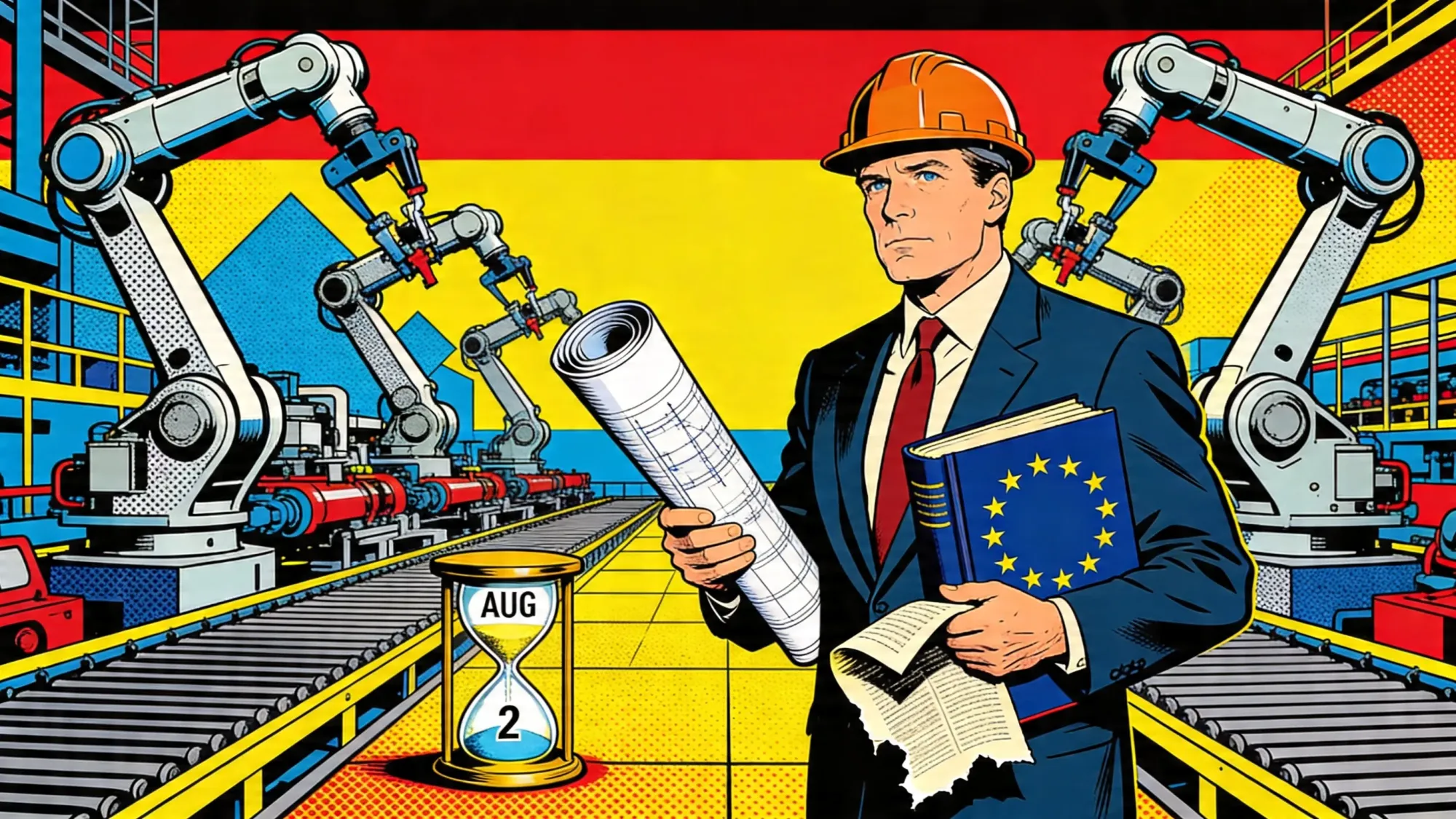
German Chancellor Friedrich Merz wants industrial AI separated from consumer rules before the EU AI Act's August 2 deadline. Germany has committed to quadrupling its AI compute capacity by 2030.
Merz framed the request as easing the EU burden and, where feasible, removing industrial AI from regulatory constraints. The ask is narrower than blanket deregulation. It targets factory-floor applications where the failure mode is broken machinery, not manipulated voters. Germany's 530-megawatt baseline needs to hit roughly 2.1 gigawatts of AI processing by 2030 to meet the fourfold target, on top of doubled total data-center capacity.
Hannover Messe provided the exhibits. Microsoft's work with Krones cut fluid-simulation time from four hours to under five minutes. ABB showed real-time industrial co-pilots. TK Elevator has AI agents briefing technicians. None of these touch the consumer-manipulation problem that drove the EU AI Act in the first place. The risk for Brussels is that a carve-out without strict worker-safety guardrails becomes the template every lobbying group cites.
Why This Matters:
- August 2 is not theoretical. Most Act provisions take effect that day, with high-risk obligations extending into 2027. Any carve-out has to clear Brussels faster than normal EU process allows.
- Industrial AI is where Germany's 2030 competitiveness story lives. If Merz fails, the compute investment lands on companies also absorbing Act compliance costs at the same time.
AI Image of the Day

Prompt: A monochromatic close-up portrait of a woman's face from the nose down, angled slightly to the left, is covered by a large butterfly with dark wings on the left side of her face. The butterfly is positioned with its head and antennae resting on the bridge of her nose. Her right eye is visible, dark, and looking forward, with long dark hair partially framing her face on the right. Her lips are dark and slightly parted, with three vertical streaks of metallic gold appearing to drip from her lower lip down into the dark background. Splatters and smudges of dark paint or ink are visible on her face and around the butterfly, creating a distressed texture. The background is a gradient from light gray on the left to dark gray/black on the right.
Yann LeCun Disputes Amodei's 50% AI Jobs Warning as BLS Data Lags
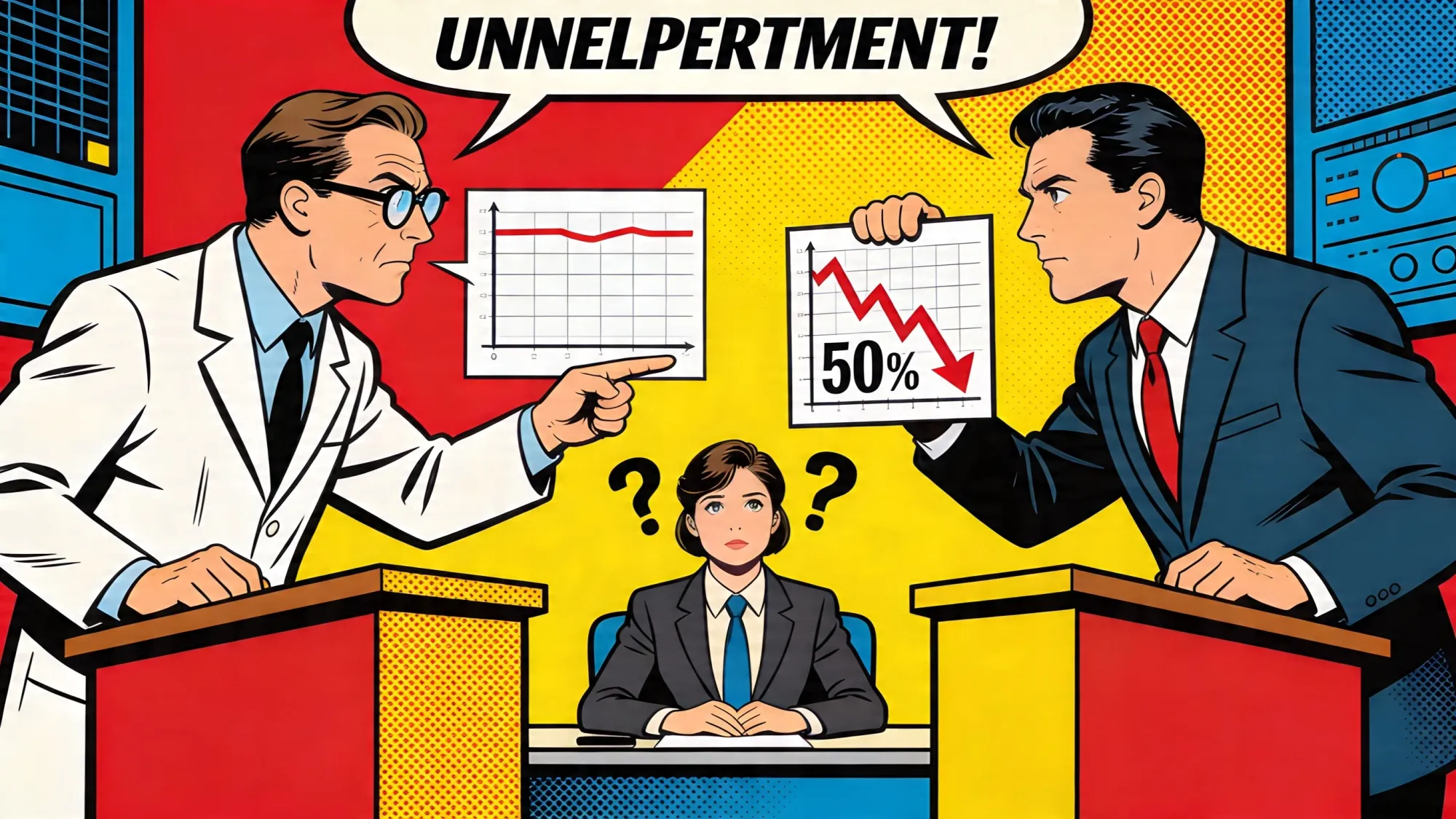
Yann LeCun told Dario Amodei to leave labor forecasts to labor economists. Amodei's warning is that AI eliminates half of entry-level white-collar jobs in one to five years.
LeCun pointed readers at Philippe Aghion, Erik Brynjolfsson, and Daron Acemoglu instead of AI CEOs. The current data is not on Amodei's side yet. BLS reported 4.3% unemployment in March with 7.2 million unemployed. JOLTS showed 6.9 million job openings. Finance sector losses were 15,000 in March, significant but not the mass shock Amodei describes. Anthropic's own job displacement tracker finds no measurable unemployment split between highly exposed and unexposed occupations since ChatGPT shipped.
The squeeze is real at the bottom of the funnel. Ages 22 to 25 in AI-exposed roles saw roughly a 14% drop in job-finding rates, and 49% of lower-wage workers tell Axios they fear AI losses. Sam Altman has already accused companies of "AI washing" layoffs to reframe cuts that would have happened anyway. Both things can be true at once: junior hiring is frozen, and the 10-20% unemployment ceiling Amodei warns about is not in the numbers.
Why This Matters:
- Forecasts from AI CEOs shape regulation and investor expectations. When the headline number is wrong by an order of magnitude, the policy built on it compounds the error for years.
- The young-worker squeeze is the real story, and it is easier to miss if everyone is arguing about 50% macro figures that may never arrive.

🧰 AI Toolbox
How to Let AI Agents Design in Your Figma Files Using Your Real Design System with Figma for Agents
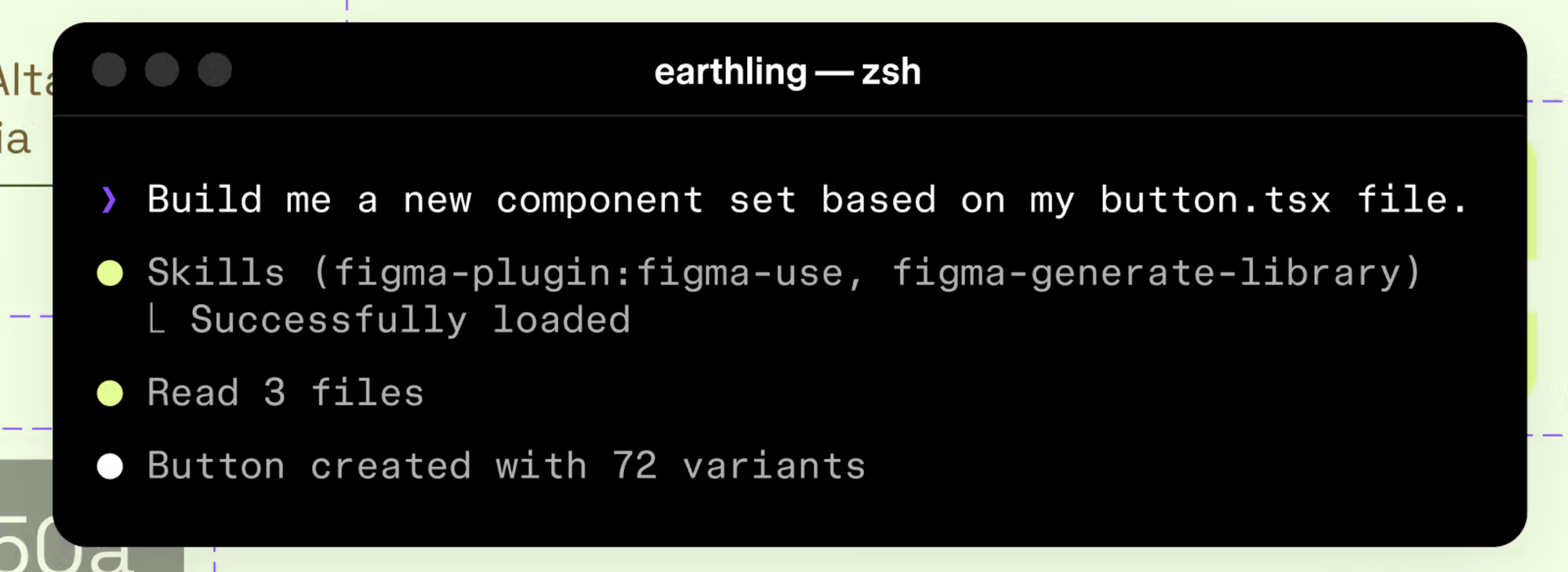
Figma for Agents opens the Figma canvas to AI coding agents through an MCP server, so Claude Code, Cursor, Codex, or Warp can read and write directly to your design files using your existing components, variables, and tokens. No more AI-generated mockups that ignore your typography and color palette. Skills let you author shareable workflows in Markdown instead of writing plugin code. Works with any MCP-compatible client.
Tutorial:
- Open Figma desktop and enable the MCP server under Preferences > AI Agents
- In your MCP client (Claude Code, Cursor, Codex CLI, Warp), add Figma as an MCP server using the connection URL Figma provides
- Open a Figma file and grant the agent access to that specific file or your whole design system
- Ask the agent to perform a design task: "Create a pricing page using our existing Button and Card components"
- Watch the agent write to the canvas using real variables and tokens, not hardcoded values
- Author a Skill in Markdown to codify a recurring workflow (e.g. "Generate a landing page variant" with your naming conventions and spacing rules)
- Share the Skill with your team or the Figma community so agents across the company follow the same design conventions
URL: figma.com/agents
What To Watch Next (24-72 hours)
|
||
|
||
|
💡 5-Minute Skill
Turn ChatGPT Into a Brutal Coach for the Skill You Keep Avoiding
You have been telling yourself for six months that you want to get better at cold emails, Python list comprehensions, or public speaking. You read a book, watched a video, bookmarked three threads. Nothing stuck. The problem is not information. The problem is that nobody is grading you.
Your raw input:
Skill I want to improve: writing cold emails to executives. Current level: I send five a week, hear back from maybe one. Time I can commit: 20 minutes a day for two weeks. Sample of my recent work: [paste three cold emails you actually sent].
The prompt:
Act as a strict but fair coach for this skill. Watch for laziness, vagueness, and fake understanding. Give me one exercise at a time. Grade my answer harshly but constructively. Do not let me move on until I show real competence. Start with diagnosis of my sample, then exercise one.
The output:
Diagnosis: All three emails open with your credentials and ask for time. None of them offer the reader a reason to care in the first sentence. You are writing about yourself, not about them.
Exercise 1: Rewrite your last cold email. The first ten words must state something specific you noticed about the recipient's work. The ask comes in sentence three, not sentence one. Paste when ready. I will not accept "I enjoyed your recent post."
Why this works:
Most AI prompts default to encouragement. Encouragement is pleasant and useless. The Brutal Coach prompt inverts the default: the model becomes deliberate-practice infrastructure, one exercise at a time, with real friction. You cannot skip ahead because it will not let you.
What to use:
Claude holds the coach persona longest and gives the most specific feedback. ChatGPT is faster on mobile for quick rounds. Works for any skill where the bottleneck is reps, not information: writing, languages, negotiation, code review, presentations.
📖 AI Alphabet
|
L
|
📖 AI Alphabet LLM LLM stands for large language model. It is an AI model trained on massive amounts of text so it can understand and generate language. |
AI & Tech News
NextDC raising AU$1.5 billion to build a 350MW Sydney data center
The Australian operator announced the equity raise alongside a capex guidance hike to AU$2.7-3.0 billion for FY26. NextDC is going to market as an AI-infrastructure pure play, not a colocation landlord, which is why the Sydney site gets the headline.
METR's "time-horizon" metric becomes the default AI progress chart
The nonprofit measures how far ahead a model can plan across writing, coding, and scientific tasks. Its curves are now cited by both researchers and Wall Street, which matters because the benchmark is public and the slope is what investors are pricing.
Apple preparing a full Siri redesign for iOS 27, Mac Studio and touch MacBook delayed
Bloomberg's Mark Gurman read the glowing "26" on Apple's WWDC invite as a Siri tell, according to his Power On newsletter. Separately, memory-chip shortages are pushing the touch MacBook Pro and next Mac Studio out by months, a clean sign that HBM is not the only supply line under stress.
Maria Davidson running a $100M California Renewal campaign to reshape state politics
The pro-business group is pulling checks from a quiet bench of Silicon Valley donors to back pragmatic-reform candidates in 2026. The SF Standard piece names her as the operational lead, which is the first time the group's decision-maker has been on the record.
SK hynix ships 192GB LPDDR5X SOCAMM2 module, tailored for Nvidia's Vera Rubin
The Korean memory vendor says this is the highest-capacity LPDDR5X module in the market, purpose-built for AI servers. The Vera Rubin hookup is the important line: Nvidia is standardizing the socket, and whoever supplies it at volume earns a second leg of HBM-style margin.
Fermi CEO Toby Neugebauer steps down as Texas "world's largest" data center stalls
The site, branded with the Trump name and backed by allies of the former president, has not landed an anchor tenant and is missing construction milestones. Axios reports Neugebauer's exit is tied directly to those delays, which is the first acknowledgement that the project is in trouble before it even breaks ground at scale.
Polymarket in talks for $400M at a $15B valuation
The prediction-market platform would jump 67% from its October 2025 round, according to The Information. The number sits below Kalshi's $22 billion March mark, and the two valuations together are the clearest signal that private markets still distinguish between the two.
Google and Marvell co-developing a memory processing unit and a new TPU variant for inference
The pair are designing a dedicated MPU to sit alongside existing TPUs plus a next-generation TPU optimized for inference workloads, per two sources briefed on the talks. The read: Google is segmenting training silicon from inference silicon at the accelerator level, the way hyperscalers already do for CPUs.
Expo raises $45M Series B led by Georgian to expand React Native tooling
The developer platform underpins a large slice of cross-platform mobile apps and sells cloud-based build and deployment services on top. The funding is a modest number by 2026 standards, but Expo is one of the few open-source mobile toolchains with a defensible commercial ramp.
Vercel confirms breach through a compromised third-party AI tool
ShinyHunters claims responsibility and is advertising the stolen data on BreachForums, according to BleepingComputer. Vercel has not detailed what was taken, but "compromised AI tool" is the phrase the industry should expect to read more of this year.
🚀 AI Profiles: The Companies Defining Tomorrow
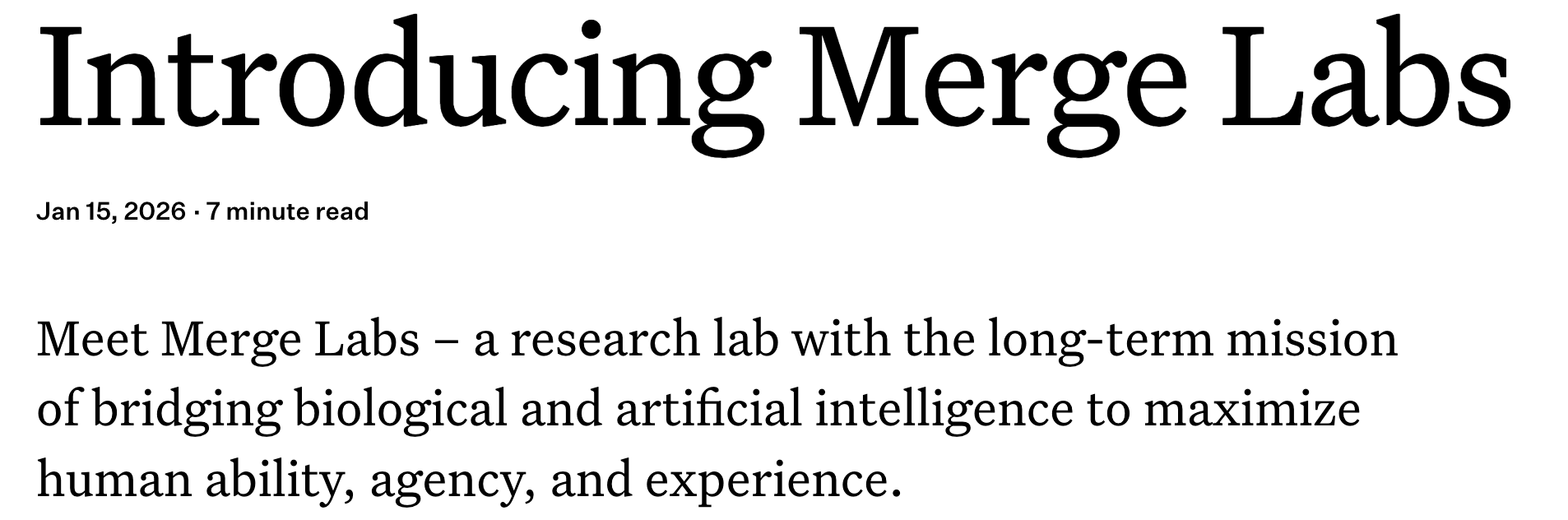
Merge Labs wants to connect human brains to computers without drilling through your skull. Sam Altman is co-founder and OpenAI wrote the biggest check. 🧠
Founders
Sam Altman, OpenAI CEO, co-founded Merge Labs alongside Alex Blania (CEO), who also runs Tools for Humanity, the parent of the Worldcoin iris-scanning project. The founding roster includes Sandro Herbig (product and engineering lead at Tools for Humanity), Tyson Aflalo and Sumner Norman (co-founders of implantable neural startup Forest Neurotech), and Caltech researcher Mikhail Shapiro. Headquartered in the Bay Area. The company calls itself a research lab and remains in early research stage.
Product
Merge Labs is building a brain-computer interface that skips the main trap of existing BCI: implantation. Where Neuralink threads electrodes into brain tissue, Merge plans to interface with neurons using molecules and transmit data through the skull via ultrasound. If it works, the system reads neural activity without surgery. Applications skew toward the Altman worldview: pairing biological intelligence with advanced AI so humans can keep up with models that will otherwise leave them behind. Nothing is shipping yet. The pitch is pure bet-on-science at a moment when AI labs are suddenly the biggest BCI funders.
Competition
Neuralink remains the household name with human implants already in trials. Synchron ships a stent-based electrode array through a blood vessel. Precision Neuroscience, Paradromics, and Forest Neurotech (whose co-founders now sit on the Merge team) compete in neural recording. Merge's differentiation is the non-invasive molecular-ultrasound approach, which would collapse the regulatory and consumer-acceptance barriers that implants face.
Financing 💰
$250 million seed round at an $850 million valuation, closed January 2026. OpenAI wrote the largest single check. Bain Capital, Interface Fund, Fifty Years, and Valve co-founder Gabe Newell also participated.
Future ⭐⭐⭐
An $850 million seed is a high price for a lab that has not yet demonstrated the core physics at neuron resolution. But the team mixes Altman's capital network with credible neuroscience, and the non-invasive angle is the one Neuralink has structurally ceded. If molecular interfacing reads neurons with useful bandwidth, Merge owns the consumer story. If not, $250 million goes to science papers. 🧠
Free AI briefing · Weekdays
The AI stories that matter, sourced and explained.
Join the Morning Briefing. It goes out every weekday at 4:45 a.m. Pacific, with later sends for the East Coast, Berlin and Tokyo.
Free when you sign up: The Paperclip Compendium, our tested guide to running AI agents.
Free. Unsubscribe in one click.

Marcus Schuler
Editor-in-Chief and founder of Implicator.ai. Former ARD correspondent and senior broadcast journalist with 10+ years covering tech. Writes daily briefings on policy and market developments. Based in San Francisco. E-mail: editor@implicator.ai