IMPLICATOR
San Francisco | Wednesday, June 17, 2026
SpaceX's $60 billion Cursor deal turns an AI coding editor into a front door for the xAI stack. The SEC filing sets the share math, while Cursor's own posts point to the compute problem: bigger coding models need Colossus-scale capacity.
That makes today's developer story less about one editor and more about ownership. GLM-5.2 still trails Claude Opus 4.8 on coding benchmarks, yet Zhipu's stock jumped 33% because open weights cannot be recalled by a Friday order from Washington.
Consumer AI is showing the same pressure on the default winner. ChatGPT still has 1.1 billion monthly users, but Sensor Tower puts its True Audience share below 50% as Gemini and Claude gain ground.
Stay curious,
Marcus Schuler
SpaceX Buys Cursor. Colossus Gets the Developer Workflow.

SpaceX filed to merge Cursor parent Anysphere into a SpaceX subsidiary Monday, converting the independent AI coding editor into a wholly owned unit in a $60 billion all-stock deal.
The SEC filing says Cursor shareholders will receive SpaceX Class A stock, with the exchange ratio set by the volume-weighted average price over the seven trading days before closing, expected in Q3. Reuters reported the stock was up 56% from its $135 IPO price, making the headline price about 2.4% of SpaceX's market value, while Tuesday's premarket move alone added more than four Cursor deals to the company's capitalization.
Cursor had already signaled the compute problem: its May Composer 2.5 post said the company was training on Colossus 2 hardware and had been "bottlenecked by compute." Truell said 60% of the Fortune 500 uses Cursor; Business Insider put its revenue run rate at $4 billion after doubling in three months. The deal turns a capacity partnership into product ownership, and the question after closing is what happens to the third-party models Cursor customers already use.
Why This Matters:
- Cursor customers built their workflows on third-party models like Claude Opus 4.8 and GPT-5.5; once Anysphere is a SpaceX subsidiary wired to Colossus and the xAI stack, the open question is whether those models stay first-class or get steered toward Grok.
- The $60 billion price is set by a seven-day volume-weighted average before a Q3 close, so the headline number floats with SpaceX stock until the deal lands rather than being fixed today.
Reality Check
What's confirmed: SpaceX filed Monday to merge Cursor parent Anysphere into a SpaceX subsidiary in a $60 billion all-stock deal. Cursor holders receive SpaceX Class A stock at an exchange ratio set by the volume-weighted average price over the seven trading days before a close expected in Q3.
What's implied (not proven): That owning Cursor pulls its users onto the xAI and Colossus stack. The filing sets ownership and share math; it does not say the third-party models Cursor offers today will be downgraded.
What could go wrong: If Cursor throttles or drops rival models after closing, the Fortune 500 customers Truell says make up 60% of its base get a reason to switch, and rivals like GitHub Copilot gain an opening.
What to watch next: The closing terms in Q3 and any change to Cursor's model picker. Whether Claude and GPT-5.5 stay default options is the first observable signal of how SpaceX intends to use the asset.

The One Number
$2.8 billion — what DeepSeek founder Liang Wenfeng committed from his own capital in the lab's first external funding round, about 40 percent of the $7.4 billion total. The round closed June 16 at a valuation above $50 billion, with Tencent, CATL, and China's state AI fund among external backers, none of whom received voting rights or freedom from a five-year lock-up. A founder who writes the largest check in his own round and gives no one else a vote is building something other than a standard venture-backed company.
💰 Fresh Funding
💰 Fresh Funding
Closes $7.4B: DeepSeek seals China's largest-ever AI funding round
Reuters and The Information reported Monday that Hangzhou-based DeepSeek closed more than $7.4 billion in its first external round at a valuation above $50 billion, with Tencent, CATL, NetEase, and China's state AI fund among the backers. Most capital flows through a limited partnership controlled by CEO Liang Wenfeng, who personally committed $2.8 billion, about 40 percent of the total, while external investors received no voting rights and a five-year lock-up.
Visit DeepSeek →Raises $55M: Stepful scales AI training for healthcare careers
Y Combinator alum Stepful raised $55 million in a Series C led by Oak HC/FT, with Foresite Capital and Citi Impact Fund joining, to expand its AI-powered certification platform for medical assistants, pharmacy technicians, and allied health roles. The company places more than 90 percent of graduates into jobs within 90 days of completion, pressing against a 635,000-position shortage in U.S. allied health staffing that traditional vocational programs have not filled.
Visit Stepful →Raises $35M: Coram AI unifies physical security on one AI platform
San Francisco-based Coram AI raised $35 million in a Series B co-led by Mosaic Ventures and 8VC, with Battery Ventures and UP Partners joining, to connect video feeds, access-control systems, and emergency workflows into a single AI-native security layer for enterprise campuses. The platform replaces separate vendors for surveillance, badge access, and incident response with one system that surfaces anomalies and routes alerts without a human dispatcher.
Visit Coram AI →Zhipu Traded the Benchmark Lead for the One Export Controls Cannot Touch

GLM-5.2 still trails Claude Opus 4.8 on coding benchmarks. Investors pushed Zhipu stock up 33% anyway, because an MIT-licensed open model cannot be switched off by a Friday order from Washington.
The scorecard Zhipu published this week puts GLM-5.2 behind Opus 4.8 on most coding tests, 62.1 to 69.2 on SWE-bench Pro and 13.0 to 26.0 on the multi-hour SWE-Marathon run. It does beat OpenAI's GPT-5.5 on several long-horizon coding benchmarks, at roughly one-sixth the API cost, $5.80 versus $35 per million tokens. The model is the first open-weight system above 80% on Terminal-Bench and placed first on the crowdsourced Design Arena.
The move that matters came the week Anthropic pulled Fable 5 and Mythos 5 offline on a Commerce Department order. "Cutting-edge intelligence should not belong to only a few, nor should it be withdrawn at any time," Zhipu said. Knowledge Atlas Technology, the Hong Kong-listed holding company, rose as much as 48% intraday before closing up about 33%. JPMorgan lifted its price target to HK$1,400 from HK$950. Z-Ben Advisors estimated about 40% of U.S.-based AI engineers were born in China and warned of "brain flight" toward Chinese labs.
Zhipu shipped GLM-5.2 on June 13 with no benchmark scores. The weights, the scorecard, and a standalone API did not land until this week. For three days the stock climbed on a model no independent lab had been able to test. The bet was on the category, an open model no government order can recall. The numbers came after and made a real bull case.
The open model carries its own catch. Cloud API calls fall under China's National Intelligence Law, which U.S. officials treat as a government-access risk. Self-hosting the FP8 weights needs roughly 800 gigabytes and eight H200 GPUs. The near-frontier coder that cannot be taken from you also costs infrastructure most teams trialing it this week will not build.

AI Image of the Day
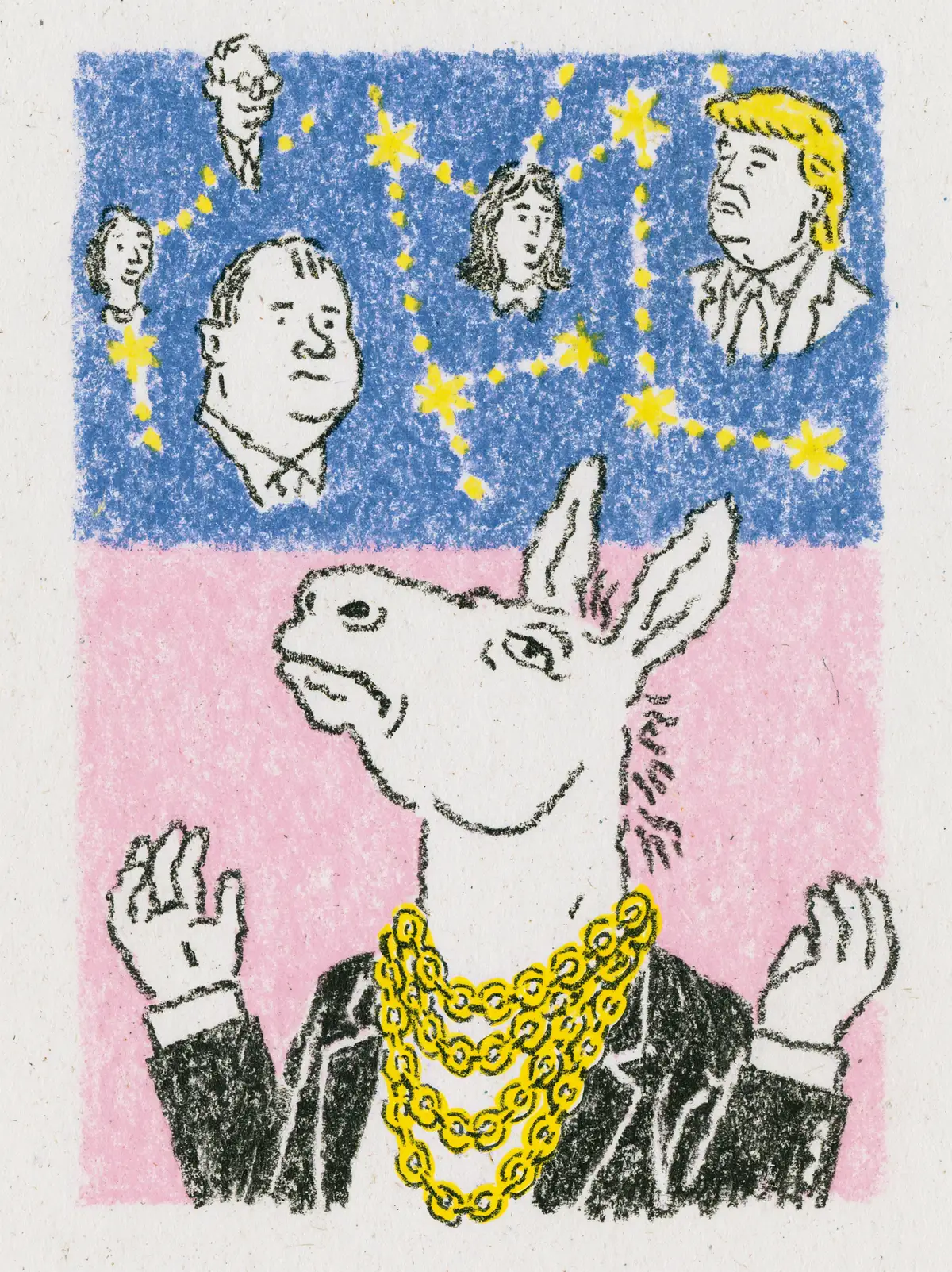
Prompt: A lonely hand-drawn donkey hybrid with gold chains looking upward with resentment, arms slightly raised as if asking the sky a question, while above them float several distant successful figures like unreachable constellations or icons. The feeling should be bitter and helpless. Naive humorous illustration, outsider art, indie zine aesthetic, simple hand-drawn character, quirky proportions, imperfect black pencil linework, slightly shaky sketch lines, minimal shading, monochrome pencil drawing on off-white paper, awkward and emotionally raw, surreal but simple symbolism, centered composition, lots of negative space, no detailed background, no typography, leave empty space at the bottom for text, 3:4 vertical.
ChatGPT Falls Below 50% as Gemini and Claude Turn Defaults Into Share

ChatGPT still counted 1.1 billion monthly users in May. Sensor Tower's True Audience measure, which removes cross-platform overlap, put it below 50% share for the first time.
The same data showed Gemini at 27.7% and Claude at 10.3%, leaving the combined challengers 8.4 percentage points behind. Sensor Tower wrote that "users remain willing to try alternative AI assistants," and the numbers back the claim: ChatGPT crossed below the 50% line in March and ended May at 46.4%.
Google's answer is distribution. Pichai said the Gemini app passed 900 million monthly users at I/O, up from 400 million a year earlier, while AI Overviews and AI Mode add billions more searches. Sensor Tower's outside count was lower, at 662 million, but the gap makes the point. Google's assistant reaches people before they open a standalone chatbot.
Claude's consumer case is narrower but sharper on monetization. Sensor Tower and Forbes put Claude's U.S. mobile revenue per user at $2.76 in May, above ChatGPT's $1.74, with 13% of iOS users paying for a subscription. The brand fight added a new variable after February's Pentagon deal and ad test: Sensor Tower said ChatGPT uninstalls peaked at roughly 200% above average the week the Department of War agreement landed.
OpenAI's February ad post said ads do not influence ChatGPT's answers. Sensor Tower's May readout put ads in front of 17% of daily users, with impressions up more than sevenfold since March. If June's True Audience print does not move back above 50%, the default-name advantage starts to look less automatic.

🧰 AI Toolbox
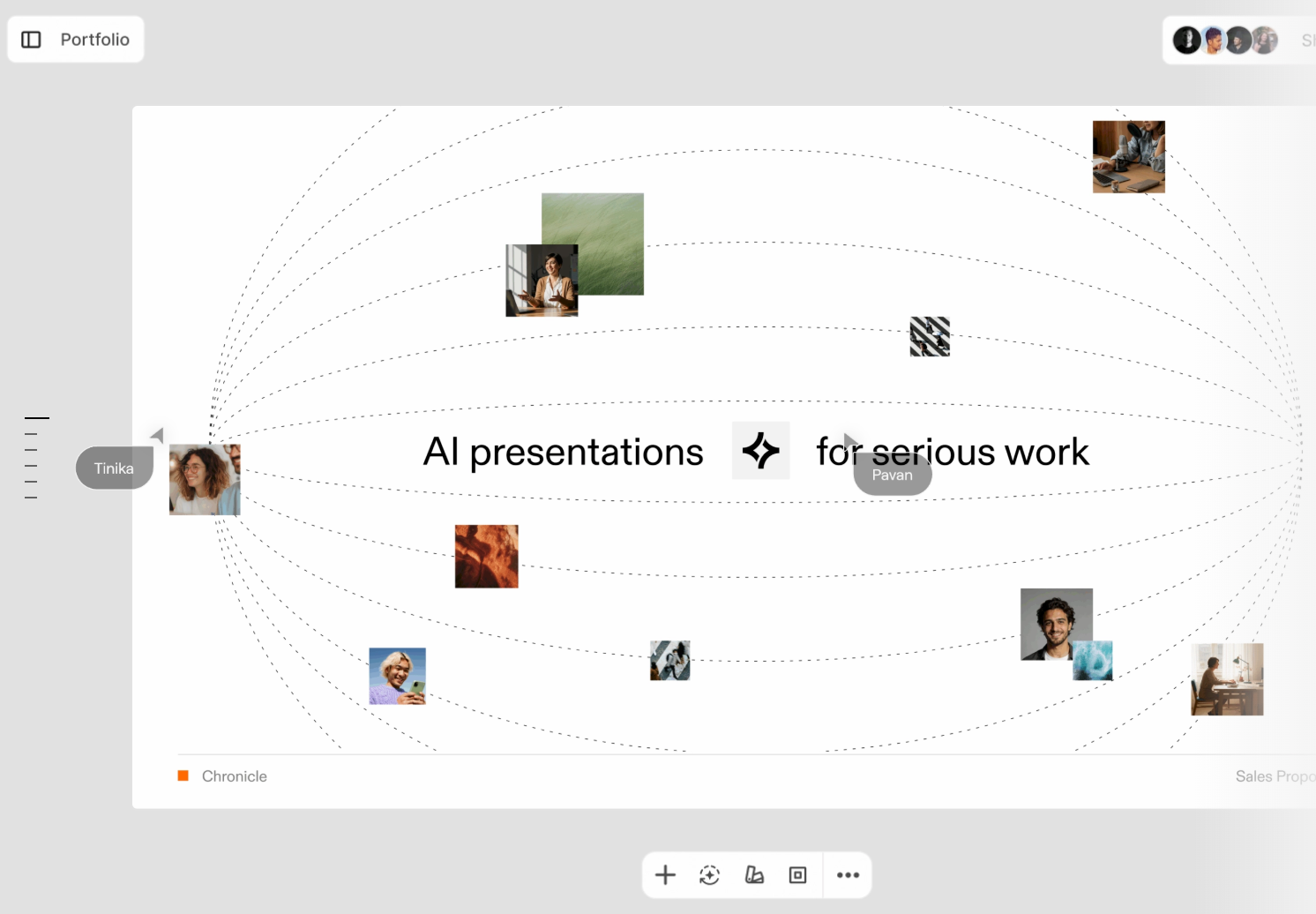
How to Create Polished Presentations Without Opening a Design Tool Using Chronicle 2.0
Chronicle 2.0 is an AI presentation tool that pairs an opinionated design system with an agent that drafts, designs, and refines slides in one place. Start from a prompt or a doc, pick a style, and Chronicle generates a deck with consistent typography, animation, and layout. Edit by chatting ("merge slides 4 and 5", "make the data slide a chart") or by clicking directly on any element. Free tier available, with paid plans for advanced collaboration.
How to get started:
- Go to chroniclehq.com and sign in with Google or email
- Describe your deck: "A 12-slide investor update covering revenue, retention, product roadmap, and the ask for our Series B"
- Pick a design system (minimalist, editorial, data-heavy) or upload your brand kit so Chronicle uses your colors and fonts
- Review the first draft in seconds, then chat with the agent: "Cut slide 6, add a chart on slide 8 using these numbers, move the CTA to the end"
- Click directly on any element to edit text, swap images, or adjust spacing without leaving the presenter view
- Use "Animate" to add subtle transitions to charts and bullet reveals without learning a separate motion tool
- Present from Chronicle live, or export to PDF, PowerPoint, or Google Slides for distribution
URL: https://www.chroniclehq.com
What To Watch Next
|
||
|
||
|
||
|
||
|
💡 5-Minute Skill: Turn an AI Vendor's Pricing Page Into a Cost Estimate for Your Actual Workload
You are comparing AI tool tiers, and the pricing page lists per-seat costs and token allowances, not what your team will actually spend. The vendor's example workload is never your workload. Here is how to turn that page into a defensible number before you forward it to finance.
Your raw input:
Vendor: AI writing assistant for a 12-person marketing team. Pricing: Pro tier $25/user/month, includes 500,000 tokens/month per user; Overage $0.008/1,000 tokens. Business tier $60/user/month, unlimited tokens, SSO, audit logs. We run roughly 3 long-form pieces per person per week, each requiring 4-5 back-and-forth drafts. We do not need SSO yet. Need: which tier, with the math, and the overage risk.
The prompt:
Act like a procurement analyst, not a sales consultant. Estimate monthly token usage per user from our workflow, then calculate total cost on each tier including likely overage. Show your token assumptions. Name the tier that wins for our current volume and the usage level where the Business tier becomes cheaper. Flag any cost that could surprise us in month two.
The output:
A long-form piece with 4 drafts at 2,000 words each runs about 10,000-12,000 tokens per piece, so 3 pieces per week is roughly 130,000-150,000 tokens per user per month. The Pro 500K allowance covers you with margin; at 12 users, Pro costs $300/month, Business costs $720/month. The break-even is around 500,000 tokens per user — you would need output to roughly triple before Business saves money. Watch for: if drafts grow longer or the team adds image generation, token counts double fast. Set a usage alert at 80% of your monthly allowance before month two.
Why this works:
Most vendor pricing comparisons stop at the per-seat cost. This prompt forces a token estimate from your actual workflow before picking a tier, so the number you send to finance reflects real usage, not the vendor's example scenario.
What to use:
Claude is best when you paste the actual pricing page and your current workflow. ChatGPT works well if you already have your own token estimate. Keep the phrase "the usage level where the higher tier becomes cheaper," or the model gives you the tier that looks good today and skips the break-even math.
📖 AI Alphabet
|
E
|
📖 AI Alphabet Epoch An epoch is one full pass through the training data. Models often train for many epochs so they can gradually improve, though too many can lead to overfitting. |
AI & Tech News
Trump's Fable 5 Move Pushes Congress Back Into AI Policy
Members of Congress from both parties said they were not briefed before the White House's Fable 5 AI action, Politico reported. Sen. Ted Cruz, who chairs the Senate Commerce Committee, was among lawmakers questioning the lack of consultation. The backlash gives Congress a new opening to press AI-oversight legislation after an executive move that touched one of the market's most powerful models.
Illinois Adds Social Media, Crypto, and Digital Ad Taxes to Budget
Illinois Gov. JB Pritzker signed the state's FY 2027 budget, including new taxes on social media platforms, digital advertising revenue, prediction markets, and cryptocurrency transactions. The state expects the measures to raise about $150 million a year, with proceeds aimed mainly at food assistance programs after federal cuts.
SpaceX Briefly Passes Microsoft, Closes at $2.65T Market Value
SpaceX rallied 12% intraday Tuesday after its record IPO, briefly topping Microsoft's market value before closing up 4.83% at about $2.65 trillion, CNBC reported. The move put SpaceX ahead of Amazon as the world's second-most valuable company by market capitalization.
PayPal Winds Down Its Venture Capital Arm
PayPal is shutting down PayPal Ventures as part of a restructuring under new CEO Enrique Lores, Fortune reported. The company has retained Jefferies to explore sales of some portfolio positions from the 10-year-old corporate venture arm.
FTC Prepares Potential Amazon Ad Suit Seeking Billions
The Federal Trade Commission is preparing a possible lawsuit against Amazon over allegations that the company misled advertisers about ad performance, Bloomberg reported. Multiple state attorneys general are coordinating on the case, which could seek billions of dollars in civil penalties.
Meta Backs KOSA After Bill Adds App-Store Age Checks
Meta reversed its opposition to the Kids Online Safety Act after revisions added app-store age verification and preemption of conflicting state AI rules, Politico reported. The shift gives the children's safety bill new industry support while moving more youth-safety and AI authority toward Washington.
Databricks Says Revenue Tops $6.9B Annualized, AI Costs Pressure Margins
Databricks reported annualized revenue of $6.9 billion, up more than 80% year over year, CNBC reported. CEO Ali Ghodsi said AI-agent adoption is raising compute and operating costs, squeezing margins even as demand for data and AI infrastructure accelerates.
Wyoming's State Stablecoin Reaches About $1M in Market Value
Wyoming's Frontier Stable Token, the first U.S. state-issued cryptocurrency, has reached about $1 million in market value, Bloomberg reported. Other states are watching the state-led digital currency as a possible white-label model, though adoption remains small.
WordPress VIP Survey Finds 60% Turned Off by AI in Brand Messaging
A WordPress VIP survey found 60% of U.S. consumers are put off by the word "AI" in brand communications, TechCrunch reported. The same survey found 86% always or sometimes verify the original source after seeing an AI-generated summary.
Anthropic Pauses Claude Agent SDK Token Billing Shift
Anthropic paused its planned move to token-based billing for the Claude Agent SDK shortly before the change was due to take effect, Ars Technica reported. The delay gives high-volume users more time before a pricing model that could raise costs for agent-heavy workflows.
U.S. Holds Off Blacklisting DeepSeek and More Than 100 Chinese Firms
The U.S. has delayed adding DeepSeek, CXMT, and more than 100 other Chinese firms to the Entity List, Reuters reported. The pause is the longest gap in more than a decade without new additions, even as officials continue reviewing AI and semiconductor companies tied to national-security concerns.
ChatGPT Falls Below 50% Market Share for First Time
TechCrunch, citing Sensor Tower data, reported ChatGPT's global market share fell to 46.4% by the end of May. Gemini rose to 27.7% and Claude to 10.3%, while Grok, Meta AI, and smaller assistants together held less than 5%.
Everlab Raises AU$65M for Preventive Healthcare Platform
Melbourne healthtech startup Everlab raised AU$65 million in a Series A led by Airtree Ventures, SmartCompany reported. The company plans to expand its AI-driven preventive healthcare platform internationally and invest in predictive analytics.
Z.ai Releases GLM-5.2 With 1M-Token Context Window
Z.ai released GLM-5.2, an open-weight model with a 1 million token context window and an MIT license. The company is positioning the model for agentic coding and long-horizon tasks, making it the latest Chinese open-weights release to pressure closed-model pricing.
TikTok Shows More AI Slop Than YouTube Shorts, Kapwing Study Finds
A Kapwing analysis found about 59% of the first 500 videos shown to a new TikTok account were classified as low-quality AI-generated content, Search Engine Journal reported. The rate was roughly three times the level observed for comparable YouTube Shorts accounts.
🚀 AI Profiles: The Companies Defining Tomorrow
DeepSeek is the Hangzhou lab that forced every frontier AI company to reprice its hardware assumptions in January 2025, when its open-weight model matched GPT-4-class output on a fraction of the training budget. Seventeen months later, on June 16, 2026, it closed its first external funding round at more than $7.4 billion from Tencent, battery giant CATL, NetEase, JD.com, and China's National Artificial Intelligence Industry Investment Fund, at a valuation above $50 billion. The round's structure is as notable as its size: most capital flows through a limited partnership controlled by CEO Liang Wenfeng, investors hold no voting rights, and a five-year lock-up applies to everyone except the state fund. 🇨🇳
Founders
Founded in 2023 by Liang Wenfeng, who also runs High-Flyer, one of China's largest quantitative hedge funds. DeepSeek grew out of High-Flyer's internal AI research unit, and Liang personally committed 20 billion yuan — roughly $2.8 billion, about 40 percent of the round target — from his own capital in the funding. The company's published research papers, including the technical report for DeepSeek-R1, were written by a team of researchers whose average age, by several accounts, was under 30 at the time of publication.
Product
DeepSeek's open-weight model family covers reasoning, coding, and long-context tasks, with the R1 series designed specifically for multi-step reasoning at inference costs that undercut Western frontier labs. DeepSeek-V3, released in December 2024, trained on roughly 2 million GPU-hours; OpenAI's GPT-4 is estimated to have consumed closer to 100 million. The company publishes model weights publicly and hosts an API, which means its pricing decisions put pressure on every closed-model vendor's gross margin.
Competition
Domestically, DeepSeek competes with Moonshot AI, Zhipu, Baidu, and the model teams at Alibaba, ByteDance, and Tencent. Abroad, the comparison is to Meta's Llama for open weights, and to OpenAI, Anthropic, and Google for paid inference. The practical effect has been a market-wide race to reduce inference costs: all three US frontier labs cut API prices materially in the six months following DeepSeek's January 2025 model release.
Financing 💰
More than 50 billion yuan ($7.4 billion) in its first external funding round, closed June 16, 2026, at a valuation above $50 billion — roughly five times the $10 billion valuation attributed to the company earlier in 2026. Tencent is reported to have committed 10 billion yuan, CATL 5 billion yuan, and Liang Wenfeng 20 billion yuan of his own capital. The National Artificial Intelligence Industry Investment Fund invested directly in DeepSeek and retained voting rights; all other investors received none, per The Information's June 16 report. Source: The Information / Reuters, June 16, 2026.
Future ⭐⭐⭐
The funding closes a year in which DeepSeek moved from research curiosity to geopolitical actor. Its open weights are now deployed inside commercial products in dozens of countries, including ones that have blocked Anthropic access on national-security grounds. If Liang's stated intention — scaling compute infrastructure and moving toward a more commercial AI platform — produces another price-reset model, the $50 billion valuation is its first act. If the structure that gave investors no votes and a five-year lock-up also insulates the company from the commercial pressure that comes with institutional shareholders, the next question is whether a lab with no board oversight and state-fund backing optimizes for market share, strategic leverage, or something else entirely. 🀄
🤨 Yeah, But...
The Information and Reuters reported Monday that DeepSeek closed its first external funding round at more than $7.4 billion from Tencent, CATL, NetEase, JD.com, and China's National Artificial Intelligence Industry Investment Fund, at a valuation above $50 billion. The round's structure routes most capital through a limited partnership controlled by CEO Liang Wenfeng; external investors hold no voting rights and face a five-year lock-up. The state fund invested directly in DeepSeek and is the only party that retained both voting rights and the freedom to exit early. Liang personally committed about 20 billion yuan, roughly 40 percent of the total.
(The Information / Reuters, June 16, 2026)
Our take: The standard pitch for venture-backed AI is that institutional capital and board governance are the grown-up oversight that makes powerful technology safe for the world. DeepSeek just collected $7.4 billion from some of the largest corporations in China, thanked them for their confidence, and handed them a limited-partnership certificate with a five-year lock and no votes attached.
JPMorgan would not accept this term sheet. Goldman would not accept this term sheet. Tencent and CATL did, and so did a state fund that alone kept its governance rights, which is a reasonable summary of how China runs its AI strategy.
Liang Wenfeng is the majority capital provider, the sole decision-maker, and the person his own investors cannot remove. The one external party with any formal authority is the government. The West keeps saying AI labs need better oversight. One of the world's most consequential AI labs just raised its largest round ever by removing it.

Marcus Schuler
Editor-in-Chief and founder of Implicator.ai. Former ARD correspondent and senior broadcast journalist with 10+ years covering tech. Writes daily briefings on policy and market developments. Based in San Francisco. E-mail: editor@implicator.ai