IMPLICATOR
At Spotify's investor day in New York on Thursday, Gustav Söderström gave investors the sentence behind the new product line. "Today, there is no media player for both public and private content," he said, according to CNBC and entertainment-trade coverage of the event. "We believe Spotify will become that." The company had just introduced Studio by Spotify Labs, a desktop app that can draw on a user's email, calendar, notes and listening history to make private podcasts, daily briefings and playlists.
Spotify's near-term bet is simple: keep AI-generated personal audio inside the same account and library where listeners already store music, podcasts and audiobooks. The Studio preview is opening to select users 18 and older in more than 20 markets; Personal Podcasts starts next month for eligible U.S. Premium users with monthly credits and paid top-ups.
Key Takeaways
- Spotify introduced Studio by Spotify Labs, a desktop app for private AI podcasts and daily briefings.
- Personal Podcasts will roll out next month to eligible U.S. Premium users with monthly credits.
- Spotify is pairing AI-generated audio with new podcast verification badges and impersonation enforcement.
- The business case is more usage per account across music, podcasts, audiobooks and generated private audio.
AI-generated summary, reviewed by an editor. More on our AI guidelines.
The prompt starts with the calendar
Studio includes an agent that can browse the web and fetch personal information for a requested podcast. Spotify's sample prompt asked for a daily audio brief for a road trip through Italy, with calendar items, bookings, a dinner recommendation and a podcast recommendation for the drive.
Studio can save generated podcasts into a Spotify library. Mehta reported that those podcasts sync across devices. Spotify also announced a mobile podcast Q&A feature for Premium users in the U.S., Sweden and Ireland, plus prompt-based daily or weekly briefs built from links, PDFs and text.
A public podcast starts with a show feed. Spotify's personal podcast starts with the user's calendar, files and listening record.
NotebookLM proved the format
Google's NotebookLM made the generated-podcast format legible by turning source material into a conversation. Spotify used the tool in 2024, when it worked with Google on a Wrapped AI podcast for eligible users in seven countries, including the U.S. and U.K. Google warned then that the hosts could mispronounce words and miss parts of the story.
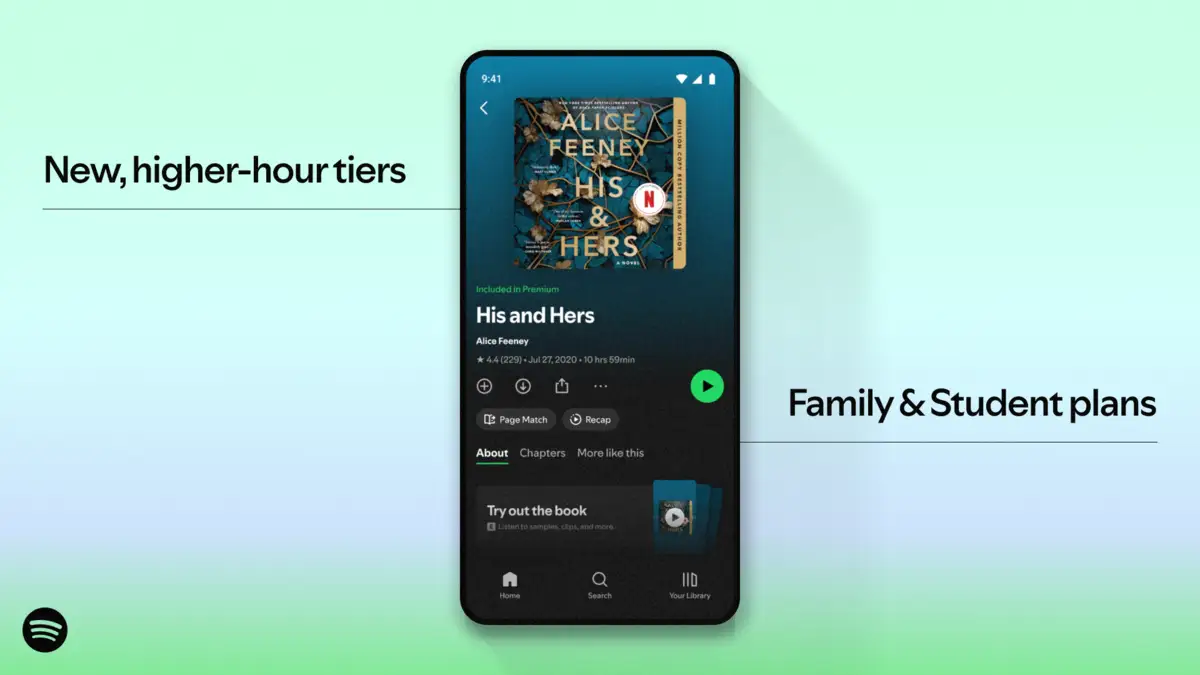
NotebookLM has since become part of Google's broader attempt to bind chat, files and research into one knowledge layer. Spotify's answer is distribution. The company has 761 million monthly active users and 293 million Premium subscribers, plus a library that its public boilerplate describes as more than 100 million tracks, 7 million podcast titles and 700,000 audiobooks.
PCMag's Lance Whitney tested NotebookLM, Gemini, Alexa Plus and ElevenLabs Reader. He picked NotebookLM because it offered "the most natural voices, ones that sound like actual people." Spotify can lose the first voice comparison and still win the placement test if the generated file lands where the listener already presses play.
Trust gets a badge
Spotify said on Tuesday that Verified by Spotify badges for podcasts will appear with a light green checkmark icon on show pages and in search. The company said eligibility will depend on sustained listener activity, policy standing and audience-authenticity checks against fraudulent or bot-driven listening.
Get Implicator.ai in your inbox
Strategic AI news from San Francisco. No hype, no "AI will change everything" throat clearing. Just what moved, who won, and why it matters. Daily at 6am PST.
No spam. Unsubscribe anytime.
Two days later, Spotify put private AI podcasts in the investor-day plan. TechCrunch reported that the company warns Studio is an early preview and that AI can make mistakes and output unreliable content.
The distinction is operational. Spotify says impersonating a real creator can lead to removal. A synthetic host reading a user's calendar becomes a private item in that user's library.
The business case is usage
Spotify expects revenue to grow at a mid-teens compound annual rate through 2030 and gross margins to reach 35% to 40%, up from 33% in the first quarter. CNBC also described 1 billion subscribers and $100 billion in annual revenue as Spotify's north-star goals, against 293 million Premium subscribers and €4.5 billion in Q1 revenue.
Audiobooks show the account-level version of the strategy. Spotify said it has more than 1 million Audiobook+ subscriptions and is on track for $100 million in annual recurring revenue, while audiobook listening hours rose 60% year over year. Mehta reported that an ElevenLabs-powered author tool will enter invite-only English-language beta in June without requiring exclusivity.
Alex Norström gave investors the softer version. "We are not trying to spark a binge. We are trying to become a trusted companion across more moments in people's lives," he said, according to TheWrap. Söderström gave the product version in the same presentation: public content, private content, one media player.
Personal Podcasts rolls out next month in the U.S. to eligible Premium users, with monthly credits and paid top-ups. Spotify has not said how many credits those users will get.
Frequently Asked Questions
What is Studio by Spotify Labs?
Studio is a standalone desktop app in research preview. Spotify says it can use connected information such as email, calendar, notes and listening history to create private podcasts, daily briefings and playlists.
How is this different from Google NotebookLM?
NotebookLM turns source material into generated audio. Spotify is applying a similar format inside an audio service where generated episodes can be saved to a listener library and tied to an existing Premium account.
Who gets Personal Podcasts first?
Spotify said Personal Podcasts will start next month for eligible Premium users in the United States, with monthly credits included and paid top-ups available.
Why did Spotify announce podcast verification at the same time?
Generated audio creates trust problems around impersonation and synthetic voices. Spotify said Verified badges will identify authenticated shows, while unauthorized voice or likeness impersonation can be removed.
What is the business goal?
Spotify wants more paid usage inside one account relationship. AI briefings, audiobook discovery, generated covers and private podcasts all give the company more surfaces beyond traditional catalog listening.
AI-generated summary, reviewed by an editor. More on our AI guidelines.

Free AI briefing · Weekdays
The AI stories that matter, sourced and explained.
Join the Morning Briefing. It goes out every weekday at 4:45 a.m. Pacific, with later sends for the East Coast, Berlin and Tokyo.
Free when you sign up: The Paperclip Compendium, our tested guide to running AI agents.
Free. Unsubscribe in one click.

Marcus Schuler
Editor-in-Chief and founder of Implicator.ai. Former ARD correspondent and senior broadcast journalist with 10+ years covering tech. Writes daily briefings on policy and market developments. Based in San Francisco. E-mail: editor@implicator.ai