IMPLICATOR
Daisy Maldonado’s neighbors in Doña Ana County, New Mexico, received mailers hailing “A NEW DAY FOR NEW MEXICO.” Oracle and its partners donated to a food pantry and the Boys & Girls Club. Even a local park where children dig for replica dinosaur fossils was due to carry a benefactor’s name. Maldonado, a longtime resident of the rural county of 230,000 people, said of Oracle and its partners, “It feels like they’re doing their best to penetrate the community’s psyche.”
Now she is running for county commissioner partly to stop it.
Senate Republicans want these projects built, and their campaign committee is telling AI companies that repairing public opinion is the companies’ job rather than the party’s.
What Changed
- The National Republican Senatorial Committee sent AI companies a private August 18 memo titled "Ohio Data Center Risk," saying former Sen. Sherrod Brown has made data centers his "de facto opponent" in his race against Republican Sen. Jon Husted.
- The memo puts the fix on the industry rather than the party: "Campaigns or party committees can not fix the toxic brand of an entire segment of the economy." It warns that if Husted loses and data centers take the blame, politicians elsewhere "will not go near the next one."
- The public polling does not confirm that explanation. A survey of 1,008 Ohio registered voters taken August 6 through August 10 put Brown ahead 53 percent to 45 percent, named inflation as the top issue at 40 percent, and reported no figure on data centers.
- Two days before the memo surfaced, OpenAI announced a 20-year lease for a central Ohio campus with Nvidia guaranteeing as much as $105 billion in conditional lease and power obligations to SB Energy. The developers promised 35,000 construction jobs and 2,500 permanent operating positions.
AI-generated summary, reviewed by an editor. More on our AI guidelines.
The Ohio race
The National Republican Senatorial Committee put that warning in a private August 18 memo titled “Ohio Data Center Risk,” first obtained by Axios. Former Sen. Sherrod Brown has made the facilities his “de facto opponent” in his race against Republican Sen. Jon Husted, the document says. Brown has put three unique television ads on the air and spent millions on more than a month of messaging. In the committee’s private polling, the attacks work better than conventional campaign themes.
“Campaigns or party committees can not fix the toxic brand of an entire segment of the economy,” the memo says. The companies need to explain who benefits and who pays, the committee wrote. If Husted loses and data centers take the blame, it warned, politicians elsewhere “will not go near the next one.”
Two days before the memo surfaced on August 19, OpenAI announced a 20-year lease for a central Ohio campus on private land and federal property formerly used for uranium enrichment. Nvidia guaranteed as much as $105 billion in conditional lease and power obligations to SB Energy. The developers promised 35,000 construction jobs. Once built, the site would have 2,500 permanent operating positions, with initial capacity available in 2028.
What the public polling shows
Public polling shows Husted behind, but it does not establish the memo’s explanation. A statewide survey of 1,008 registered voters, conducted August 6 through August 10 and released August 13, put Brown ahead 53 percent to 45 percent. The eight-point margin was unchanged from June.
The survey put inflation first, named by 40 percent of respondents as their top concern. It found 38 percent saying their family was falling behind financially, up from 28 percent in 2020. It also found 51 percent worried that Husted was too close to President Donald Trump, compared with 46 percent in June. The published results reported no figure on data centers. The committee’s claim that its message is working rests on private polling it describes but does not publish.
Get Implicator.ai in your inbox
Strategic AI news from San Francisco. No hype, no "AI will change everything" throat clearing. Just what moved, who won, and why it matters. Daily at 6am PST.
No spam. Unsubscribe anytime.
Ohio is not the only test of whether the issue moves votes. A moratorium also failed as a campaign centerpiece in Wisconsin. Democratic gubernatorial nominee David Crowley narrowly defeated a primary challenger who called for a one-year pause on construction. Crowley supports giving local communities veto power while arguing that the facilities can bring economic benefits.
Why communities resist
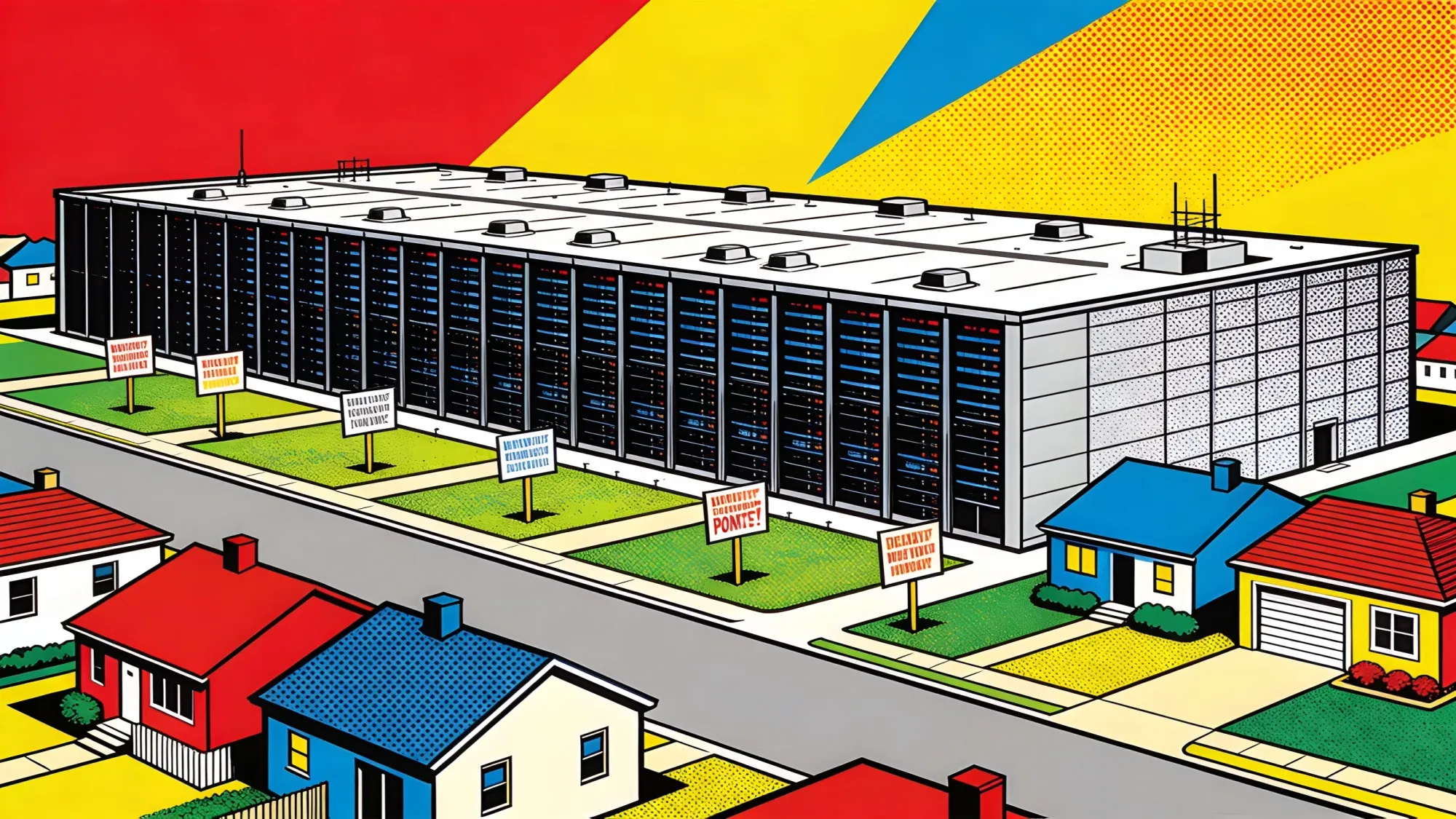
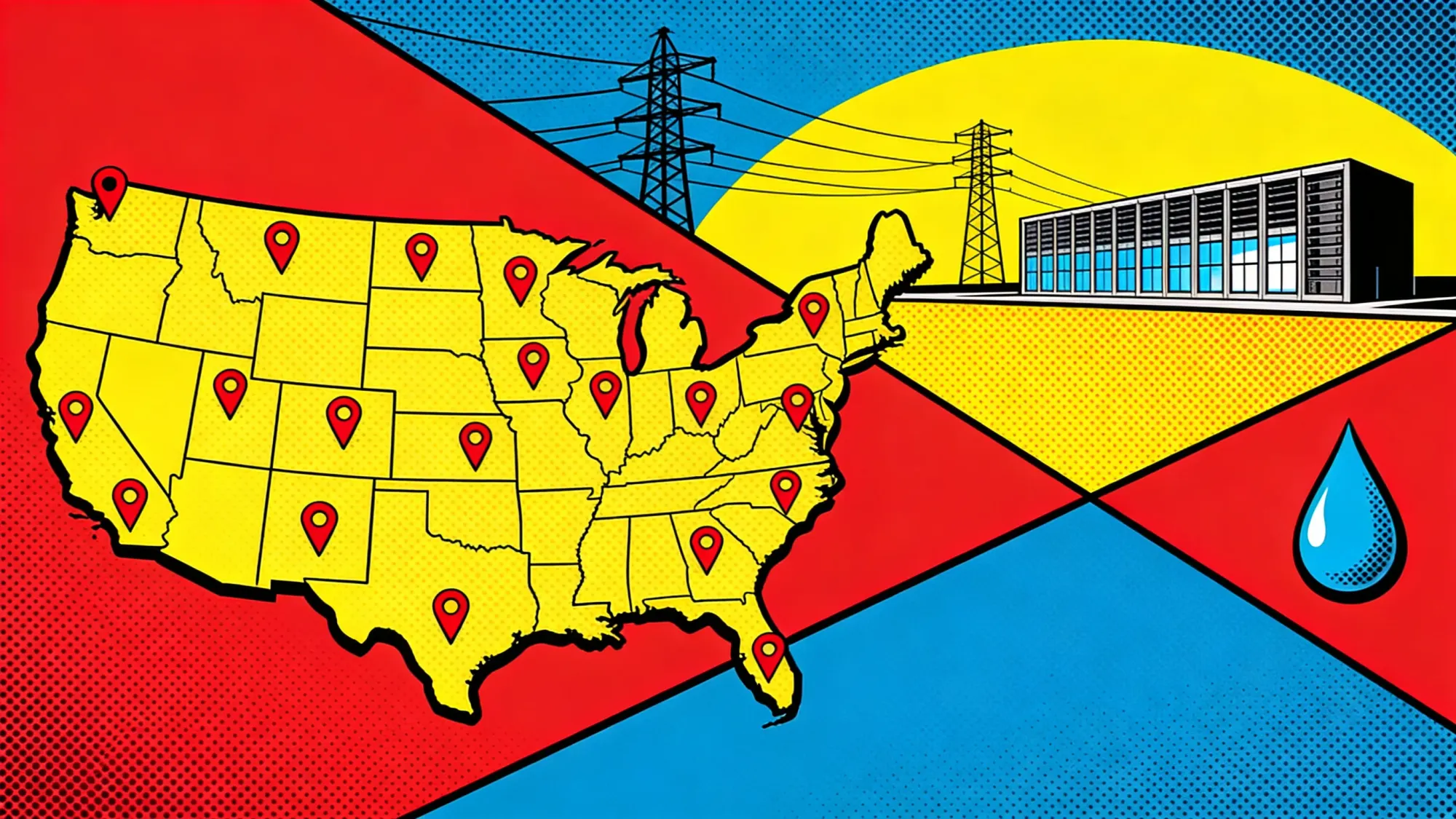
The facilities require large amounts of electricity, can drive up utility bills, use large amounts of water and occupy enormous warehouse-like structures while providing few jobs. Some use more energy than small cities and dwarf football stadiums and factories. Residents have objected to lost farmland, on-site diesel generators, risks to wells and aquifers, and effects on property values. An initial power plan for Project Jupiter would have produced more emissions than New Mexico’s two largest cities combined.
Know someone who'd find this useful? ✉️ Email it to a friend in one click, or they can subscribe free here.
Jerry Hale, the 82-year-old supervisor of Lowell Township, Michigan, expected a smooth rollout when local officials began talks about a large campus late last year. Residents met at a library, formed a Facebook group and placed signs in snowy front yards. So many people attended a December hearing that the fire chief shut it down. Officials suspended the effort until the unnamed developer identified itself.
Microsoft came forward in January, held town halls and dropped requests for nondisclosure agreements and property tax breaks. Betsy López-Wagner, an organizer with Residents United for a Healthy Lowell, said the issue extended beyond the proposed facility. “We don’t want this in our backyard. We don’t want it in anybody’s backyard.” Hale described the impasse plainly: “They want to stop a data center, period. That’s their goal.”
The industry’s answer
Companies have responded with open houses, grants and promises to cover their power costs. At an event near Savannah, Georgia, OpenAI employees staffed booths beside a taco bar. The company pledged $80 million for the surrounding community and up to $71 million in coding credits. Chris Lehane, OpenAI’s chief global affairs officer, said residents wanted specific answers about electricity bills and water supplies.
The campaign around the proposed 2.45-gigawatt facility in Doña Ana County included an informational open house and job fair, as well as paid canvassers at gas stations and grocery stores. Maldonado said some residents distrusted the project and still accepted the offerings. “We don’t trust them and know they’re trying to buy us off, but I’ll take a party or free food.”
Microsoft President Brad Smith, whose company abandoned secrecy agreements in Lowell, said messaging had a limit. “People are smart. Even if you don’t inform them, they find ways to inform themselves.”
Frequently Asked Questions
What does the NRSC memo actually ask AI companies to do?
It tells them to explain who benefits and who pays, and why a community should want a data center. The committee's position is that a party committee cannot repair the reputation of an entire segment of the economy, so the companies have to do it themselves.
Is there published evidence that data centers are costing Husted the race?
Not outside the campaigns. The statewide survey of 1,008 Ohio registered voters taken August 6 through August 10 put Brown ahead 53 to 45, named inflation as the top issue at 40 percent and Husted's ties to President Trump as a concern for 51 percent, and reported no figure on data centers. The committee's claim rests on private polling it describes but does not publish.
What is the Ohio data center project at the center of the race?
OpenAI announced a 20-year lease for a campus in central Ohio, sited on private land and federal property formerly used for uranium enrichment. Nvidia guaranteed as much as $105 billion in conditional lease and power obligations to SB Energy. The developers promised 35,000 construction jobs and 2,500 permanent operating positions, with initial capacity in 2028.
How are AI companies responding to local opposition?
With open houses, community grants and promises to cover their own power costs. OpenAI pledged $80 million to the community near Savannah, Georgia, plus up to $71 million in coding credits. Microsoft dropped nondisclosure agreements and property tax break requests in Lowell Township, Michigan.
Has opposing data centers worked as a campaign strategy elsewhere?
Not reliably. In Wisconsin, Democratic gubernatorial nominee David Crowley narrowly defeated a primary challenger who made a one-year construction moratorium her centerpiece. Crowley backs local veto power while arguing the facilities can bring economic benefits.
AI-generated summary, reviewed by an editor. More on our AI guidelines.

Free AI briefing · Weekdays
The AI stories that matter, sourced and explained.
Join the Morning Briefing. It goes out every weekday at 4:45 a.m. Pacific, with later sends for the East Coast, Berlin and Tokyo.
Free when you sign up: The Paperclip Compendium, our tested guide to running AI agents.
Free. Unsubscribe in one click.

Marcus Schuler
Editor-in-Chief and founder of Implicator.ai. Former ARD correspondent and senior broadcast journalist with 10+ years covering tech. Writes daily briefings on policy and market developments. Based in San Francisco. E-mail: editor@implicator.ai