IMPLICATOR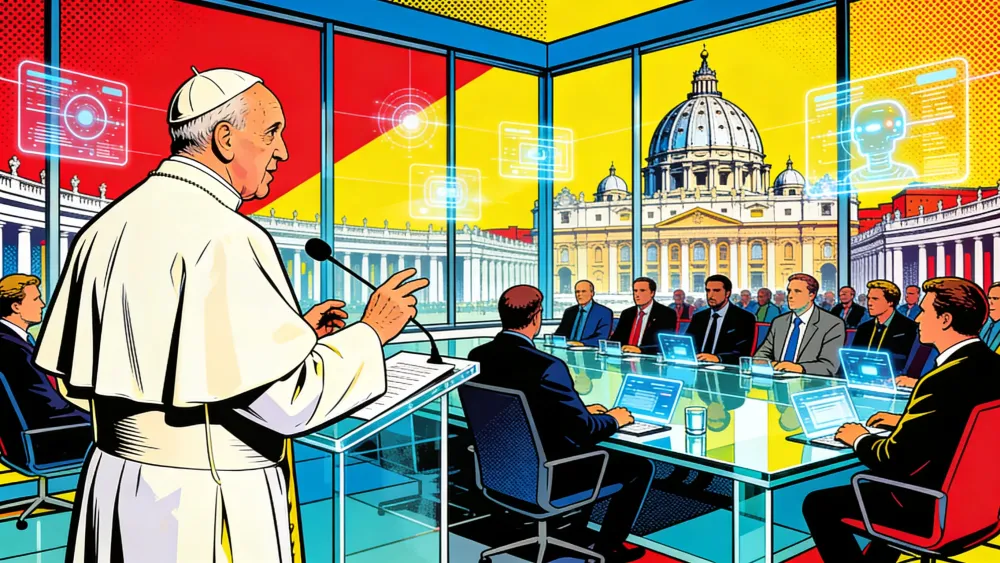
San Francisco | Tuesday, May 26, 2026
Pope Leo XIV presented his first encyclical Monday with Christopher Olah, the atheist Anthropic co-founder, seated beside the cardinals. A Vatican official called the invitation not an endorsement. The message was that the Church intends to write AI rules with the industry in the room.
Olah made the hardest admission before Leo spoke. Frontier AI labs operate inside incentives that conflict with doing the right thing, he said. The people building the technology cannot govern it alone. A co-founder of a company valued near $900 billion asked for outside oversight.
DeepSeek made a 75 percent price cut permanent, locking output tokens 34 times below GPT-5.5. Gemini extended its lead in the Implicator LLM Meter. The model race runs on price, compliance, and a Vatican bench now.
Stay curious,
Marcus Schuler
Know someone drowning in AI noise? Forward this briefing. They can subscribe free here.
Pope Leo Seats Anthropic Co-Founder Beside Him at AI Encyclical Launch

Pope Leo XIV presented his first encyclical Monday with Christopher Olah, the atheist Anthropic co-founder, seated among the cardinals. The 42,300-word text attacks AI power concentrated in fewer hands — companies like his.
Olah made the hardest concession before Leo rose to speak. Frontier AI labs operate inside incentives that can conflict with doing the right thing, he told the Synod Hall. A Vatican official called the invitation not an endorsement, prize, reward or canonization. Leo's text calls for independent oversight, demands AI be disarmed and declares the Church's just war doctrine outdated. It dismisses company-set ethics: a more moral AI is not enough if that morality is determined by a few, a direct challenge to Anthropic's constitution-based approach.
Why This Matters:
- Enterprise compliance teams now have a 42,300-word policy document from a 1.4-billion-member institution to cite in AI procurement, not only a tech industry white paper
- Anthropic faces litigation risk as it sues the Trump administration over federal use of its technology, with an IPO approaching near $900 billion
Reality Check
What's confirmed: Pope Leo XIV presented his first encyclical, roughly 42,300 words, with Anthropic's Olah seated beside cardinals. Olah said frontier labs' incentives can conflict with doing the right thing.
What's implied (not proven): That the Vatican endorses Anthropic over competitors. Vatican officials explicitly denied this, calling the invitation not an endorsement.
What could go wrong: The encyclical could be cited by global regulators as a policy benchmark, raising compliance costs for AI companies beyond what current frameworks demand.
What to watch next: Whether the Trump administration responds to the encyclical, and whether other AI labs seek similar Vatican engagements.

The One Number
42,300 — The approximate English word count of Pope Leo XIV's first encyclical, Magnifica Humanitas, according to The New York Times. The document applies Catholic social teaching to AI labor displacement, autonomous weapons and concentrated digital power. Silicon Valley now has the Church writing policy-grade objections.
Source: The New York Times, May 25, 2026
DeepSeek Makes 75% V4 Pro Price Cut Permanent

DeepSeek removed the strikethroughs from its API pricing page Saturday, making its 75 percent V4 Pro discount permanent. Output tokens now cost $0.87 per million, 34.5 times less than GPT-5.5 at $30.
The math is sustainable because V4 runs on Huawei Ascend 950 chips, not Nvidia hardware, and DeepSeek carries no IPO clock. Western labs cannot match $0.87 per million output tokens without rewriting the revenue models their valuations rest on. Running the full Artificial Analysis benchmark costs $268 on V4 Pro, about 12 times less than GPT-5.5.
Why This Matters:
- Enterprise buyers now have a published benchmark for AI procurement negotiations, even if regulated industries cannot route production traffic through a Chinese provider
- Anthropic has accused DeepSeek of distillation attacks on Claude; if substantiated, the price gap reflects IP arbitrage rather than engineering efficiency
AI Image of the Day

Prompt: A girl with exaggeratedly colored hair, full-body frontal portrait, several facial piercings and studs, Yawen makeup, creative makeup, white background, model photo --chaos 30 --ar 3:4 --profile v25o2u4 8yjppi1 --v 8.1
Gemini Reaches 90 in Implicator LLM Meter After Google I/O
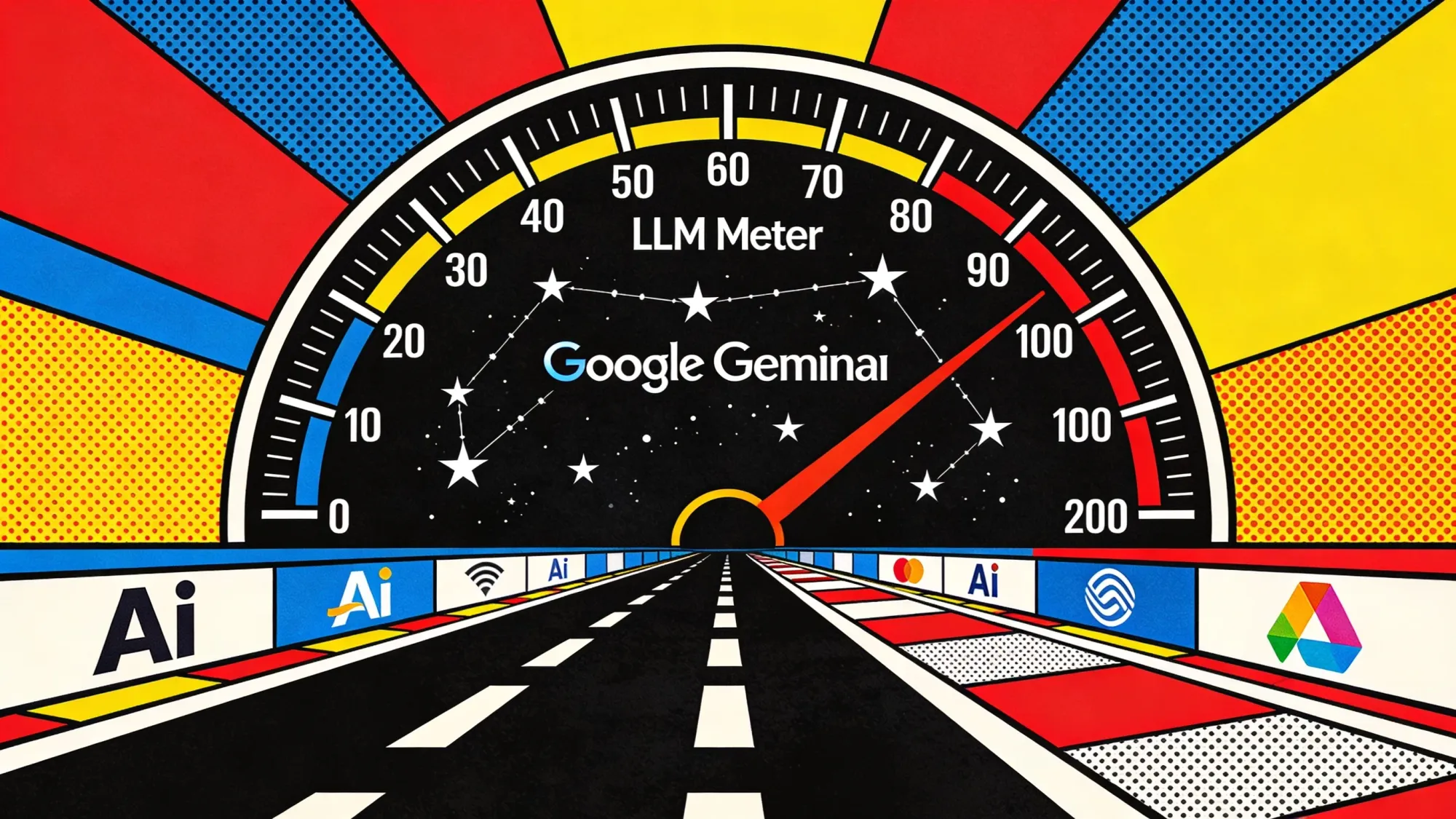
Google's Gemini rose two points to 90 in Implicator's weekly LLM Meter, extending its lead after Gemini 3.5 Flash launched at Google I/O on May 19. The new model scored within two points of Claude Opus 4.7 at roughly a third of the per-token cost.
Claude slipped to 86 on price pressure from Flash and a June 15 billing change. ChatGPT rose to 85 after Dell agreed to bring Codex on-premises and OpenAI committed $234 million to a Singapore lab. DeepSeek rose to 16 after the V4 Pro price cut, with U.S. government-device bans still in force. Gemini 3.5 Pro ships before the next meter on May 31.
Why This Matters:
- The LLM Meter now reflects a three-tier market: Gemini leads on breadth and price, Claude holds the quality crown, and the bottom three diverge on very different strategies
- Gemini 3.5 Pro could widen the gap further before the next meter publishes
 Marcus Schuler
🧰 AI Toolbox
How to Get AI Code Reviews That Actually Understand Your Codebase with Cubic
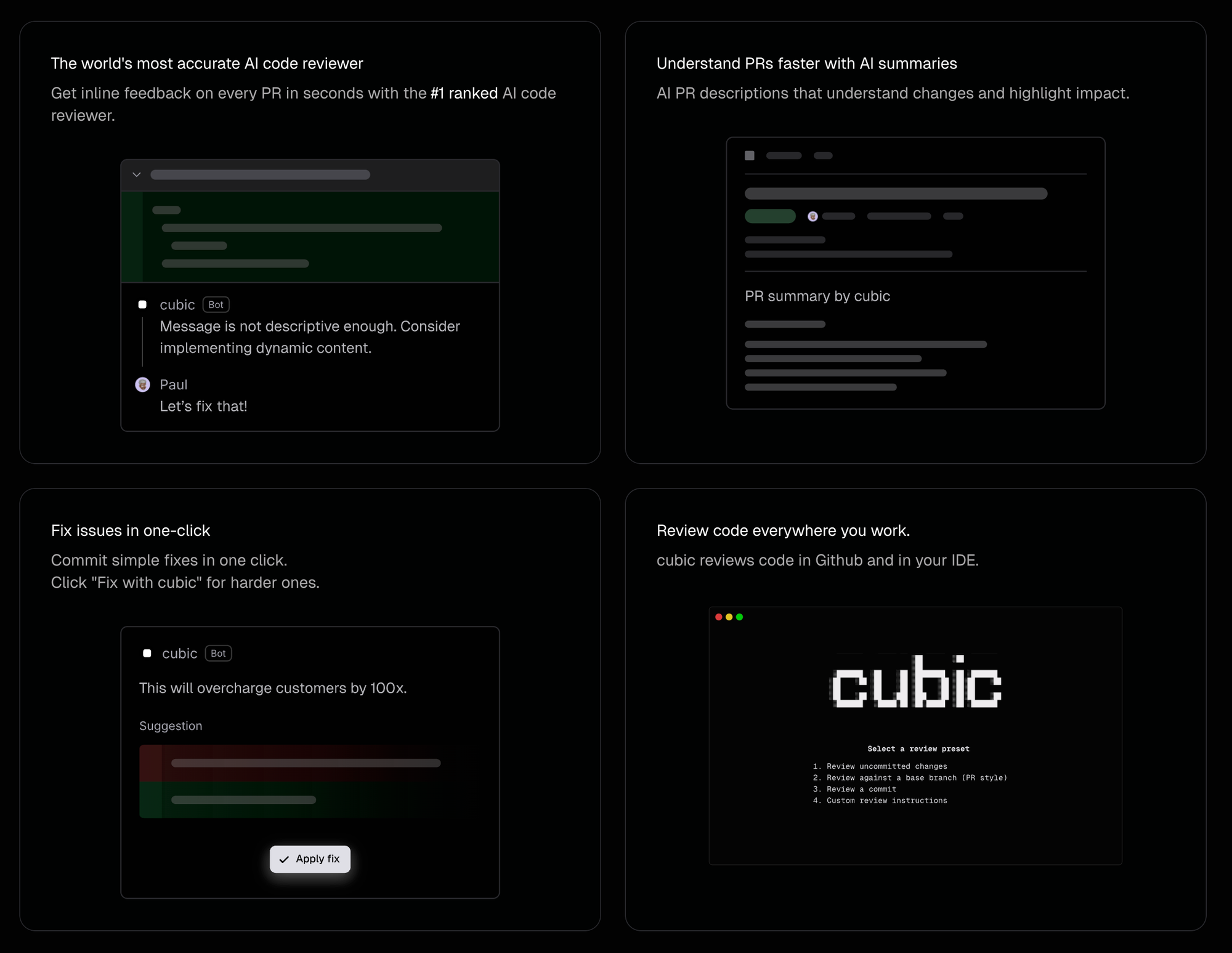
Cubic is an AI code review platform built for codebases too large for an LLM to load in one shot. It indexes your repo, learns your conventions, and reviews every pull request against the rest of the code, catching bugs, security issues, and consistency problems that linters miss. Comments arrive inside GitHub or GitLab in seconds, with suggested fixes you can apply with one click. Free for open source and small teams.
Tutorial:
- Sign up at cubic.dev and install the GitHub or GitLab app on your repo
- Let Cubic index your codebase once — the indexing job runs in the background and finishes in minutes
- Open a pull request as you normally would; Cubic posts a structured review with categorized comments
- Click "Apply suggestion" on any comment to commit the fix directly from the PR
- Configure project-specific rules in
.cubic.ymlto enforce conventions, security policies, or framework patterns - Use Cubic's chat to ask questions about your repo: "Where do we validate auth tokens?" or "Show me every place we call the Stripe API"
- Connect Cubic to Slack so reviewers get a digest of new PRs with severity scores and recommended approvers
What To Watch Next
|
||
|
||
|
💡 5-Minute Skill
Turn a 42,000-Word AI Policy Text Into Five Board Questions
Tuesday, 3:18 p.m. Someone sent the board a 42,000-word AI policy text and asked for "implications." Do not let the model summarize it into fog. Make it turn the document into questions management has to answer.
Your raw input:
Document: 42,300-word AI policy statement. Themes: labor displacement, autonomous weapons, child safety, concentrated data power, outside oversight. Audience: board risk committee. Need: five questions for management, no theology, no summary.
The prompt:
Act like a board risk adviser. Turn this long AI policy text into five questions management must answer. For each, give the risk, owner, evidence to request, and next decision. Separate moral claims from operational controls. Do not summarize the document. Do not use slogans.
The output:
Question: Which AI use cases affect jobs, safety or customer data? Owner: COO and CISO. Evidence: deployment list, vendor approvals, incident logs. Decision: which uses need human review, outside audit or a pause.
Why this works:
Long policy documents usually turn into quotable mush. This prompt forces the model to convert values into controls, owners and evidence requests, which is what a board can actually act on.
What to use:
Claude is best when you paste the full document or long excerpts. ChatGPT is faster for turning the output into a one-page board memo. Gemini helps if the policy text is live on the web, but verify every quote before it reaches directors.
📖 AI Alphabet
|
N
|
📖 AI Alphabet Natural Language Processing Natural language processing, or NLP, is the field focused on getting computers to understand and generate human language. Modern chatbots, translation tools, and summarizers all sit inside NLP. |
AI & Tech News
IRGC-Linked Hackers Deployed AI-Assisted Malware During US-Iran Conflict
Check Point Research documented Nimbus Manticore reactivating during Operation Epic Fury, using AI to accelerate malware development and SEO poisoning campaigns against corporate networks. The IRGC-linked group deployed backdoors and credential harvesters across compromised websites as geopolitical tensions escalated.
Iran Reopens International Internet After Near-90-Day Nationwide Blackout
President Masoud Pezeshkian ordered the restoration of international connectivity on May 25, ending an unprecedented digital isolation that had severed the country from the global internet since early 2026. State media confirmed full service resumption is expected shortly.
EU Prepares Triple-Digit-Million-Euro Fine Against Google for Search Self-Preferencing
The European Commission is finalizing a massive antitrust penalty after a 2025 investigation found Alphabet systematically favored its own services in search results. The fine, reported by Handelsblatt, marks continued aggressive enforcement under the Digital Markets Act.
UK AI Safety Institute Gains Traction as Global Regulatory Template
Governments worldwide are adopting the methodology developed by the UK's AISI, a body staffed by former OpenAI and Google researchers that runs red-teaming exercises and vulnerability assessments on frontier models. The institute launched in 2023 and has become the de facto blueprint for AI risk evaluation.
SoftBank Shares Hit Record High on OpenAI and SB Energy IPO Expectations
SoftBank Group surged 4.6% to an all-time high as investors bet on substantial returns from upcoming public listings of its two most valuable stakes. OpenAI's march toward an IPO and SB Energy's growth trajectory are driving the rally.
FTC Fines Cox Media and Partners $930K for Fabricated AI Phone Surveillance Claims
The agency penalized three media companies for marketing advertising technology they falsely claimed could access smartphone microphones to eavesdrop on users. The FTC found the companies lacked both the technical means and legal authorization for any such capability.
Fabricated Citations in Biomedical Papers Surge 12-Fold, Driven by AI Hallucinations
A Columbia University study found one in 277 biomedical papers now contains at least one nonexistent reference, a rate that has exploded since 2023. Lead researcher Maxim Topaz nearly published a paper with a hallucinated citation himself before catching the error.
Visually Impaired Californians Call Waymo Robotaxis a Transformative Mobility Option
Riders like Ruben Brunt describe Waymo's self-driving taxis as offering independence and dignity free from the discrimination they routinely face from human drivers. Users cite the predictable behavior and lack of human bias as decisive advantages over traditional ride-hailing.
Self-Represented Litigants Flood US Courts With AI-Drafted Lawsuits
A growing wave of pro se filers is using generative AI to draft and submit legal complaints, increasing access to the judicial system but also burdening courts with procedurally flawed and frivolous cases. Advocates call it a democratizing force while clerks report rising demands on staff time.
Wix Cuts 1,000 Jobs — 20% of Workforce — in Largest Layoff Round in Company History
The website-building platform is eliminating roughly one-fifth of its employees after its stock dropped ~50% in 2026 and Q1 earnings disappointed. Wix attributed the restructuring to rising AI-related infrastructure costs and broader financial headwinds.
🚀 AI Profiles: The Companies Defining Tomorrow
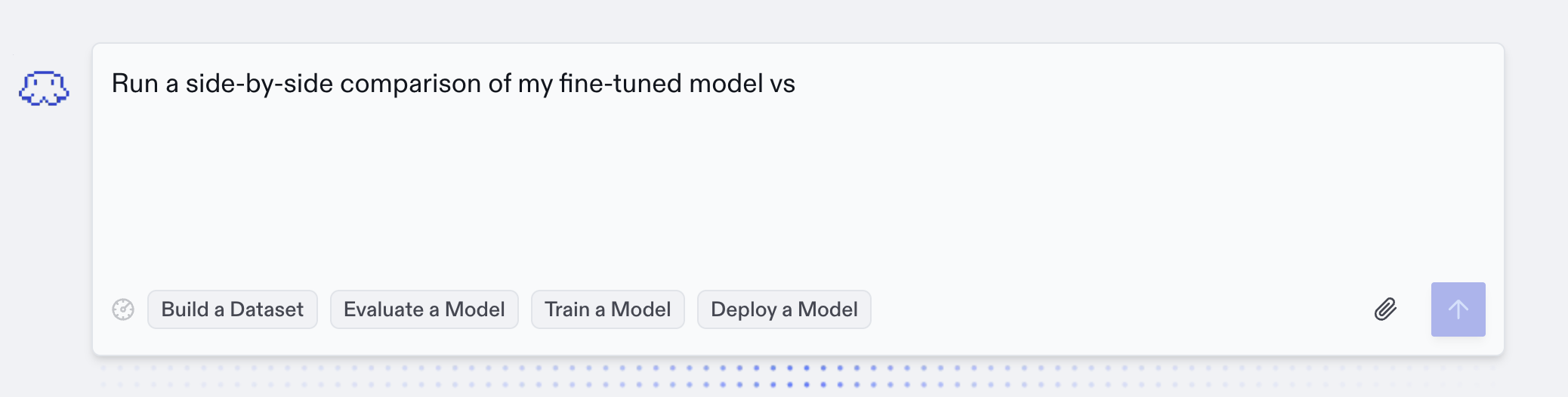
Oumi is the open platform for unconditionally open foundation models, letting any company prototype and train custom models in hours rather than months. The Bay Area startup is positioning itself as the alternative for buyers who want a model their team owns end-to-end without using frontier-lab APIs. 🛠️
Founders
Founded in 2024 by Manos Koukoumidis (CEO) and Oussama Elachqar (CTO), both formerly at Apple. The team built Oumi around a thesis they encountered repeatedly inside large platforms: enterprises that need model ownership are stuck between training from scratch (expensive, slow) and fine-tuning closed APIs (limited, opaque).
Product
Oumi is an open-source platform covering the full LLM lifecycle: data curation, training, evaluation, and deployment. Users describe what they want in plain English and Oumi generates the training pipeline and infrastructure to produce a model on their own data. The platform supports models from 10M to 405B parameters, runs on a single laptop or a thousand-GPU cluster, and works with text and multimodal inputs.
Competition
The competitive set splits between closed-lab fine-tuning (OpenAI, Anthropic, Google), open-weight platforms (Together AI, Fireworks, Mistral's tooling), and developer-first stacks (Hugging Face, Mosaic before Databricks bought it). Oumi's wedge is being unconditionally open — code, model weights, and pipelines — and aimed at companies that treat model ownership as a strategic requirement.
Financing 💰
Oumi raised a $10 million seed round led by Spark Capital in late 2024, with participation from angels and AI researchers. The company also runs an active open-source community on GitHub.
Future ⭐⭐⭐
If the next phase of enterprise AI is buyers who want to own their models, Oumi is well placed because it ships the boring infrastructure those buyers need. The risk is that open-weight platforms commoditize quickly and the wedge collapses into a feature of every cloud. Oumi wins if "unconditionally open" becomes a real procurement requirement. 🧱
🤨 Yeah, But...
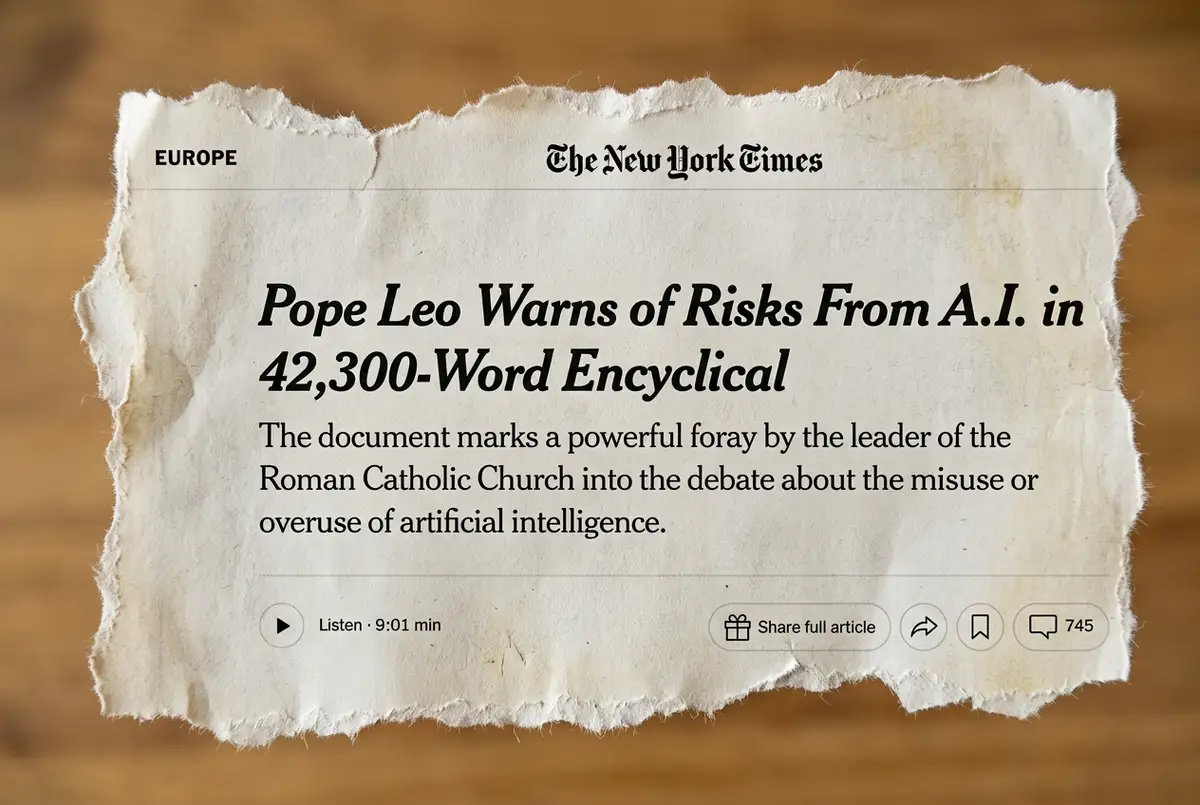
The New York Times reported Monday that Pope Leo XIV presented his roughly 42,300-word AI encyclical beside Christopher Olah, the atheist Anthropic co-founder. The document warns against concentrated AI power and calls for independent oversight, while Olah said frontier labs' incentives can conflict with doing the right thing.
(New York Times, May 25, 2026; Vatican, May 15, 2026)
Our take: Silicon Valley has spent years asking for a seat at every table, and the Vatican finally obliged by seating the industry in the front row of its intervention. That is almost too Catholic: confession with better lighting and more badges. Olah performed the rare tech-executive maneuver of agreeing that the people building the machine may not be ideal supervisors of the machine, which is how self-awareness sounds when it arrives with counsel present. The pope got dialogue. Anthropic got proximity to moral authority. Everyone got to call it a beginning, which is what institutions say when nobody wants the next meeting on the calendar yet.
Free AI briefing · Weekdays
The AI stories that matter, sourced and explained.
Join the Morning Briefing. It goes out every weekday at 4:45 a.m. Pacific, with later sends for the East Coast, Berlin and Tokyo.
Free when you sign up: The Paperclip Compendium, our tested guide to running AI agents.
Free. Unsubscribe in one click.

Marcus Schuler
Editor-in-Chief and founder of Implicator.ai. Former ARD correspondent and senior broadcast journalist with 10+ years covering tech. Writes daily briefings on policy and market developments. Based in San Francisco. E-mail: editor@implicator.ai