IMPLICATOR
San Francisco | Friday, June 19, 2026
Trump is turning Silicon Valley access into content. Haberman and Swan report he showed visitors private outreach from Zuckerberg and Bezos after the election, while FEC records put Amazon's inaugural support in exact dollar lines. The usual proximity play looks weaker when the private channel becomes a prop.
The quieter tool story: Claude Code skills now need their own GitHub map. A folder with SKILL.md is turning into a team distribution problem.
Then GLM-5.2 tops Artificial Analysis' open-weight index. Independent testers put it close to Opus 4.8 on build tasks, with a 43,000-output-token appetite per index task.
Stay curious,
Marcus Schuler
Zuckerberg and Bezos Learn the Cost of Access

Haberman and Swan's reporting flips the access story inside out. Trump did not just take meetings. He showed visitors private outreach from Zuckerberg and Bezos after the election, calling them "kissing my ass" in front of guests.
WIRED reported Thursday that the forthcoming Haberman and Swan book, Regime Change, says Trump showed guests texts and letters from the Meta and Amazon founders weeks after courting them. The New York Times published its own account of the 464-page book. According to the WIRED excerpt, Trump described the post-2024 outreach as material for the room.
The FEC paper trail runs parallel. Amazon appears in the Trump Vance Inaugural Committee CSV with a $1,000,000 contribution and an $888,893.52 in-kind line for digital services. AP confirmed that Meta and Amazon each gave $1 million. A person familiar with Bezos's actions told WIRED that Bezos works with every president and intended to work with the next one too.
The book also places Bezos at a December 2024 dinner where he called The Washington Post his worst investment. Months later, according to Haberman and Swan, Bezos asked Trump to intervene on Blue Origin's behalf, arguing SpaceX's hold on Cape Canaveral created a national-security risk. SpaceX had a $5.9 billion Space Force contract. Blue Origin had $2.4 billion.
Meta's January 2025 decision to end U.S. third-party fact checking lands differently against this backdrop. AP reported at the time that Trump, asked whether Zuckerberg acted because of his threats, answered "Probably." The sequence makes access look less like insurance than like an admission that the other side holds the levers.
Why This Matters:
- The access playbook's downside is no longer theoretical: Haberman and Swan's book documents private overtures becoming political inventory the recipient displayed for entertainment
- A $245 million inaugural fund plus individual CEO donations creates a record of corporate courtship that outlasts any single policy win
Reality Check
What's confirmed: Haberman and Swan report Trump showed private outreach from Zuckerberg and Bezos. FEC records list Amazon's inaugural contributions.
What's implied (not proven): The access strategy gave Trump more power over executives, not less.
What could go wrong: Companies may treat each meeting as insurance while the private record becomes political theater.
What to watch next: Blue Origin's federal asks and Meta's moderation requests under the same White House.

The One Number
1.6 gigawatts - the computing capacity Meta is under contract to buy from Crusoe across sites in Texas and Missouri, Bloomberg reported Thursday. That is power-plant-scale AI infrastructure moving through a specialist provider rather than Meta's own campus. The compute race is turning capacity contracts into strategic supply agreements.
💰 Fresh Funding
💰 Fresh Funding
Raises $100M: Genspark lifts its AI workspace to a $2.6B valuation
Genspark said Wednesday it closed a $100 million Series B extension at a $2.6 billion post-money valuation, up from $1.6 billion in March, with returning investors Sozo Ventures, Korea Mirae Asset and UpHonest Capital. The Palo Alto company builds an all-in-one AI workspace that executes tasks across tools for more than 6,000 business clients, and the extension lifts its total Series B to $485 million.
Visit Genspark →Raises $100M: Twenty scales AI cyber warfare to a $1B valuation
Twenty said Wednesday it raised a $100 million Series B led by Accel at a $1 billion valuation, with Friends & Family Capital, Point72 Ventures and Caffeinated Capital joining, in what it calls America's first venture-backed cyber warfare company. The Arlington, Virginia startup, founded in 2024 by former Palo Alto Networks executive Joe Lin, builds AI-enabled systems that let U.S. military and intelligence operators run offensive and defensive cyber operations at machine speed, a rare case of venture-backed AI reaching classified mission work.
Visit Twenty →Raises $60M: Conduct turns legacy enterprise code into AI-ready systems
Conduct said Wednesday it raised a $60 million Series A co-led by Index Ventures and ICONIQ, with SAP investing strategically and existing backers Creandum, Lucid Capital and Booom joining, bringing total funding to about $72 million. The London startup, founded by three former Palantir engineers, runs AI agents that read the custom code buried inside core systems like SAP and map it to business logic, a wedge into the thousands of customers who must migrate before SAP ends mainstream ECC support at the end of 2027.
Visit Conduct →Claude Code Skills Now Need Their Own GitHub Map
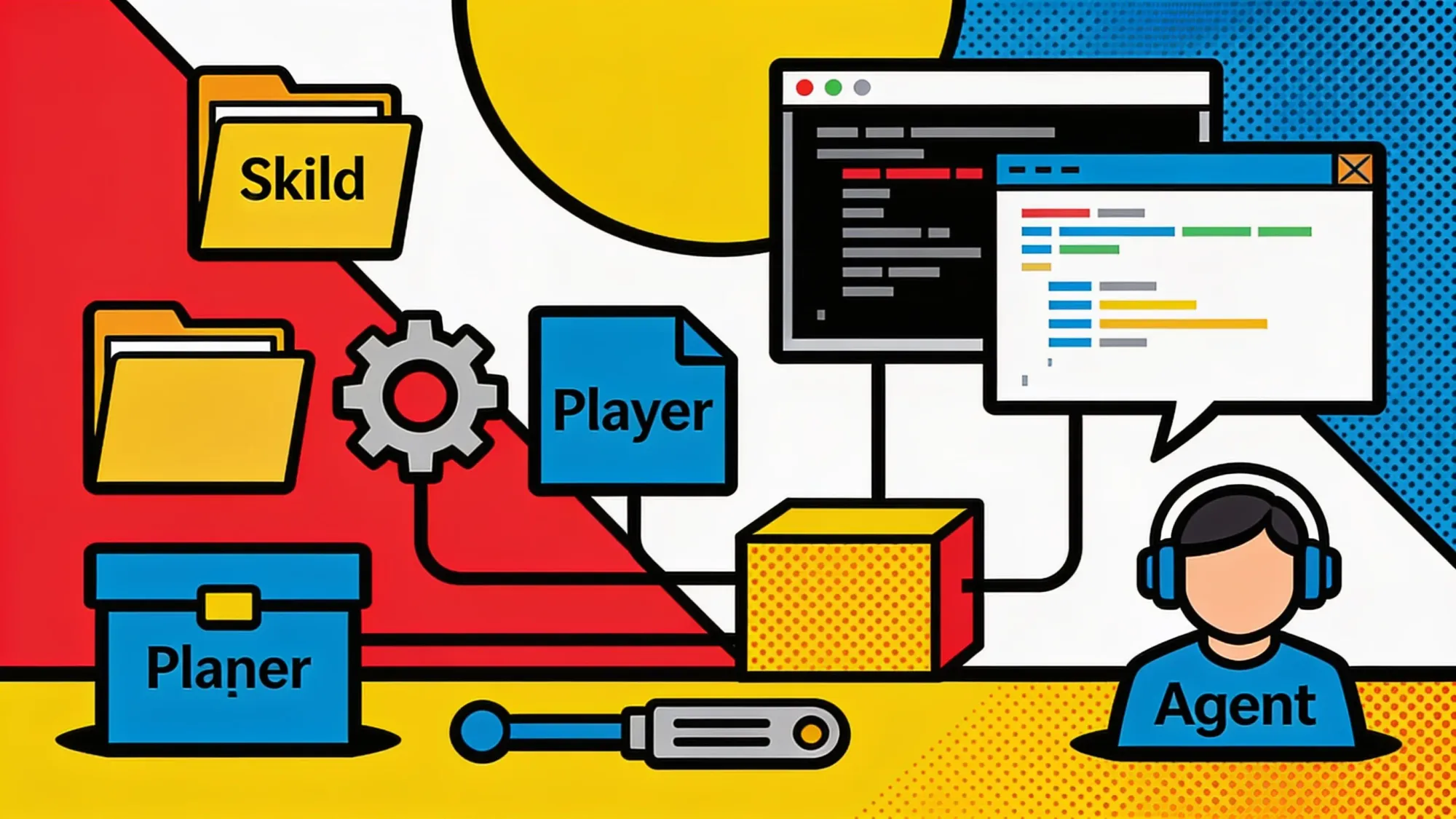
The SKILL.md format is minimal: a YAML frontmatter description that tells Claude when to fire, then Markdown instructions. The harder question is everything after the first skill, where the GitHub tooling has split across distinct jobs.
The canonical start is anthropics/skills, which ships the skill-creator authoring workflow. It interviews you about what the skill should do, when it should trigger, and what edge cases matter, then pushes toward testing instead of a one-shot draft. Philipp Schmid's guide recommends a starter set of 10 to 20 prompts with scenario-specific success criteria, including prompts that must not fire the skill.
The distinction between a local skill and a plugin matters for teams. A personal .claude/skills folder works until other people need the workflow. Anthropic's plugin documentation draws the line at namespacing, versioning and distribution. anthropics/claude-plugins-official is the reference, and ivan-magda/claude-code-plugin-template ships scaffolding if you want a packaging head start.
runkids/skillshare solves a different problem: syncing one library across Claude Code, Codex, OpenCode and OpenClaw. mattpocock/skills offers process patterns (plan grilling, TDD, diagnosis) worth studying for skills that add friction at the right moment. For discovery, travisvn/awesome-claude-skills works as a catalog, but the security caveat is the same as any dependency: read the SKILL.md, scan the scripts, and check for network or credential access before installing.
Why This Matters:
- Skills are becoming an operating layer for how teams teach AI agents to behave; the repositories worth knowing each answer a different question: authoring, distribution, cross-CLI sync, or process patterns
- Anthropic formalized the architecture on June 18 with guidance that reserves skills for procedures, hooks for guardrails, and subagents for isolated side tasks

AI Image of the Day

Prompt: semi realistic scene of a stunning toddler with blonde hair in a messy updo, wearing an oversized shirt with paint splatter on it, shorts and bare feet. She is painting big sunflowers on the side of a blue turquoise barn
GLM-5.2 Is the New Open-Weight Benchmark Leader. The Token Bill Is the Catch.

Artificial Analysis named GLM-5.2 the top open-weight model on its Intelligence Index at 51. Independent testers ran it against Opus 4.8 and found it close on build tasks at roughly five times lower cost. The asterisk is a 43,000-output-token appetite per index task.
Nate Herk, who runs AI Automation on YouTube, switched Claude Code to GLM-5.2 and clocked a one-shot website build at 3 minutes 59 seconds against 14:59 for Opus 4.8. He ran it on a $60-a-month Z.ai plan. On a coding challenge, Herk had Codex grade both outputs and Opus won on precision, catching an edge case the GLM run missed. Herk told viewers the model handles maybe 80 to 90 percent of his work.
Julian Goldie tested GLM-5.2 against Kimi K2.7 and Opus 4.8 on June 14 and gave GLM the win on four of five build tests: a voxel runner, a metaball simulation, an Apple-style landing page, and a neon arcade game. Kimi took the fifth, an inner solar system orbit map. A third reviewer, Zero to MVP, ran the model through an easy-to-hard coding gauntlet on June 17 and it passed "all my tests with excellent results."
The token cost is the part YouTube reviewers skip. Artificial Analysis recorded 43,000 output tokens per Intelligence Index task, 37,000 of them reasoning. That puts per-task cost at about 46 cents against roughly 5 cents for DeepSeek V4 Pro at its maximum setting. The model still lands on the intelligence-versus-cost Pareto frontier, and per-token prices run about five times cheaper than Opus 4.8. For sustained marathon tasks, Opus still leads at 26.0 to 13.0 on SWE-Marathon. The open-weight model has not closed every gap, but it has closed the ones most work runs through.
Why This Matters:
- An open-weight model under an MIT license is now competitive with the best paid model on common build work, which resets the ceiling on what enterprise buyers need to pay for coding AI
- The 43,000-token spend per task means buyers who compare only per-token prices will underestimate their bill; reasoning models shift cost from unit price to usage volume

🧰 AI Toolbox

How to Blend Subject, Scene, and Style Images Into New 4K Artwork With Google Whisk
Whisk is Google Labs' AI image tool that takes three images (a subject, a scene, and a style reference) and blends them into a new image you can refine with text prompts. It's faster than writing a long prompt because you show the model what you mean instead of describing it. Built on Imagen 4 with 4K output, animation export, and the ability to remix any result endlessly. Free to use through Google Labs.
Tutorial:
- Go to labs.google/whisk and sign in with a Google account
- Drop three reference images: one subject (a person, animal, or object), one scene (an environment), and one style (a painting, photo, or design)
- Let Whisk generate the first composite and review the result, which captures the essence rather than exact pixels
- Refine with a short text prompt: "make it golden hour", "add fog", "switch to a cinematic 16:9 frame"
- Use "Remix" to riff on a result you like without losing the original variation
- Switch to Animate to turn the final image into a short looping clip with Veo 3
- Download at up to 4K, or share a link so collaborators can remix your composition
URL: Google Whisk
What To Watch Next (24-72 hours)
|
||
|
||
|
||
|
||
|
5-Minute Skill: Turn an AI Vendor's Pricing Page Into a Cost Estimate for Your Actual Workload
Friday, 8:15 a.m. You are evaluating an AI API or SaaS tool and the pricing page lists tokens, seats, tiers, and compute units. Before you sign up for a trial or forward the vendor to procurement, make the model price your real usage.
Your raw input:
Vendor: AI writing assistant for a 12-person marketing team. Pricing: Pro tier $25/user/month, includes 500,000 tokens/month per user; Overage $0.008/1,000 tokens. Business tier $60/user/month, unlimited tokens, SSO, audit logs. We run roughly 3 long-form pieces per person per week, each requiring 4-5 back-and-forth drafts. We do not need SSO yet. Need: which tier, with the math, and the overage risk.
The prompt:
Act like a procurement analyst, not a sales consultant. Estimate monthly token usage per user from our workflow, then calculate total cost on each tier including likely overage. Show your token assumptions. Name the tier that wins for our current volume and the usage level where the Business tier becomes cheaper. Flag any cost that could surprise us in month two.
The output:
A long-form piece with 4 drafts at 2,000 words each runs about 10,000-12,000 tokens per piece, so 3 pieces per week is roughly 130,000-150,000 tokens per user per month. The Pro 500K allowance covers you with margin; at 12 users, Pro costs $300/month, Business costs $720/month. The break-even is around 500,000 tokens per user; you would need output to roughly triple before Business saves money. Watch for: if drafts grow longer or the team adds image generation, token counts double fast. Set a usage alert at 80% of your monthly allowance before month two.
Why this works:
Most vendor pricing comparisons stop at the per-seat cost. This prompt forces a token estimate from your actual workflow before picking a tier, so the number you send to finance reflects real usage, not the vendor's example scenario.
What to use:
Claude is best when you paste the actual pricing page and your current workflow. ChatGPT works well if you already have your own token estimate. Keep the phrase "the usage level where the higher tier becomes cheaper," or the model gives you the tier that looks good today and skips the break-even math.
📖 AI Alphabet
|
G
|
📖 AI Alphabet Gradient Descent Gradient descent is the method many models use to improve during training. It adjusts internal values step by step to reduce error over time. |
AI & Tech News
Meta Strikes 1.6 GW AI Computing Deal With Crusoe in Texas and Missouri
Meta Platforms has entered contractual agreements with data center developer Crusoe for roughly 1.6 gigawatts of computing capacity across two sites in Texas and Missouri, Bloomberg reported Thursday. The deal supports Meta's growing AI infrastructure needs for training and operating large-scale models.
SpaceX Readies $20 Billion Bond Sale to Repay xAI Merger Debt
SpaceX plans to launch a $20 billion bond sale as early as next week to repay short-term financing from its xAI merger, according to Financial Times sources. The move follows SpaceX's landmark $86 billion valuation in its recent public listing.
Snap Spins Off AI Video Team Into New Company Dotmo
Snap is separating its generative AI video team into a standalone company called Dotmo, focused on AI models for interactive gaming, TechCrunch reported Thursday. Snap cited the high cost of developing and scaling generative AI infrastructure as the primary driver.
Google Lost Secret Warrant Battle in Jan. 6 Pipe Bomb Investigation
A federal court unsealed records showing Google lost a 2023 legal fight against a DOJ warrant seeking identifying information for over 300 individuals who searched for the RNC and DNC headquarters. The case went through the Foreign Intelligence Surveillance Court before Google complied.
U.S. Raises Alarm Over Possible Chinese Acquisition of ASML EUV Machine
Commerce Secretary Howard Lutnick has raised concerns with ASML about a possible unauthorized acquisition of an extreme ultraviolet lithography machine by China, Bloomberg reported Thursday. The Dutch equipment maker faces pressure from the Trump administration to clarify how the restricted tool may have reached China.
Telegram Ban in India Triggers 49% Surge in VPN Downloads
Following India's one-week block of Telegram on June 16 over exam-related fraud concerns, daily downloads of major VPN apps spiked 49% nationwide, according to Appfigures data. Proton and Turbo VPN recorded the sharpest increases.
Early Access to Anthropic Mythos Remains Despite Government Order
About 200 companies in Anthropic's Project Glasswing retained access to the Mythos Preview model after a recent U.S. government shutdown order, Bloomberg reported Thursday. The order targeted certain AI development activities while pre-existing access for approved testers appears unaffected.
Ohio Social Media Law Takes Effect After Court Reversal
A federal appeals court upheld Ohio's law requiring platforms to obtain parental consent before allowing users under 16 to create accounts. The decision clears the way for the Age-Appropriate Design Codes Act to take immediate effect.
Intel Taps Former SK Hynix CEO Lee to Lead Foundry Push
Intel appointed former SK Hynix CEO Seok-Hee Lee as executive vice president of Intel Foundry, Reuters reported Thursday. Naga Chandrasekaran will concurrently oversee front-end technology and manufacturing as Intel bids to scale its contract chipmaking business.
Dina Powell McCormick Leads Meta's $600 Billion AI Infrastructure Drive
Former Goldman Sachs executive Dina Powell McCormick has become one of Silicon Valley's most influential figures as she leads Meta's plan to build AI infrastructure including data centers and chips, the Financial Times reported Thursday. The estimated investment of up to $600 billion involves pioneering non-traditional financing strategies.
Barret Zoph Departs OpenAI Again Five Months After Return
Barret Zoph, OpenAI's head of enterprise AI sales, has left the company for a second time, The Verge reported Thursday. He previously departed in 2024 to co-found Thinking Machines Lab before rejoining OpenAI in January 2026.
🚀 AI Profiles: The Companies Defining Tomorrow
DeepSeek
DeepSeek is the Hangzhou lab that forced every frontier AI company to reprice its hardware assumptions in January 2025, when its open-weight model matched GPT-4-class output on a fraction of the training budget. Seventeen months later, on June 16, 2026, it closed its first external funding round at more than $7.4 billion from Tencent, battery giant CATL, NetEase, JD.com, and China's National Artificial Intelligence Industry Investment Fund, at a valuation above $50 billion. The round's structure is as notable as its size: most capital flows through a limited partnership controlled by CEO Liang Wenfeng, investors hold no voting rights, and a five-year lock-up applies to everyone except the state fund. 🇨🇳
Founders
Founded in 2023 by Liang Wenfeng, who also runs High-Flyer, one of China's largest quantitative hedge funds. DeepSeek grew out of High-Flyer's internal AI research unit, and Liang personally committed 20 billion yuan, roughly $2.8 billion and about 40 percent of the round target, from his own capital in the funding. The company's published research papers, including the technical report for DeepSeek-R1, were written by a team of researchers whose average age, by several accounts, was under 30 at the time of publication.
Product
DeepSeek's open-weight model family covers reasoning, coding, and long-context tasks, with the R1 series designed specifically for multi-step reasoning at inference costs that undercut Western frontier labs. DeepSeek-V3, released in December 2024, trained on roughly 2 million GPU-hours; OpenAI's GPT-4 is estimated to have consumed closer to 100 million. The company publishes model weights publicly and hosts an API, which means its pricing decisions put pressure on every closed-model vendor's gross margin.
Competition
Domestically, DeepSeek competes with Moonshot AI, Zhipu, Baidu, and the model teams at Alibaba, ByteDance, and Tencent. Abroad, the comparison is to Meta's Llama for open weights, and to OpenAI, Anthropic, and Google for paid inference. The practical effect has been a market-wide race to reduce inference costs: all three US frontier labs cut API prices materially in the six months following DeepSeek's January 2025 model release.
Financing 💰
More than 50 billion yuan ($7.4 billion) in its first external funding round, closed June 16, 2026, at a valuation above $50 billion, roughly five times the $10 billion valuation attributed to the company earlier in 2026. Tencent is reported to have committed 10 billion yuan, CATL 5 billion yuan, and Liang Wenfeng 20 billion yuan of his own capital. The National Artificial Intelligence Industry Investment Fund invested directly in DeepSeek and retained voting rights; all other investors received none, per The Information's June 16 report. Source: The Information / Reuters, June 16, 2026.
Future ⭐⭐⭐
The funding closes a year in which DeepSeek moved from research curiosity to geopolitical actor. Its open weights are now deployed inside commercial products in dozens of countries, including ones that have blocked Anthropic access on national-security grounds. If Liang's stated intention, scaling compute infrastructure and moving toward a more commercial AI platform, produces another price-reset model, the $50 billion valuation is its first act. If the structure that gave investors no votes and a five-year lock-up also insulates the company from the commercial pressure that comes with institutional shareholders, the next question is whether a lab with no board oversight and state-fund backing optimizes for market share, state influence, or something else entirely. 🀄
Yeah, But...
Bloomberg reported Thursday that Meta is under contract to buy roughly 1.6 gigawatts of computing capacity from Crusoe across data center sites in Texas and Missouri. Seeking Alpha's summary said the agreements add AI computing power as Meta races to support model training, inference and infrastructure for its AI products. (Bloomberg via Techmeme, June 18, 2026; Seeking Alpha, June 18, 2026)
Our take: Meta used to describe AI as a product race. The Crusoe contract is a utility bill with a board-approved face. A gigawatt deal asks local grids, landowners and regulators to underwrite the model roadmap before users see the next feature. Crusoe gets the cleaner role in the story: a supplier selling capacity to a customer that cannot wait for its own steel, power gear and interconnect queues. Meta gets the harder question. If AI demand softens, those megawatts do not turn back into optional spend. They sit in Texas and Missouri as infrastructure commitments, with cooling, power and neighbors attached. The model race is now contracting years of physical capacity in advance, and the first constraint readers should watch is the permit queue beside the benchmark chart.

Marcus Schuler
Editor-in-Chief and founder of Implicator.ai. Former ARD correspondent and senior broadcast journalist with 10+ years covering tech. Writes daily briefings on policy and market developments. Based in San Francisco. E-mail: editor@implicator.ai