IMPLICATOR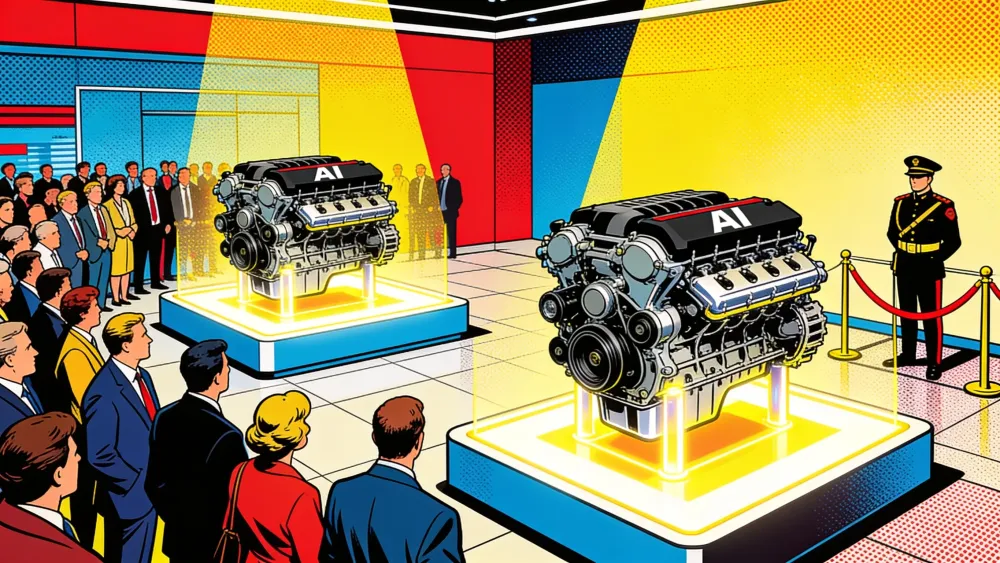
San Francisco | Wednesday, June 10, 2026
Anthropic put a Mythos-class model on the open market Tuesday. Claude Fable 5 runs $10 per million input tokens and $50 out, and its classifiers hand any cybersecurity, biology or distillation request to the older Opus 4.8. More than 95% of sessions never see the fallback, the company says. The unrestricted edition, Mythos 5, stays with vetted cyberdefenders.
The same company refused to strip those safeguards for the Pentagon in February and watched the contract go to OpenAI. Now the refusal reads like strategy: everyone else is reacting to Anthropic's release calendar.
Google, meanwhile, streams live translation across 70 languages into Meet and the Translate app, work that interpretation vendors bill at up to $35 an attendee-hour.
Stay curious,
Marcus Schuler
Anthropic Routes High-Risk Fable 5 Queries to Opus 4.8

Anthropic made its Mythos-class model public on Tuesday. The safety layer ships inside the product.
Claude Fable 5 answers most prompts itself, but classifiers send cybersecurity, biology, chemistry and distillation requests to the older Opus 4.8. Anthropic says more than 95% of sessions never trigger the fallback, and users see a notice when it does.
GitHub wired the tradeoff into Copilot. Business and Enterprise admins must flip an off-by-default switch accepting 30-day retention of prompts and outputs for safety monitoring, while other Claude models keep zero retention.
Pricing sits at $10 per million input tokens and $50 for output, twice Opus 4.8. Paid plans include Fable through June 22; credits start June 23.
Why This Matters:
- Enterprise buyers must now price a monitoring layer into the strongest public Claude, retention window included.
- Fallback frequency on real security and biology work will decide whether researchers stay or route around Anthropic.
Reality Check
What's confirmed: Fable 5 launched publicly Tuesday at $10 input and $50 output per million tokens; cyber, bio-chem and distillation prompts route to Opus 4.8; GitHub Copilot requires a 30-day retention opt-in.
What's implied (not proven): That under 5% of sessions hit the fallback. The figure is Anthropic's early data, not an independent measurement.
What could go wrong: Conservatively tuned classifiers catch harmless requests and push security and biology teams toward zero-retention rivals.
What to watch next: June 23, when usage moves to credits and the retention switch shows real enterprise uptake.

The One Number
54.7% - ChatGPT's share of web visits across the seven biggest AI chatbots, down from 76.5% in February 2025, according to Similarweb data compiled by Momentic. Gemini took most of the difference, climbing from 5.6% to 27.4%. The default-assistant question, which looked settled for two years, is open again.
Source: Momentic / Similarweb, June 2026
💰 Fresh Funding
💰 Fresh Funding
Lands $200M: Standard Bots puts no-code robot arms on factory floors
Standard Bots announced Tuesday a $200 million Series C led by RoboStrategy at a $1 billion valuation, with General Catalyst returning. The Glen Cove company's robot arms learn machining, welding and assembly tasks from demonstration instead of programming, and the capital expands its New York plant to 70,000 square feet for domestic production by 2027.
Visit Standard Bots →Raises $300M: PhysicsX compresses engineering simulation into seconds
PhysicsX announced Monday an oversubscribed $300 million Series C led by Temasek at a roughly $2.4 billion valuation, with Nvidia, Siemens and Applied Materials among returning strategic backers. The London company's physics AI models stand in for simulations of jet engines, semiconductors and other hardware that once took engineering teams months to run.
Visit PhysicsX →Banks $85M: Rylo builds AI communication tools for deaf users
Rylo, the New York startup formerly known as Nagish, said Tuesday it raised $85 million in growth capital from General Catalyst's Customer Value Fund plus a new investment led by Canaan, with Vertex Ventures and Contour participating. Its real-time captioning and speech tools serve the estimated 48 million Americans with hearing loss, and a late-2025 acquisition of Sign.mt adds live sign-language translation.
Visit Rylo →Anthropic Turns Restraint Into a Weapon

The company that lost a Pentagon contract over its safeguards now looks like the one setting the industry's pace. Our new opinion piece argues that is no accident.
Tuesday's launch put Fable 5 on the open market while Mythos 5, the same model with fewer brakes, went to Project Glasswing defenders and, next, selected biology researchers. The piece reads the two-tier release as productized control: Anthropic decides who gets the dangerous version, under what conditions, on what timetable.
The Pentagon backdrop sharpens the argument. After refusing to drop limits on autonomous weapons and mass surveillance, Anthropic was branded a supply-chain risk and is fighting the designation in court while OpenAI took the contract. Rivals now launch against Anthropic's sequence.

AI Image of the Day

Prompt: surreal images in the Renaissance style, artistic and vintage style --chaos 20 --ar 9:16 --raw --sref 3594326491 --profile 51u8dg3 --v 8.1
Google Expands Meet Speech Translation From 5 Languages to 70 With Gemini 3.5
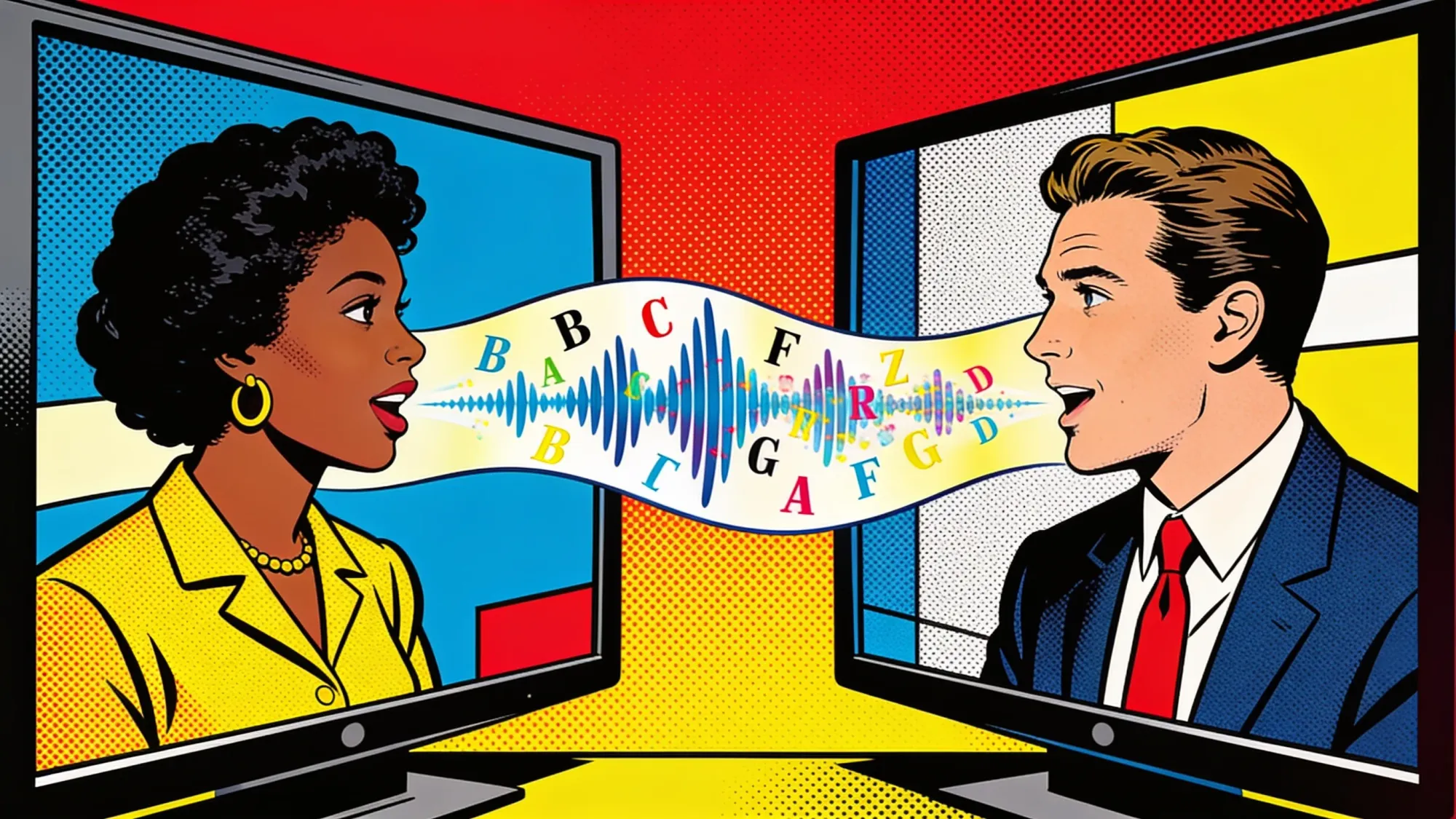
Google folded a paid industry into a free feature on Tuesday. Interpretation vendors charge up to $35 an attendee-hour for what Gemini 3.5 Live Translate now bundles.
The model translates speech continuously across more than 70 languages, a few seconds behind the speaker, preserving intonation and pacing. It reached the Translate app on Android and iOS on Tuesday and hits Google Meet this month, where the old system covered five languages through an English pivot.
Google's own model card lists the limits: voices can shift gender mid-session, language detection struggles with non-native accents, and the company publishes no latency figure. DeepL built its rival pitch around accuracy over speed in April.
🧰 AI Toolbox
How to Build a Daily Journaling Practice With an AI Coach Using Reflection
Reflection is an AI journaling app with a built-in coach that asks the right next question instead of leaving you staring at a blank page. Write or speak your entry, and the coach reflects patterns back, surfaces themes across weeks of entries, and suggests prompts that match the work you're doing on yourself. Useful for anyone who wants a daily journaling habit but bounces off the empty-page problem. Free tier available.
Tutorial:
- Download Reflection from reflection.app for iOS, Android, Mac, or the web
- Set up your goals during onboarding: stress, focus, relationships, work transitions, or general well-being
- Open the app, tap a daily prompt suggested by the coach, and write or speak your entry
- Let the coach ask follow-up questions when you stop, since the prompts adapt to what you wrote today
- Open the weekly review to see patterns across your entries: themes, emotional shifts, repeated worries
- Use voice mode during a walk to journal hands-free; Reflection transcribes and lets the coach respond out loud
- Export your entries to PDF or Markdown anytime; your journal stays yours and nothing is shared without explicit consent
URL: reflection.app
What To Watch Next
|
||
|
||
|
||
|
||
|
🛠️ 5-Minute Skill: Turn an S-1 Risk-Factors Section Into a Buy-or-Skip Question List
Wednesday, 8:10 a.m. SpaceX starts trading Friday, and every IPO season produces risk-factors sections nobody reads. Paste one in before you buy anything.
Your raw input:
Document: 30 pages of risk factors from an IPO prospectus. Problem: half is boilerplate every company files, half could actually sink the stock, and the lawyers formatted both identically. Need: which is which, fast.
The prompt:
Act like a skeptical buy-side analyst. Sort these risk factors into three lists: boilerplate every issuer files, risks specific to this company, and risks the company itself quantifies with numbers. For each specific risk, write the one question I should be able to answer before buying. Flag anything that names a single customer, supplier, regulator, or person. No investment advice.
The output:
Boilerplate: macro conditions, litigation, key-personnel language. Specific: one named launch customer above 40% of revenue, approvals pending in two markets, founder holds 78% of voting power. Quantified: the filing flags a contract worth $2 billion that expires next year. Question one: what replaces that revenue if it lapses?
Why this works:
Risk sections are written to disclose everything and emphasize nothing. Sorting by specificity reverses the design: boilerplate drops out, and the named numbers left over are the ones the lawyers argued about.
What to use:
Claude holds a 30-page paste without losing the named details. ChatGPT is the pick if you want the result as a table. Keep "no investment advice" in the prompt, or the model hedges every line into mush.
📖 AI Alphabet
|
A
|
📖 AI Alphabet Autoencoder An autoencoder is a model trained to compress data and then reconstruct it. That makes it useful for tasks such as denoising, anomaly detection, and learning compact representations. |
AI & Tech News
Meta AI Chatbot Flaw Exposes 34,000 Instagram Accounts, Including Obama's
A vulnerability in Meta's AI chatbot let attackers take over roughly 34,000 Instagram accounts, among them the official @BarackObama White House page. Meta says the flaw is patched, after more than 3,500 usernames were changed in the breach.
ServiceNow Confirms Breach Through Unauthenticated API Endpoint
ServiceNow disclosed that attackers exploited an unauthenticated API flaw to query data from customer instances. The company patched the vulnerability June 5 and has shared few details beyond confirming the exploitation.
EU Warns Traffickers Use AI to Design Ban-Evading Drug Precursors
EU agencies report criminal networks are using AI-driven chemical synthesis to tweak molecular structures of drug precursors just enough to slip past existing bans. Authorities say the shift is accelerating designer-drug development across Europe.
SpaceX Seeks Approval for Up to 1 Million Data-Center Satellites
SpaceX plans to test orbital AI computing by the end of 2027 and has filed a regulatory request for up to 1 million data-center satellites, Reuters reports. Executives frame low-Earth orbit as the next site for large-scale processing now confined to ground data centers.
SoftBank's $6 Billion OpenAI Margin Loan Stalls
SoftBank's attempt to borrow $6 billion against its OpenAI stake has stalled, Bloomberg reports. The target had already been cut from an initial $10 billion, a sign creditors are wary of the collateral's valuation.
Seattle Becomes First Major US City to Freeze New Data Centers
The Seattle City Council voted 9-0 for a one-year moratorium on new large data centers while staff study their environmental and economic impact. Mayor Katie Wilson is expected to sign the ordinance.
Trump Family Crypto Ventures Earned $2.3 Billion While Investors Lost as Much
A Reuters investigation finds the Trump family earned more than $2.3 billion from four crypto initiatives launched since January 2025, while outside investors lost roughly the same amount. The family put in minimal capital and cashed out before downturns hit other participants.
CoreWeave Founders Sell $2.3 Billion in Stock Since IPO
CoreWeave's founders have sold $2.3 billion of shares since the post-IPO lockup expired in August 2025, cutting their combined stake by about 25%. The AI data-center stock has still more than doubled since its March 2025 debut.
Super Micro Raises $7 Billion to Finance AI Server Orders
Super Micro plans to raise up to $7 billion in equity and equity-linked offerings earmarked for component purchases behind AI server demand. Shares fell more than 6% after hours on the dilution.
Kalshi Requires Employer Disclosure for Insider-Sensitive Trades
Kalshi will require users to disclose their employer before trading in markets where outcomes may turn on nonpublic information, the Wall Street Journal reports. The prediction-market platform is moving ahead of regulators on insider-trading risk.
🚀 AI Profiles: The Companies Defining Tomorrow
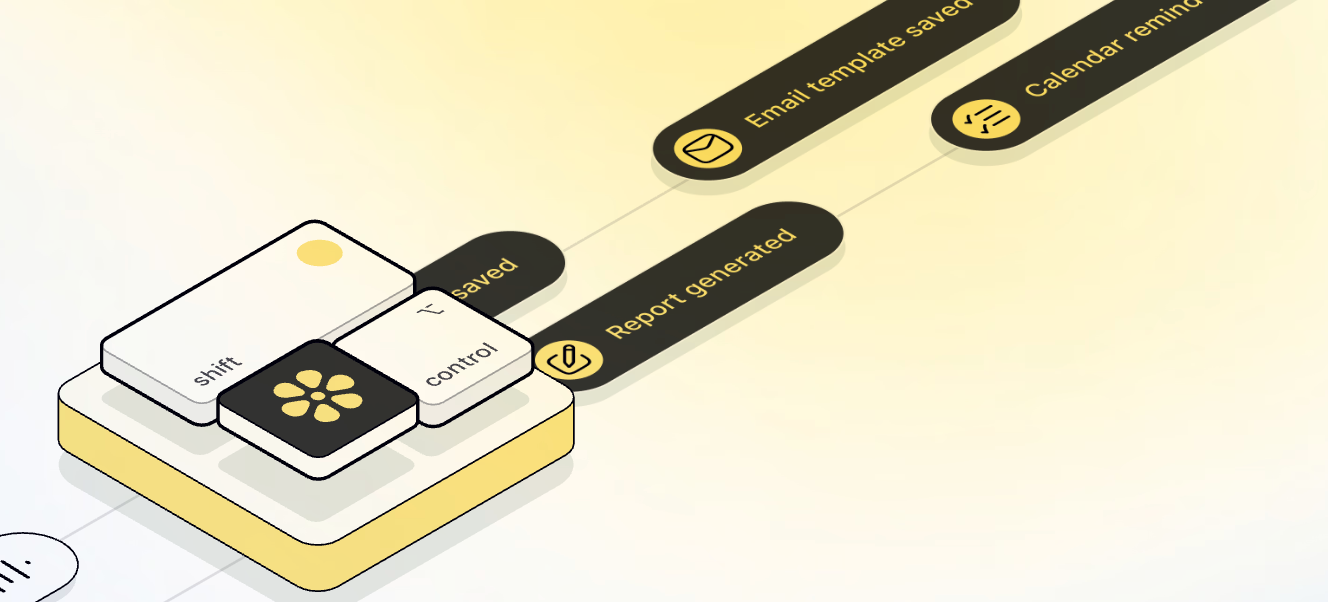
Lemon is the free voice-to-task agent that lets you write, search, and command across any open tab by talking instead of clicking. The pitch is conversational productivity: stop switching tools, stop hunting for the right tab, just say what you want and let the agent do it in the browser you already have open. 🍋
Founders
Lemon was launched by a small team building a thin client between voice input and a user's existing web stack, with the goal of removing the friction of opening apps, finding the right field, and typing. Founder details have not been publicly detailed beyond the product launch.
Product
Lemon installs as a browser extension and listens for a hotkey or wake word. Once active, it transcribes the user's voice and interprets the request against the page they have open: write an email, search a doc, fill a form, create a task in Linear, draft a Slack message. The product handles short multi-step tasks ("draft a reply to this email referencing the doc I had open ten minutes ago") and routes longer work to deeper agents.
Competition
Lemon competes with Wispr Flow (dictation-first), Cluely (meeting-first), Pi Voice (general assistant), and the voice features being added to Chrome, Edge, and ChatGPT directly. Its wedge is task-completion in the current tab rather than transcription or chat.
Financing 💰
Lemon launched as a free product in early 2026; funding details were not publicly disclosed at launch.
Future ⭐⭐⭐
Voice as a control surface for the browser is one of the most-attempted and least-shipped categories in productivity software. Lemon's chance is to focus narrowly enough that the product is reliable; the failure mode is to spread thin trying to be a general-purpose assistant and losing to Chrome built-in. 🗣️
🤨 Yeah, But...
Bloomberg reported Tuesday that China is preparing a roughly 2 trillion yuan ($295 billion) five-year plan to build a nationwide network of interconnected AI data centers, with the National Development and Reform Commission drafting the blueprint. State carriers China Mobile and China Telecom would operate most of the hubs, at least 80% of the technology would come from domestic suppliers such as Huawei, and folding in the power grid could lift total investment to 5 trillion yuan. (Bloomberg, June 9, 2026)
Our take: The 2 trillion yuan is the headline; the 80% quota is the policy. Beijing is writing one of the largest infrastructure checks in AI history and attaching a procurement condition that hands most of the silicon to Huawei and its neighbors, whether or not those chips match what Nvidia ships this year.
The bet treats compute like high-speed rail: build the network first and let the technology mature inside it. China Mobile and China Telecom do not need to win benchmark charts; they need to keep buying domestic long enough for domestic to get good. Washington, meanwhile, has spent two years adjusting which Nvidia chips China may import, and Beijing just answered by budgeting five years of guaranteed demand for the ones it makes itself.
Every month the export bans stay in place, the captive market they created works a little harder for the customers they were supposed to slow down.
Free AI briefing · Weekdays
The AI stories that matter, sourced and explained.
Join the Morning Briefing. It goes out every weekday at 4:45 a.m. Pacific, with later sends for the East Coast, Berlin and Tokyo.
Free when you sign up: The Paperclip Compendium, our tested guide to running AI agents.
Free. Unsubscribe in one click.

Marcus Schuler
Editor-in-Chief and founder of Implicator.ai. Former ARD correspondent and senior broadcast journalist with 10+ years covering tech. Writes daily briefings on policy and market developments. Based in San Francisco. E-mail: editor@implicator.ai