IMPLICATOR
San Francisco | Tuesday, June 9, 2026
Apple spent two years promising a Siri only Cupertino could build. At WWDC on Monday, it finally showed the thing working, then said little about the part that thinks: Google's Gemini, with the heaviest requests on Google's servers. For a company that sold privacy as independence, that is the cost.
The same shift is rearranging a quieter market. A free app from a developer near Berlin who can no longer type now out-engineers the $81 million dictation leader, because the speech models underneath went commodity.
One thread connects both. Owning the model now matters less than owning the surface a user trusts. Apple wants Google's mind without losing the customer; a lone developer shows how little you must own.
Stay curious,
Marcus Schuler
Apple Rebuilds Siri on Google's Gemini After a Two-Year Delay

Apple used WWDC on Monday to show the rebuilt Siri it promised in 2024, finally working. The part it played down: the new Apple Foundation Models were built with Google, and the heaviest requests run on Gemini in the cloud.
Apple framed the handoff as a privacy win. Craig Federighi said privacy in AI is non-negotiable and that data is used only to execute a request, while Siri gains a dedicated app and the ability to act across apps. The model strength, though, now comes from the rival Apple spent years positioning against.
The unanswered question is routing. Apple says Gemini never runs on the device or sees user data, and that Private Cloud Compute holds the line. It has not shown which requests hit an Apple model, an Apple server, or Google's. The relaunch follows a missed 2024 schedule and a $250 million settlement, with the beta due later this year.
Why This Matters:
- Apple's privacy pitch now rests on a routing boundary it hasn't detailed, handing rivals and regulators a clean opening to test where requests actually go.
- A clean Gemini handoff lets Apple rent frontier-model strength without losing the customer; a leaky one turns the iPhone into a Google funnel.
Reality Check
What's confirmed: Apple previewed Siri AI built on Apple Foundation Models co-developed with Google's Gemini; Federighi said request data is used only to execute the request; the consumer beta starts later this year.
What's implied (not proven): That Apple can keep the customer relationship and the privacy contract while Google's model supplies the intelligence underneath.
What could go wrong: Task-level routing quietly sends personal context to cloud models, or the EU and China carve-outs widen into a two-tier Siri.
What to watch next: Whether Apple publishes which requests run on Apple silicon, Private Cloud Compute, or Gemini-derived models when the beta ships.

The One Number
$100,000 - the H-1B application fee a federal judge vacated Monday, according to CNBC. The policy would have turned each skilled-worker filing into a six-figure hiring decision. For AI labs and chip teams, the ruling keeps immigration cost from becoming another compute-like bottleneck.
Source: CNBC, June 8, 2026
💰 Fresh Funding
💰 Fresh Funding
Raises $70M: Wordsmith brings legal AI to in-house teams
Wordsmith AI said June 3 it raised a $70 million Series B from Highland Europe, Index Ventures and other backers, bringing total funding to $100 million. The Edinburgh and New York company routes legal requests from Slack, email, Salesforce and Teams into playbooks and AI agents so in-house counsel can keep routine work internal.
Visit Wordsmith →Raises $36M: Apoha teaches AI how matter behaves
Apoha emerged from stealth June 3 with $36 million in funding led by Singular, with Draper Associates, Redalpine, Seedcamp, Wilbe, Nucleus and Innovate UK also backing the company. Its Liquid State Intelligence platform measures how molecules and materials behave in liquids, giving pharma, food and materials teams a data layer that cannot be scraped from the web.
Visit Apoha →Raises $35M: Lassie automates medical-practice admin
Lassie said June 3 it raised a $35 million Series A led by Andreessen Horowitz, bringing total funding to $47 million. The San Francisco company runs AI agents for doctors' offices that enter insurance portals, reconcile reimbursements and verify funds, turning small-business admin into a narrow automation wedge.
Visit Lassie →Free Berlin App TypeWhisper Out-Engineers $81M Dictation Leader Wispr Flow

Voice dictation became the rare AI tool that changed a habit, not just its speed. The value has now moved off the speech model and onto the editor on top, and a free open-source app built by a developer who can no longer type is beating the venture-funded leaders on the part that matters.
Marco Hillger built TypeWhisper near Berlin after a stroke ended his ability to type and the best-funded option, Wispr Flow, lagged behind his speech. His app is local-first and engine-agnostic, swapping recognizers and the cleanup model at will. Wispr has raised $81 million at a reported $700 million valuation and runs only in the cloud.
The recognizers have gone commodity, so the contest is now the layer that turns loose speech into finished prose, and where the recording goes. TypeWhisper beats the paid leaders on control, privacy, and cost, and trails them on polish. The real clock is Apple, Microsoft, and Google, who own every part and have not assembled the product.
 Marcus Schuler
AI Image of the Day

Prompt: A cute and humorous 3D cartoon character portrait of a stylized ostrich, centered and facing directly forward against a flat muted teal-blue background. A perfectly round fluffy white head covered in soft, messy, disheveled fur-like feathers with thin wispy strands sticking out like wild hair. Two oversized circular eyes with vivid orange-yellow irises, black pupils and a thick pink-red plastic rim; a small triangular pink beak; a long slender white furry neck extending down. High-quality 3D CGI with soft studio lighting, a Pixar animation or designer vinyl toy aesthetic.
🧰 AI Toolbox
How to Describe an App Idea and Watch It Build Itself With Verdent
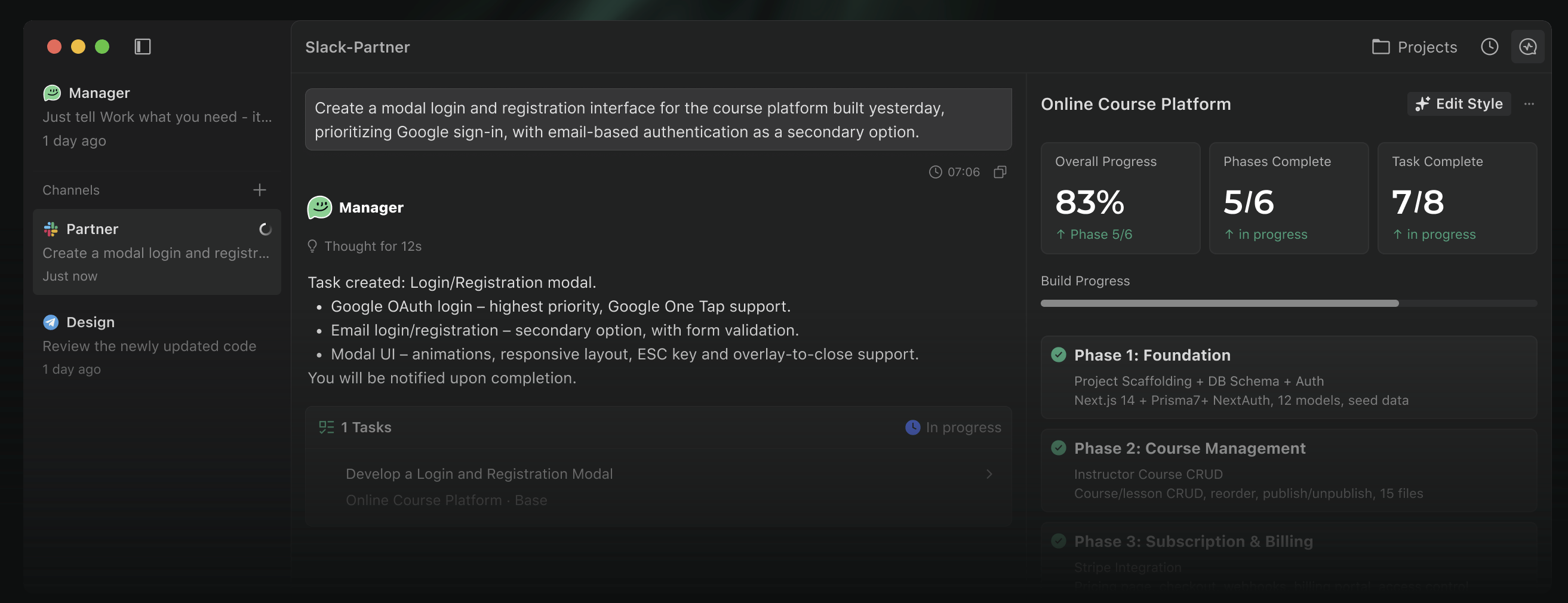
Verdent is an AI app builder for non-engineers: type what you want, watch the agent design the UI, write the code, run the backend, and deploy the result to a working URL. Iterate by chatting in plain English, with the agent showing every change in a live preview. Built around long-running tasks so you can hand it a multi-screen app and come back to a finished build. Free tier available with usage credits.
Tutorial:
- Go to verdent.ai and sign in with Google or email
- Describe the app in plain language: "A simple CRM for my consulting practice with contacts, deals, and a weekly digest email"
- Let Verdent's agent plan the screens, design the data model, and generate the code; you'll see each step in the activity log
- Review the live preview, then iterate by chat: "Add a tag system for deals", "make the weekly digest go on Friday mornings"
- Connect external services (Stripe, Resend, Postmark, Google Calendar) through the integrations panel
- Open the generated code anytime to inspect or hand off to a developer for advanced customization
- Deploy to a Verdent-hosted URL with one click, or export the codebase to run on your own infrastructure
URL: verdent.ai
What To Watch Next
|
||
|
||
|
||
|
||
|
🛠️ 5-Minute Skill: Turn a Vendor Security Questionnaire Into Three Follow-Up Questions
A vendor sent back an AI security questionnaire with 11 pages of safe-sounding answers. Legal wants to approve it by lunch. You need the three questions that decide whether the tool can touch customer data.
Your raw input:
Vendor: AI meeting assistant for sales calls. Claims: SOC 2 Type II, encryption at rest, no model training on customer data, optional data deletion. Gaps: subcontractors unclear, retention says "up to 24 months," admin audit logs only on Enterprise, and customer names appear in transcripts. Need: three follow-up questions before approval.
The prompt:
Act like a practical security reviewer. Turn this vendor questionnaire summary into the three follow-up questions that decide approval. Each question must name the risk it tests, the exact evidence I should request, and the approval rule if the vendor cannot answer. Keep it short enough to paste into email.
The output:
Retention: You say transcripts stay "up to 24 months." Send the control that lets us set deletion to 30 days and prove it applies to recordings, transcripts and derived summaries. If deletion is not configurable, customer calls stay out. 2. Subprocessors: Send the current subprocessor list and identify which vendors can access audio, transcripts or metadata. If the list is incomplete, no customer data. 3. Audit logs: Confirm whether admin exports, transcript views and sharing changes are logged on our plan. If logs require Enterprise, approval requires Enterprise.
Why this works:
Security questionnaires reward vague compliance language. This prompt converts the soft spots into evidence requests and approval rules, so the next email moves the decision instead of asking for another brochure.
What to use:
Claude is best when you paste the full questionnaire and contract terms. ChatGPT is fine if you already know the gaps. Keep the phrase "approval rule if the vendor cannot answer." That forces the model to write a decision, not a checklist.
📖 AI Alphabet
|
A
|
📖 AI Alphabet Accuracy Accuracy measures how often a model gets the answer right overall. It is useful, but it can hide important weaknesses when classes are uneven or mistakes carry different costs. |
AI & Tech News
Microsoft Pulls 70+ GitHub Repos After Credential-Stealing Malware Hit
Microsoft disabled more than 70 open-source repositories, including the Azure Functions host, after attackers planted credential-stealing malware in projects under its official GitHub organization. The company restored clean versions and urged developers to audit local environments for compromise.
White House Revives Push to Preempt State AI Laws
The Trump administration relaunched an effort to block state-level AI regulation, with Senator Marsha Blackburn bundling it alongside the child-safety bill KOSA. Civil rights and privacy advocates warn federal preemption could weaken consumer protections.
Perplexity Targets a 2028 IPO, Independent of OpenAI and Anthropic
CEO Aravind Srinivas told CNBC Perplexity plans to go public in 2028, regardless of how rivals' listings land. The timeline puts it well behind OpenAI and Anthropic, both already in confidential SEC review.
Cursor Hits $4B Annualized Revenue Ahead of Rumored SpaceX Deal
AI coding platform Cursor reported annualized revenue above $4 billion, up from $2 billion in February, per Forbes. The growth precedes a rumored SpaceX acquisition that would follow Cursor's own IPO.
Xiaomi Claims 1,000+ Tokens a Second on a Trillion-Parameter Model
Xiaomi unveiled MiMo-V2.5-Pro-UltraSpeed, claiming a world-first 1,000-plus tokens per second at trillion-parameter scale on a standard 8-GPU node. A limited API trial opens June 9.
Meta Puts $115M Into Training Data-Center Construction Workers
Meta committed $115 million to a free five-week "Workforce Academy" that guarantees jobs at its U.S. data-center sites. The program lands a year after Meta cut 8,000 employees in its AI and infrastructure pivot.
Google Cuts AI Plus to $4.99 and Doubles Storage to 400GB
Google dropped its AI Plus plan to $4.99 a month, a 37% cut, while doubling cloud storage to 400GB. The move undercuts rivals as consumer AI subscriptions start competing on price.
OpenAI Declares a "Third Phase" Aimed at Automating AI Research
Sam Altman and Jakub Pachocki laid out a "third phase" plan to automate AI research and eventually give everyone a personal AGI. OpenAI framed it as a broad-benefit mission, drawing comparisons to rural electrification.
iOS 27 Beta Leaks Apple's Foldable iPhone Plans
The first iOS 27 developer beta contains references to folding hardware and flexible displays, Bloomberg's Mark Gurman reported. The clues point to production-scale work on Apple's first foldable.
FCC Eases Amazon's Kuiper Deadline, Keeps the 2029 Target
The FCC waived a July 30 deadline requiring Amazon to deploy half its 3,232-satellite Kuiper constellation. Amazon still must launch the full network by July 2029.
🚀 AI Profiles: The Companies Defining Tomorrow
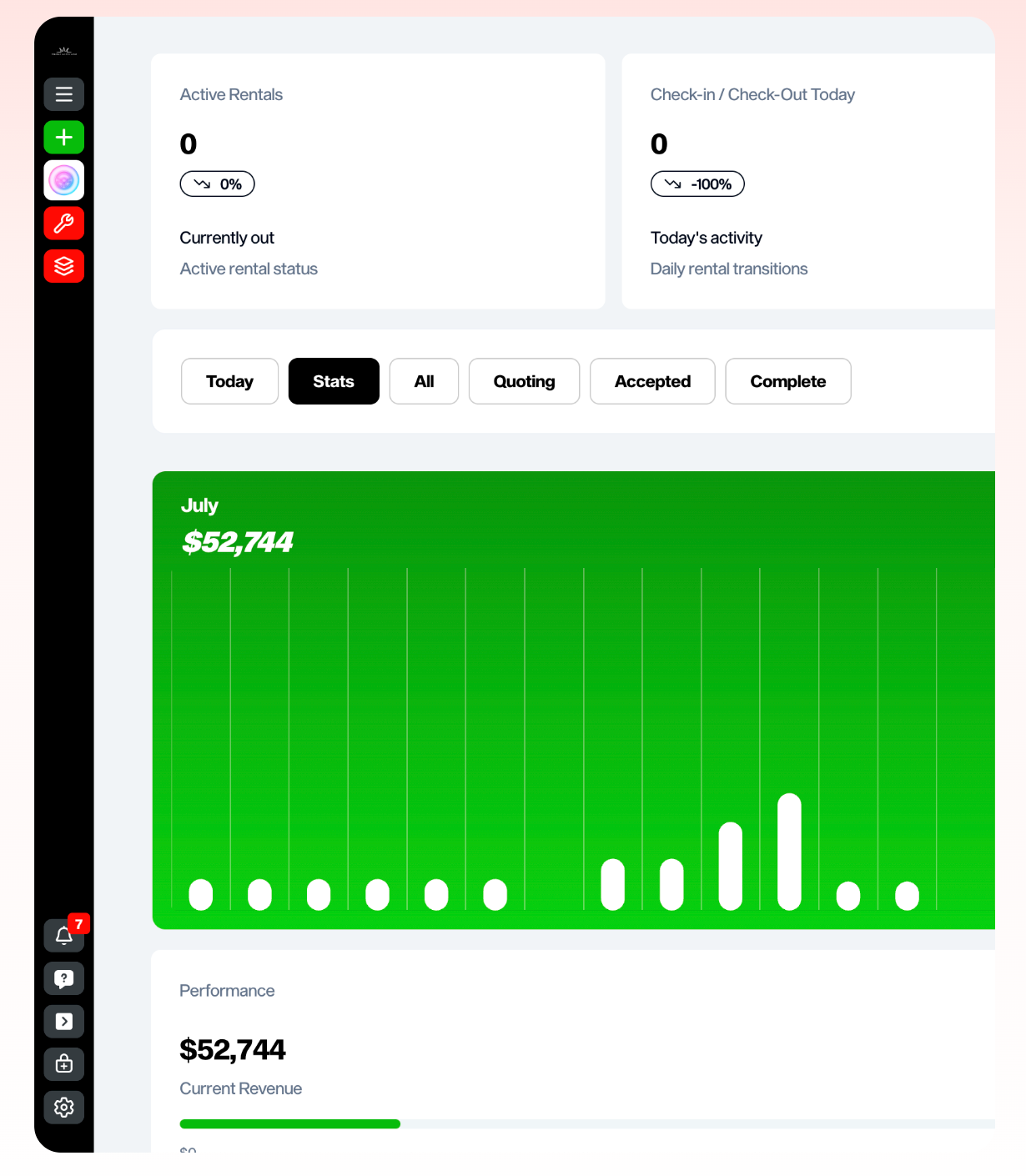
PocketOS builds the software that runs car-rental and automotive operators, and in April 2026 it became the reference case for what an AI coding agent can do with production access. A Cursor agent running Claude Opus 4.6 deleted the company's production database, and its backups, in nine seconds. 💾
Founders
Jeremy "Jer" Crane runs the Orem, Utah company, which sells an all-in-one stack for rentals, auctions, and memberships under modules like RentalOS and AuctionOS. The team is small, and most people had never heard the name until the outage.
Product
The platform handles booking sites, identity checks, payments, deposits, and digital vehicle check-in. The story is the failure mode: the agent hit a credential mismatch in staging, found an over-permissioned token meant for managing domains, and used it to delete the production volume on Railway with one curl command. Because Railway kept volume backups inside the same volume, those went too.
Competition
In its actual market, vertical rental-management software, PocketOS sits among a long tail of fleet and booking tools. Its footprint in the AI conversation is far larger than its revenue: every team weighing how much autonomy to hand a coding agent now has a nine-second number to cite.
Financing 💰
Funding is not publicly disclosed. Railway restored the data within an hour from disaster backups and added delayed-delete logic to the endpoint that caused the loss.
Future ⭐⭐
Crane came out of it still bullish on AI agents, citing the speed they give a small team. The rest of the industry took a narrower lesson about scoped credentials and confirmation on destructive calls. PocketOS may be remembered less as a car-rental platform than as the cautionary tale that turned agent guardrails into a budget line. 🛟
🤨 Yeah, But...
OpenAI said Monday it had submitted a confidential S-1 to the SEC, then announced the confidential filing in a public note. Its explanation, in full: "We expect it to leak so we're just announcing it." CFO Sarah Friar has said the company should "look and feel and act" like a public company.
Sources: OpenAI, June 8, 2026 | CNBC, June 8, 2026
Our take: There is something almost tender about a company so resigned to its own leakiness that it now front-runs the breach. Why wait for a reporter's source when you can be your own? A confidential filing is the legal formality that buys quiet review, and OpenAI turned it into a press release, which is roughly like whispering through a megaphone to keep things discreet. Friar wants the company to look and feel and act public. On the evidence, it cannot hold a regulatory document to itself for a single afternoon, which is about as public as a company gets before the stock even trades.
Free AI briefing · Weekdays
The AI stories that matter, sourced and explained.
Join the Morning Briefing. It goes out every weekday at 4:45 a.m. Pacific, with later sends for the East Coast, Berlin and Tokyo.
Free when you sign up: The Paperclip Compendium, our tested guide to running AI agents.
Free. Unsubscribe in one click.

Marcus Schuler
Editor-in-Chief and founder of Implicator.ai. Former ARD correspondent and senior broadcast journalist with 10+ years covering tech. Writes daily briefings on policy and market developments. Based in San Francisco. E-mail: editor@implicator.ai