IMPLICATOR
San Francisco | Wednesday, June 24, 2026
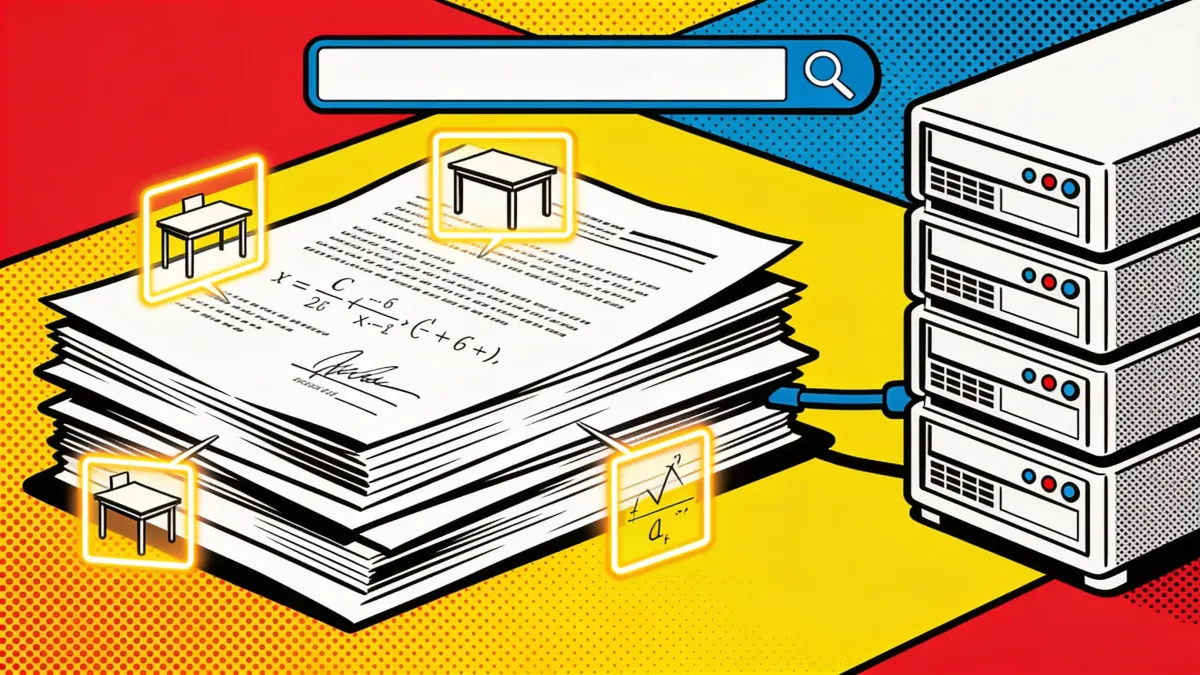
Mistral is moving document AI toward audit trails. OCR 4 returns bounding boxes, block labels, and confidence scores across 170 languages, so search can point to the chart, signature, or table it used. Page structure is now part of the API answer.
The memory trade gets its own test after Micron and SanDisk fell about 13% and the Philadelphia Semiconductor Index dropped 7.9%. Micron reports after today's close, and the call now has to defend the HBM story that carried the stock.
Sakana's Fugu arrives in the opening left by Anthropic's Fable and Mythos shutdown, with a 93.2 LiveCodeBench score and one black-box router. Buyers get less dependence on one lab, plus a new layer they still cannot see.
Stay curious,
Marcus Schuler
Mistral OCR 4 Adds Page Coordinates for Enterprise Search

Mistral's new OCR release changes what document AI returns. OCR 4 sends back the text, the block type and the coordinates on the page.
The company says the model supports 170 languages and won 72% of human comparisons across more than 600 documents. The useful part for enterprises is less glamorous: tables, signatures, captions and equations now arrive with bounding boxes and confidence scores, which means a search or compliance system can cite where the answer came from.
OCR 4 also costs $4 per 1,000 pages, or $2 through batch processing, while Mistral's Document AI layer adds schema output for $5 per 1,000 pages.
Why This Matters:
- Retrieval systems can preserve document structure, which helps audits, citations and human review instead of flattening every PDF into text.
- Mistral is pushing OCR into enterprise plumbing, where accuracy, price and deployment options matter more than demo screenshots.
Reality Check
What's confirmed: Mistral released OCR 4 with bounding boxes, block labels, confidence scores and 170-language support.
What's implied (not proven): That enterprises will rebuild search and review workflows around page coordinates rather than treat OCR as plain text extraction.
What could go wrong: Downstream systems may ignore the coordinates, leaving OCR 4 as a better parser bolted to old workflows.
What to watch next: Mistral's July 7 OCR 4 production webinar and the Snowflake Parse Document integration.
The One Number
$150 million a month - what open-source lab Reflection AI agreed Monday to pay SpaceX for Nvidia GB300 capacity at the Colossus 2 site near Memphis, running from July 1 through 2029 for up to $6.3 billion. SpaceX, which absorbed xAI in February, now reports more than $80 billion in committed outside compute revenue. The rocket company has quietly become an AI landlord.
Source: CNBC, June 22, 2026
💰 Fresh Funding
💰 Fresh Funding
Raises $650M: Groq rebuilds as an AI inference cloud
Groq said Monday it raised $650 million in a round led by the investment firm Disruptive and the hedge fund Infinitum, roughly six months after Nvidia licensed its chip technology and hired away founder Jonathan Ross. The capital funds the company's pivot from selling LPU inference chips to running them as a cloud service across 13 data centers that already process trillions of tokens a week for more than five million developers.
Visit Groq →Raises $190M: Upscale AI lifts its networking fabric to a $2B valuation
Upscale AI said Monday it raised a $190 million Series A-1 extension led by Premji Invest, with Nvidia, Salesforce Ventures, Seligman Ventures and Temasek joining, lifting its valuation to $2 billion and total funding to about $500 million. The company builds open-standard switches that connect accelerators, memory and storage inside AI clusters, targeting the networking bottleneck that slows large, synchronized training and inference runs.
Visit Upscale AI →Raises $20M: Aether AI bets on causal world models over raw scale
Aether AI said it closed a $20 million seed round led by MPCi, with Inno Angel Fund, SWC Global and Unity Ventures joining the San Diego company. Founded by UC San Diego causality researcher Biwei Huang, it builds causal world models that teach robots why an action changes an outcome rather than match patterns, and reports 20 to 30 percent gains in data efficiency on manipulation tasks.
Visit Aether AI →Micron and SanDisk Sink as AI Memory Trade Gets Tested
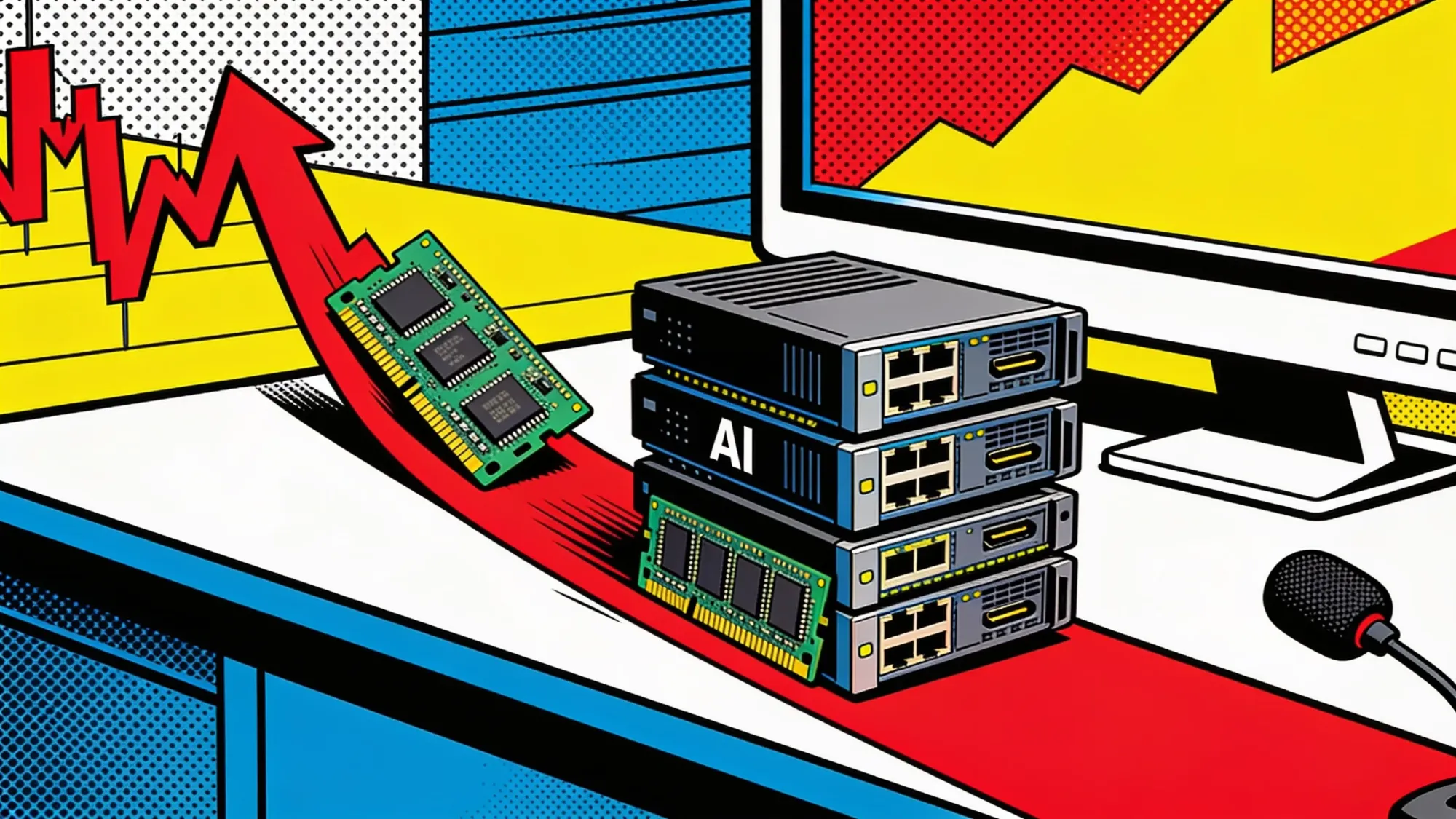
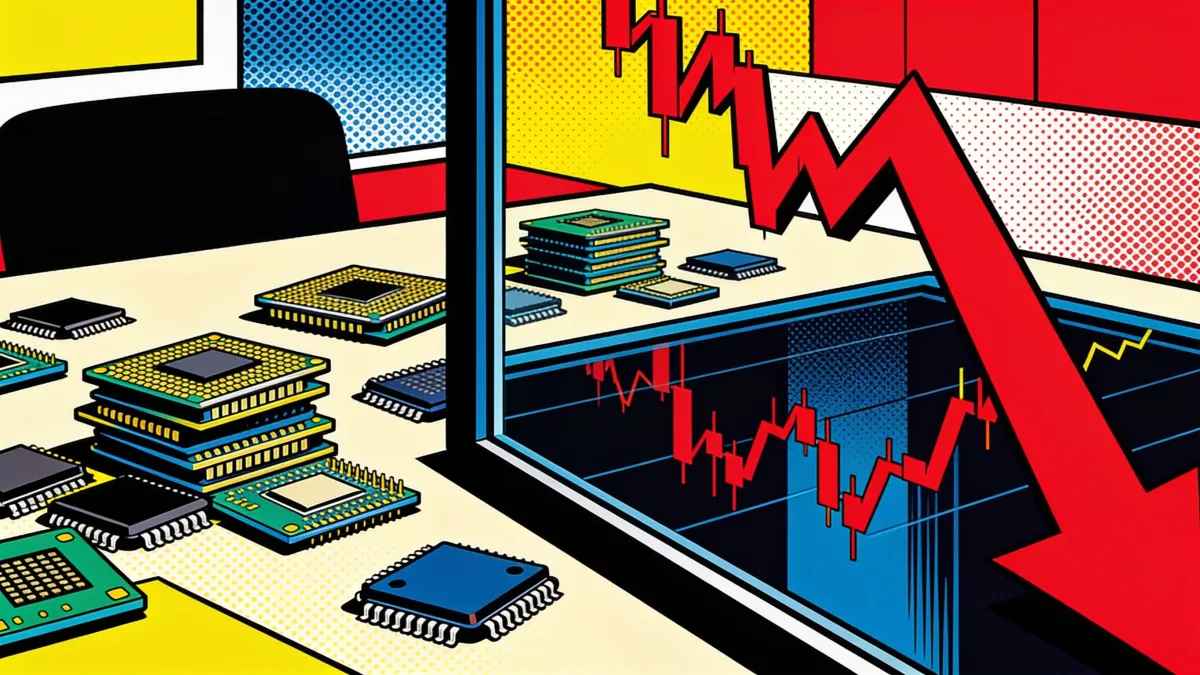
The AI memory trade finally got a red screen. Reuters put the Philadelphia Semiconductor Index down 7.9%, with Micron and SanDisk each off about 13%.
The selloff started in Seoul, where Bloomberg said South Korea's Kospi fell 10% after SK Hynix and Samsung both dropped more than 10%. The U.S. move landed one session before Micron's earnings call, turning a routine report into a test of the HBM shortage thesis that carried memory stocks for months.
Investors now want management to separate normal profit-taking from a weaker AI-capex story. The difference matters because Micron's rally has rested on cloud buyers paying up for high-bandwidth memory through 2027.
AI Image of the Day

Prompt: Ultra-realistic close-up of a vintage Gulf-liveried racing car front, focusing on its left headlight and aerodynamic curves, sleek pastel blue body with bright orange racing stripe and white roundel, isolated against a dark gradient studio background with soft neutral floor, evoking a cinematic, timeless motorsport aura. Smooth glossy metal, subtle reflections, polished glass headlamps with inner shadows, crisp edges, and fine detailing in vents and tow hook. Soft diffused studio lighting with deep contrast and gentle rim highlights, shot on a 50mm lens at f/2.0 with IMAX film look, highly realistic 3D Octane render with subtle imperfections and light film grain
Sakana Fugu Beats Fable 5 on LiveCodeBench After Anthropic Cutoff

Sakana AI is turning Anthropic's access problem into a product pitch. Fugu Ultra scored 93.2 on LiveCodeBench, ahead of Fable 5's 89.8.
The Tokyo startup sells Fugu as one OpenAI-compatible endpoint that coordinates several models behind the scenes. Its timing is convenient: Anthropic said a U.S. directive forced it to disable Fable 5 and Mythos 5 for customers, including foreign-national employees.
The catch is control. Sakana says enterprise users can exclude providers, but it has not disclosed which model handles each request. Buyers trade one-lab dependence for a router they still cannot fully inspect.
🧰 AI Toolbox
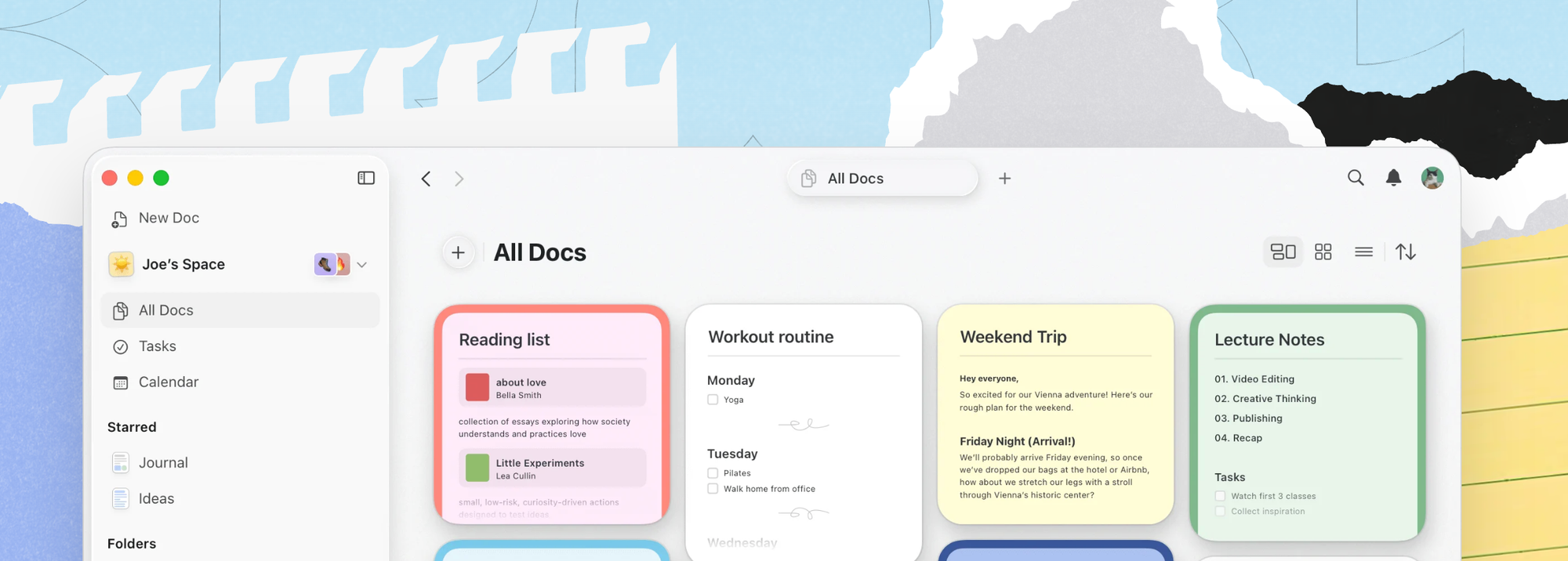
How to Write Beautiful Notes That Connect to Every AI Agent Through MCP With Craft Docs
Craft Docs is a notes and docs app loved for its design that recently shipped MCP support, so Claude, ChatGPT, or any MCP-compatible agent can read and write directly to your Craft workspace. Pair Craft's structured blocks (todos, calendar, daily notes) with an AI agent and you get a notes app that stores decisions and pushes tasks into action. Free for personal use, paid for teams and advanced AI features.
Tutorial:
- Download Craft Docs from craft.do for Mac, iOS, iPad, Windows, or open the web app
- Set up a workspace and pick a starter template (daily notes, project space, knowledge base)
- Enable the MCP server in Settings > Integrations and copy the connection URL
- Add Craft as an MCP server in Claude Desktop, Cursor, or Codex CLI using the connection URL
- Ask your agent a question that touches your notes: "What did I decide about the client proposal in this week's daily notes?"
- Use Daily Notes plus AI to auto-draft a morning briefing from yesterday's notes, your calendar, and your task list
- Connect Craft to Apple Reminders, Google Calendar, and email so the agent can update tasks and schedule across tools without leaving your notes
URL: Craft Docs
What To Watch Next
|
||
|
||
|
||
|
||
|
💡 5-Minute Skill: Turn an AI Vendor Demo Into a Pilot With Kill Criteria
Thursday, 10:04 a.m. The vendor demo looked great, mostly because no one asked what happens when it fails. Before procurement turns the highlight reel into a contract, make the model build a pilot that can die honestly.
Your raw input:
Tool: AI agent for sales research and CRM updates. Claim: saves reps 5 hours a week. Users: 12 account executives. Systems: Salesforce, Gmail, Gong. Risk: bad notes, private customer data, fake account facts. Pilot window: 14 days. Need: test plan with success metrics and stop rules.
The prompt:
Act like a skeptical AI pilot owner. Turn this vendor demo into a 14-day pilot plan. Include the hypothesis, user cohort, control group, data the tool may access, data it may not access, success metrics, review owner, failure modes, and kill criteria. Separate what the vendor claims from what we can measure. No procurement language.
The output:
Pilot goal: prove whether reps save time without polluting CRM. Cohort: 12 reps, 20 accounts each; control group keeps the current workflow. Metrics: minutes saved, accepted edits, bad-field rate, manager review time, privacy exceptions. Stop rule: kill the pilot if bad-field rate exceeds 3% twice or managers spend more time correcting than they save.
Why this works:
Demos ask whether the tool can work. Pilots ask whether it works here, with your mess, under review. This prompt forces baseline, owner, metric and stop rule before a vendor's favorite success story becomes your budget request.
What to use:
Claude is best when you paste a long vendor deck, security notes and internal constraints. ChatGPT is faster for turning the final plan into a one-page pilot brief. Gemini helps if you need web context on the vendor. Keep "kill criteria" in the prompt. Without it, every test becomes a success story with nicer formatting.
📖 AI Alphabet
|
I
|
📖 AI Alphabet Interpretability Interpretability is the ability to understand why a model produced a certain result. It matters most when people need to trust, audit, or challenge automated decisions. |
AI & Tech News
Nvidia B300 Servers Hit $1.1 Million in China's Black Market
Financial Times sources said tighter U.S. export enforcement pushed Nvidia DGX B300 servers to about $1.1 million in China's black market. The price is more than double the prior level, which shows how enforcement risk is becoming part of the compute bill.
NSA Lost Access to Anthropic's Mythos 5 After Security Tests
The NSA tested Anthropic's Mythos 5 on classified cyber systems before the agency lost access to the tool, according to the New York Times. The report says the model identified vulnerabilities, which makes the later dispute with Anthropic more than a procurement fight.
White House Presses Meta to Submit Models for Review
The Trump administration is urging Meta to submit its large AI models for federal safety evaluations, the New York Times reported. Meta is now described as the lone major U.S. AI developer without a voluntary review agreement.
Cerebras Revenue Rises 94% in First Post-IPO Report
Cerebras reported first-quarter revenue of $193.4 million, up 94% from a year earlier, CNBC said. Shares still fell after hours because the company warned that core gross margins could contract in the second quarter.
Superhuman Buys GPTZero as AI Authenticity Becomes a Product Line
Superhuman acquired AI detection company GPTZero, Business Insider reported. GPTZero has more than 19 million registered users and about $30 million in annual recurring revenue, giving Superhuman a trust layer for AI-written email and documents.
Krea Opens Weights for Its Two-Second Image Model
Krea released open weights for Krea 2 under a custom license, VentureBeat reported. The startup says the model can generate enterprise-grade images in roughly two seconds, while the license keeps commercial usage under Krea's rules.
xLight Seeks $350 Million for EUV Laser Push
The Information reported that xLight is in talks to raise $350 million from investors including Boardman Bay and Bain Capital. The U.S.-backed chipmaking startup is working on high-power lasers for extreme ultraviolet lithography, a choke point in advanced semiconductor manufacturing.
MoEngage Buys Aampe to Add Personalization Agents
Indian customer-engagement platform MoEngage acquired AI personalization startup Aampe for tens of millions of dollars, TechCrunch reported. Aampe's agents tailor messaging in real time, giving MoEngage more AI inside its marketing automation stack.
AI Regulation Candidate Loses New York Primary
Alex Bores, a New York Democrat who campaigned on AI safeguards, lost the District 12 primary to Nadler-backed Micah Lasher, NBC News projected. The race drew heavy spending from AI-related political groups, turning local politics into a test case for the industry's Washington strategy.
Zhipu Weighs Hong Kong Share Sale After 2,000% Rally
Bloomberg reported that Chinese AI developer Zhipu is exploring a multibillion-dollar Hong Kong share sale after its stock surged 2,000% since January. A follow-on sale would test whether investors still want exposure to China's model labs at a $128 billion-plus market value.
🚀 AI Profiles: The Companies Defining Tomorrow
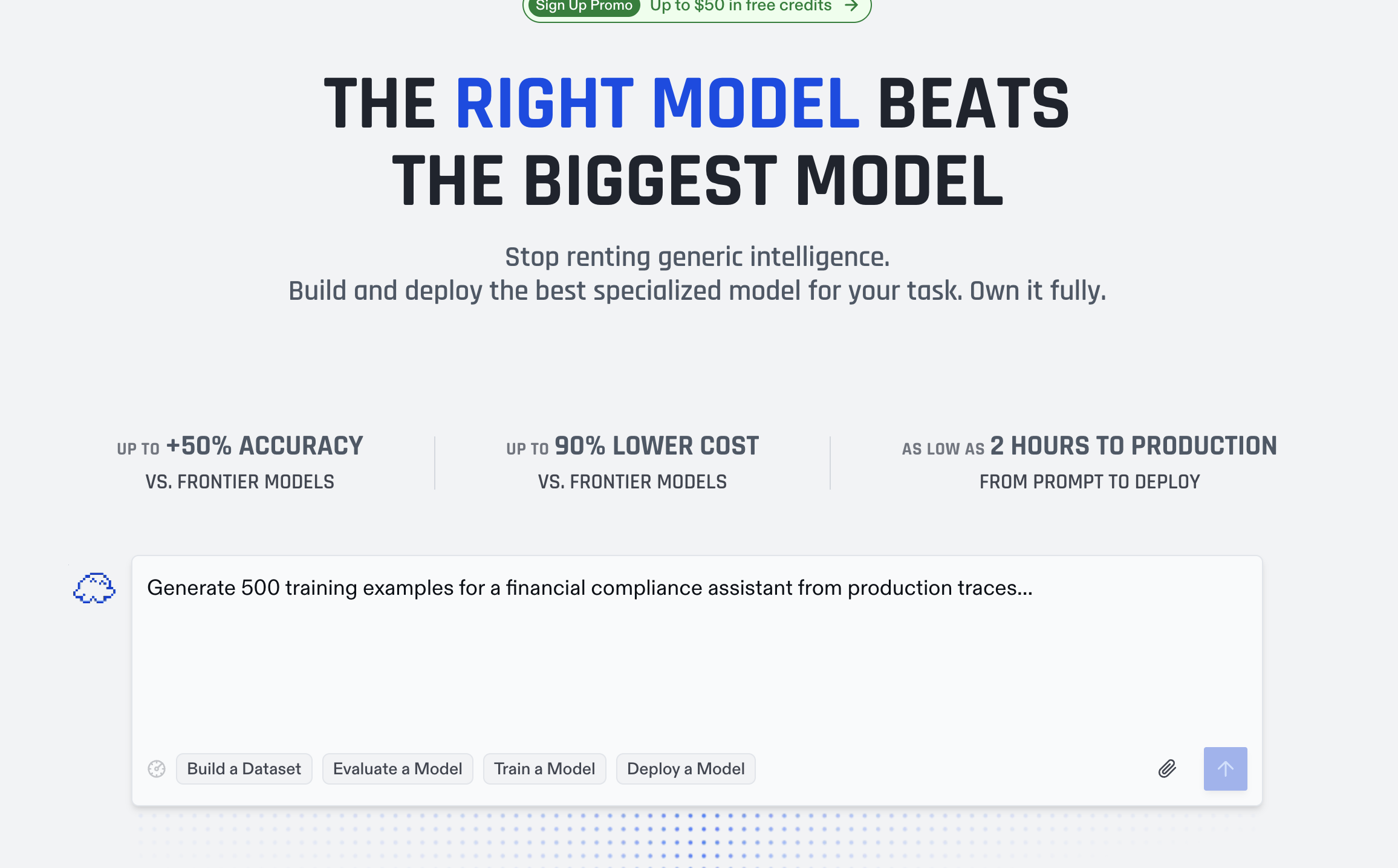
Oumi is the open platform for unconditionally open foundation models, letting any company prototype and train custom models in hours rather than months. The Bay Area startup is positioning itself as the alternative for buyers who want a model their team owns end-to-end without using frontier-lab APIs. 🛠️
Founders
Founded in 2024 by Manos Koukoumidis (CEO) and Oussama Elachqar (CTO), both formerly at Apple. The team built Oumi around a thesis they encountered repeatedly inside large platforms: enterprises that need model ownership are stuck between training from scratch (expensive, slow) and fine-tuning closed APIs (limited, opaque).
Product
Oumi is an open-source platform covering the full LLM lifecycle: data curation, training, evaluation, and deployment. Users describe what they want in plain English and Oumi generates the training pipeline and infrastructure to produce a model on their own data. The platform supports models from 10M to 405B parameters, runs on a single laptop or a thousand-GPU cluster, and works with text and multimodal inputs.
Competition
The competitive set splits between closed-lab fine-tuning (OpenAI, Anthropic, Google), open-weight platforms (Together AI, Fireworks, Mistral's tooling), and developer-first stacks (Hugging Face, Mosaic before Databricks bought it). Oumi's wedge is being unconditionally open across code, model weights and pipelines, aimed at companies that treat model ownership as a strategic requirement.
Financing 💰
Oumi raised a $10 million seed round led by Spark Capital in late 2024, with participation from angels and AI researchers. The company also runs an active open-source community on GitHub.
Future ⭐⭐⭐
If the next phase of enterprise AI is buyers who want to own their models, Oumi is well placed because it ships the boring infrastructure those buyers need. The risk is that open-weight platforms commoditize quickly and the wedge collapses into a feature of every cloud. Oumi wins if "unconditionally open" becomes a real procurement requirement. 🧱
🤨 Yeah, But...
Reuters and Time reported that the Trump administration ordered Anthropic to suspend foreign-national access to Fable 5 and Mythos 5, days after Fable 5 was released publicly as a Mythos-class system. Anthropic disabled the models for customers and foreign-national employees while disputing that the cited jailbreak risk justified the order.
(Reuters, June 13, 2026; Time, June 13, 2026)
Our take: Anthropic spent years arguing that frontier models are powerful enough to deserve special caution. Washington appears to have accepted the premise and picked a remedy the company hates. Anthropic's own staff became part of the access problem, an awkward HR footnote to a national-security order. The timing is worse because the company is heading toward a public-market story built on reliability, enterprise trust and access to the best Claude models. Investors now have a new line item to price: a government switch that can turn off the product before the sales team finishes the deck.

Marcus Schuler
Editor-in-Chief and founder of Implicator.ai. Former ARD correspondent and senior broadcast journalist with 10+ years covering tech. Writes daily briefings on policy and market developments. Based in San Francisco. E-mail: editor@implicator.ai