IMPLICATOR
San Francisco | Thursday, May 21, 2026
SpaceX has finally given investors the filing they wanted. Starlink supplies 10.3 million subscribers and about $11 billion of revenue; xAI brings a $7.7 billion first-quarter AI capex line, Grok risk, gas-turbine exposure and Musk's 85.1 percent voting control into the same security. The next amended filing has to put a price on that mix.
OpenAI is preparing its own confidential IPO filing while Anthropic circles a near-trillion-dollar valuation. Public investors are about to learn whether frontier AI is a software-margin story or a data-center financing story.
Then TypeWhisper offers the small counterpoint: a stroke-built, local-first dictation app where model choice beats polish. The AI market wants scale. Users still want control.
Stay curious,
Marcus Schuler
Know someone drowning in AI noise? Forward this briefing. They can subscribe free here.
SpaceX IPO Filing Puts Starlink Revenue Behind xAI Costs
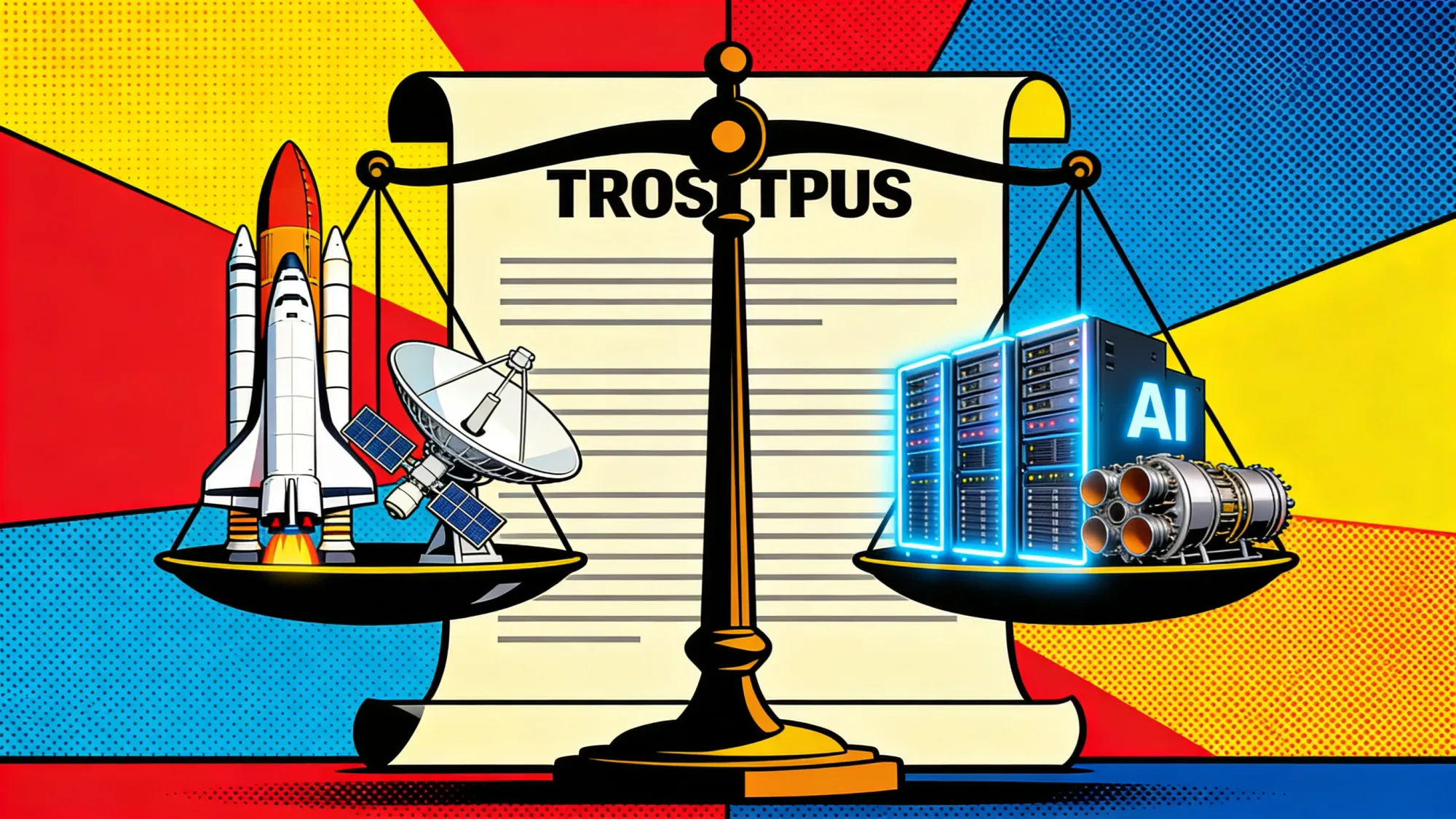
SpaceX opened its books for the SPCX listing and put three businesses in one investor package. Starlink supplies the revenue investors can model; xAI supplies the bill they have to underwrite.
The filing shows $18.67 billion in 2025 revenue, a $4.94 billion loss and Starlink's 10.3 million subscribers. Starlink generated about $11 billion last year, while AI absorbed $7.7 billion of first-quarter capital expenditures.
Anthropic gives the AI side a near-term revenue answer through its SpaceX capacity deal, listed at $1.25 billion per month through May 2029. The risk section still has Grok investigations, gas-turbine permits and Musk's 85.1 percent voting control.
Why This Matters:
- Public investors get Starlink growth, rocket risk and xAI spending in one security, with limited governance power.
- The next amended filing will show whether Wall Street prices xAI as growth engine, liability or both.
Reality Check
What's confirmed: SpaceX filed publicly under SPCX, disclosed 2025 revenue and losses, and listed Musk's voting control above 85 percent.
What's implied (not proven): Starlink can carry enough predictable revenue to make xAI's capex acceptable.
What could go wrong: Lower Starlink revenue per user or turbine delays could weaken the combined story.
What to watch next: The amended filing's price range and share count.

The One Number
85.1% - Elon Musk's voting power at SpaceX before the IPO, according to S-1 details TechCrunch pulled from Wednesday's filing. Public investors may buy the rocket, satellite and AI conglomerate; they are not buying much say in its boardroom.
Source: TechCrunch, May 20, 2026
OpenAI IPO Filing Plan Puts Anthropic Into Investor Comparison
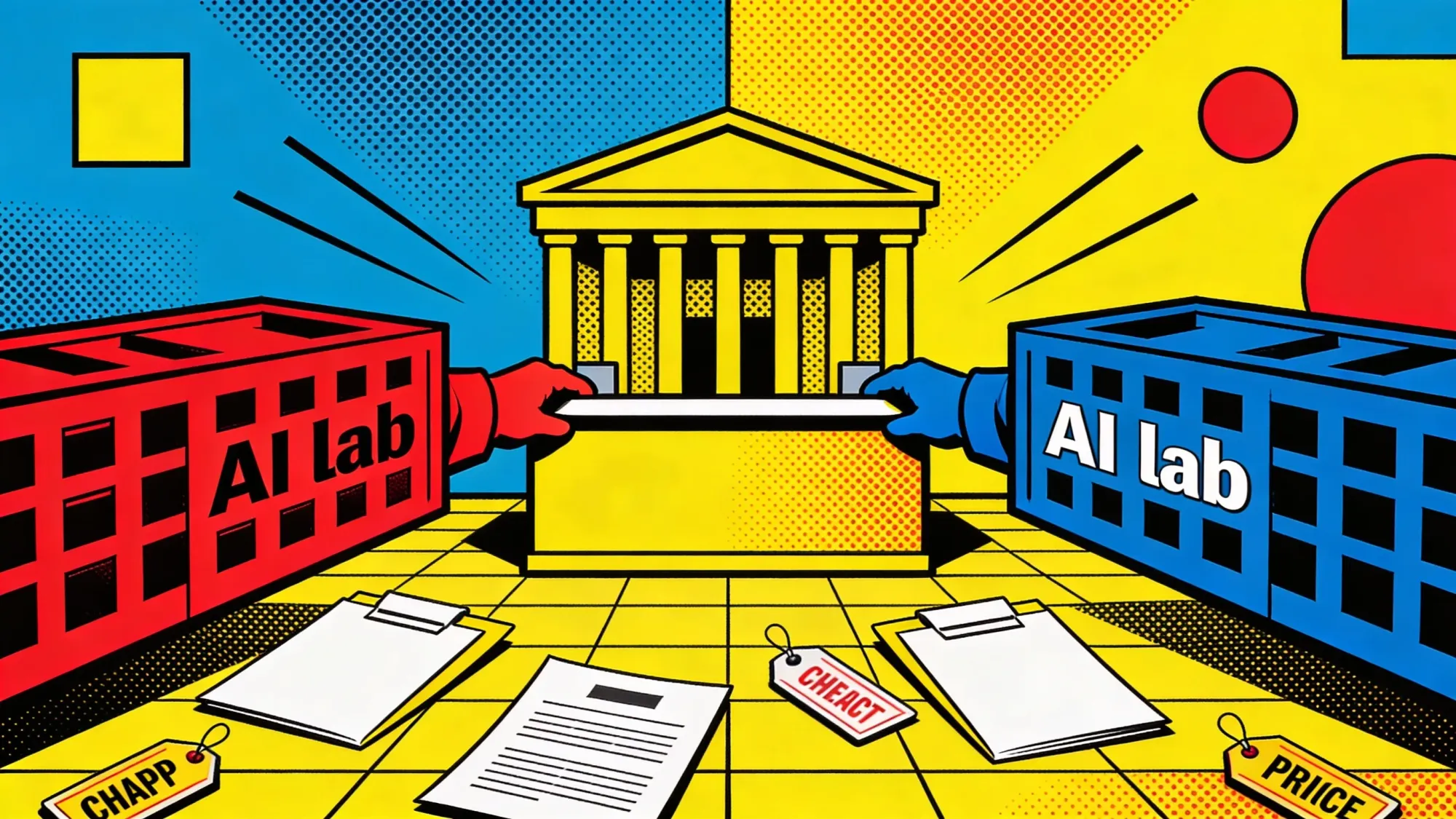
OpenAI may file confidential IPO paperwork as soon as Friday. The filing would not only sell OpenAI; it would create the public-market yardstick for Anthropic.
Goldman Sachs and Morgan Stanley are helping prepare the draft prospectus, according to reports. OpenAI's last private valuation sits above $850 billion, while Anthropic has discussed a raise at up to $950 billion.
The comparison is not only valuation. OpenAI just launched Guaranteed Capacity contracts for one, two and three-year compute access, while Anthropic's valuation story rests on Claude revenue, Amazon and Google money, and SpaceX capacity.
Why This Matters:
- Public filings will force frontier labs to show revenue mix, compute liabilities and customer concentration.
- Cheaper model routing could pressure the premium pricing both companies need to defend their marks.

AI Image of the Day

TypeWhisper Founder Turns Stroke Recovery Into Local Dictation App

Marco Hillger built TypeWhisper after a stroke made sustained typing difficult. The result is a local-first dictation tool that treats model choice as the product.
Hillger says commercial licensing now brings in about EUR 2,000 a month while the core stays free under GPLv3. Team pricing is EUR 19 per month for up to 10 devices; enterprise pricing is EUR 99 for support or non-GPL deployment.
The app lets users choose WhisperKit, Parakeet, Apple SpeechAnalyzer, Groq, OpenAI Whisper and other engines. The harder market question is whether local control can hold attention when dictation moves into operating systems.
Why This Matters:
- The story shows a different AI product path: disability-driven need, open-source control and paid support.
- Platform dictation will improve, but specialist workflows still need privacy, profiles and model-level choice.

🧰 AI Toolbox
How to Get a Real-Time AI Coach in Every Meeting and Call with Cluely
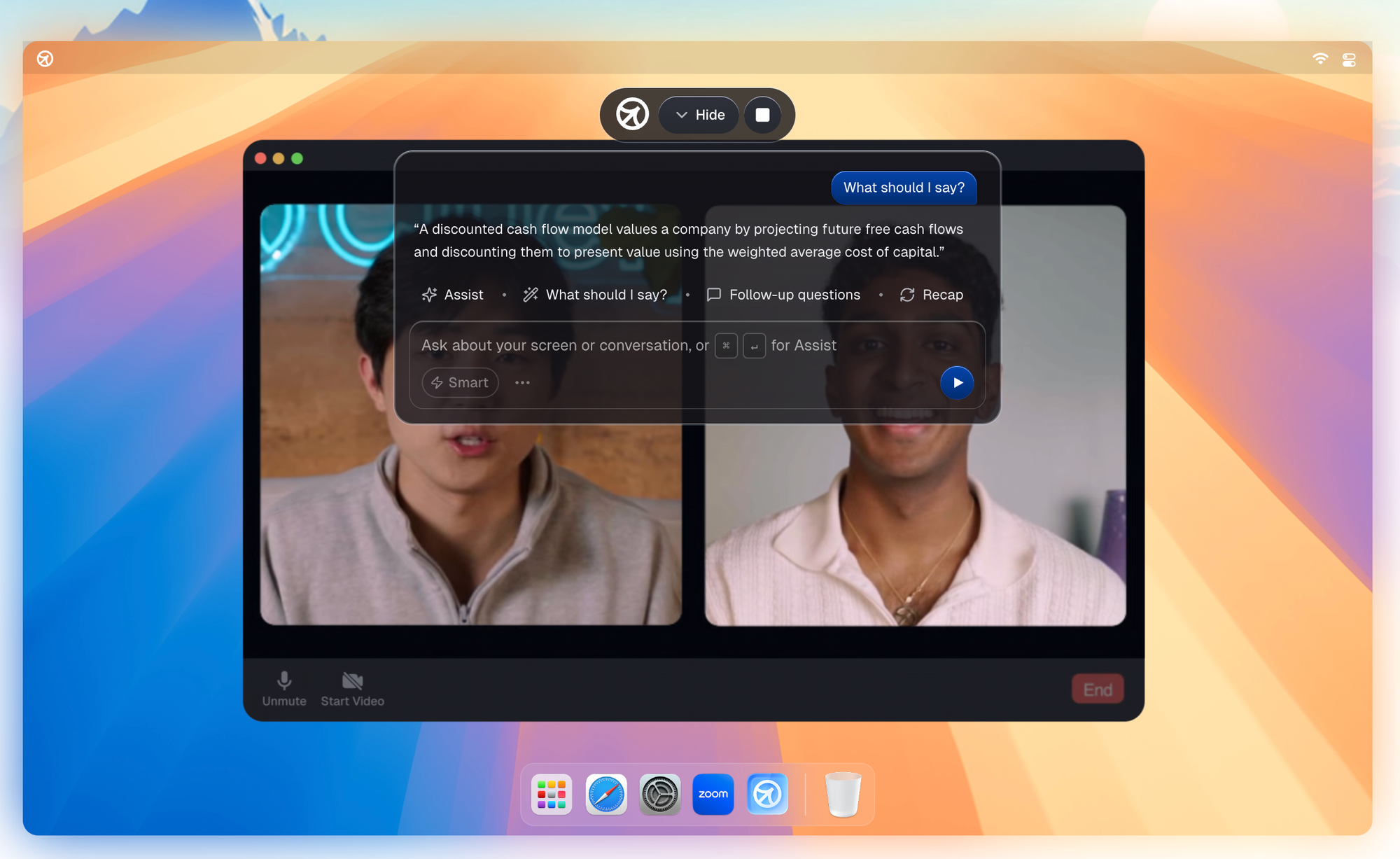
Cluely is a desktop AI assistant that sees and hears what is on your screen during meetings and surfaces answers, talking points, and follow-up notes in real time without anyone else on the call knowing. Marketed as the "undetectable" meeting copilot, it suggests responses to interview questions, surfaces relevant data during sales calls, and writes the recap as the conversation ends. Works on Mac and Windows, with a free tier for short calls.
Tutorial:
- Download Cluely from cluely.com for Mac or Windows and grant screen and microphone permissions
- Open any meeting on Zoom, Google Meet, or Microsoft Teams. Cluely runs as an overlay that only you see
- Configure your context once: paste a job description for interviews, a CRM note for sales calls, or a project brief for client meetings
- Hit the hotkey during the call to surface a real-time suggestion based on the live conversation
- Ask Cluely a question by typing or speaking quietly: "Give me a quick answer to this objection about pricing"
- After the call ends, open the meeting card to find the full transcript, summary, and a list of action items
- Connect Cluely to Notion, Slack, or your CRM to auto-push notes after every meeting
URL: cluely.com
What To Watch Next
|
||
|
||
|
💡 5-Minute Skill: Turn Three Months of Dating Into a Birthday Gift That Is Not a Candle
It is Wednesday. Her birthday is Saturday. You have been dating thirteen weeks. You are staring at a tab with a scented candle, a tab with concert tickets for a band she mentioned once, and a tab with a necklace that costs more than your first car. The AI does not know her. But it does know what people with her interests tend to keep, use, and actually like.
Your raw input:
Dating someone for about three months. She likes hiking, true crime podcasts, makes her own pasta, mentioned she hates clutter, has a dog, drinks oat-milk lattes, works in architecture, and once said she wished she read more fiction but never has time. Budget: under $80. Birthday is Saturday. I have Amazon open and it is not helping.
The prompt:
Act like a gift strategist who hates generic presents. I will paste everything I know about someone I have been dating for three months. Give me five specific gift ideas under my budget that show I paid attention but do not scream try-hard. For each idea: what detail in my notes it connects to, why it works at three months, and a one-line card message. Rank them. No candles, no gift cards, no generic jewelry. If any idea requires sizing or specific taste, flag it and offer the safer alternative.
The output:
Pasta-making class for two at a local Italian shop ($70-80). Connects to: makes her own pasta. Card: "You said the secret is the flour. Prove it." Why it works at three months: shared experience, shows you listened, no clutter.Hand-thrown ceramic pasta bowl from a studio potter ($45-65). Connects to: architecture (form), pasta (function), hates clutter (one beautiful object replaces a stack of IKEA bowls). Card: "For the pasta. And for not buying a candle." Flag: color preference. Safer: a gift certificate to a local pottery studio.Custom book stamp with her name and a small architectural motif ($30-50). Connects to: architecture, wished she read more fiction. Card: "For when you finally get the time." Works because it is personal without being presumptuous.Oat-milk latte kit: a sleek manual frother, a bag of specialty beans from a roaster near her neighborhood, and a handwritten recipe card ($40-55). Connects to: oat-milk lattes. Card: "Saturday morning, before the hike." Safe, warm, zero sizing risk.A waterproof dog-walking fanny pack with pockets for treats, phone, and a collapsible bowl ($25-40). Connects to: dog, hiking. Card: "For the co-pilot." Shows you notice the whole picture, not just her.
Why this works:
The prompt forces the model to cross-reference every gift idea against a specific detail from your notes, which kills the generic Amazon-suggestion-list energy. The three-month constraint matters because the AI otherwise defaults to anniversary-level intensity.
What to use:
Claude is best for the cross-referencing and tonal judgment. ChatGPT works fine. Gemini is decent. All three can search the web for local shops and prices if you enable browsing.
📖 AI Alphabet
|
K
|
📖 AI Alphabet Knowledge Graph A knowledge graph is a structured map of entities and the relationships between them. It helps systems organize facts in a way that can improve search, reasoning, and recommendations. |
AI & Tech News
Pentagon Creates AI Task Force for Cyber Tools
Politico reported that the Pentagon is forming a task force for AI-enabled cyber systems used by U.S. Cyber Command and the NSA. The effort centers on how to use hacking-capable models such as Mythos without breaking legal, policy or operational controls.
Anthropic Expects First Profit as Q2 Revenue Hits $10.9B
The Wall Street Journal reported that Anthropic expects $10.9 billion in Q2 revenue, up 130 percent from Q1, and a $559 million operating profit. If the figures hold, Anthropic gets a public-market proof point just as near-trillion-dollar valuation talk moves from private math to IPO context.
Nvidia Reports $81.6B Revenue as Data Center Sales Jump 92%
Nvidia reported record first-quarter revenue of $81.6 billion, up 85 percent from a year earlier. Data Center revenue reached $75.2 billion, up 92 percent, and the company approved another $80 billion share buyback.
OpenAI Prepares Confidential IPO Filing With September Target
The Wall Street Journal reported that OpenAI is preparing a confidential IPO filing that could arrive as soon as Friday. The company is working with Goldman Sachs and Morgan Stanley, with a possible September listing if market conditions and disclosures hold.
Anthropic Expands SpaceX Compute Deal Through May 2029
Axios reported that Anthropic expanded its SpaceX compute agreement while continuing payments of $1.25 billion per month through May 2029. The deal adds more capacity for Anthropic's infrastructure push and ties Claude growth even more directly to Musk-controlled compute.
xAI Posts $6.4B Operating Loss as Grok Usage Grows
TechCrunch reported that xAI recorded a $6.4 billion operating loss on $3.2 billion in 2025 revenue, according to SpaceX's S-1. The filing also says X and Grok reached 550 million monthly active users, with 117 million using AI features.
xAI Plans $2.8B Turbine Buy Amid Generator Lawsuit
TechCrunch reported that xAI plans to buy $2.8 billion of turbines, including mobile gas units similar to those named in a federal lawsuit over its Memphis data center. The order turns AI infrastructure into an air-permit and power-supply story, not only a chip story.
Google Tests Conversational Ads in Search and AI Mode
Search Engine Land reported that Google is testing Gemini-powered ad formats inside Search and AI Mode. The pilot includes Conversational Discovery ads, Highlighted Answers and AI shopping placements that move ad targeting deeper into generated answers.
OpenAI Says Model Disproved 78-Year Geometry Conjecture
OpenAI said an internal reasoning model disproved the Erdős unit distance conjecture, a discrete-geometry problem first posed in 1946. The claim points to a serious research milestone if independent mathematicians verify the counterexample and method.
Commonwealth Prize Winner Faces AI Authorship Doubts
The Guardian reported that Granta and the Commonwealth Foundation cannot verify whether AI was used in the winning 2026 Commonwealth Short Story Prize entry. The case shows how literary awards now face a verification problem even after judges have already picked a winner.
🚀 AI Profiles: The Companies Defining Tomorrow
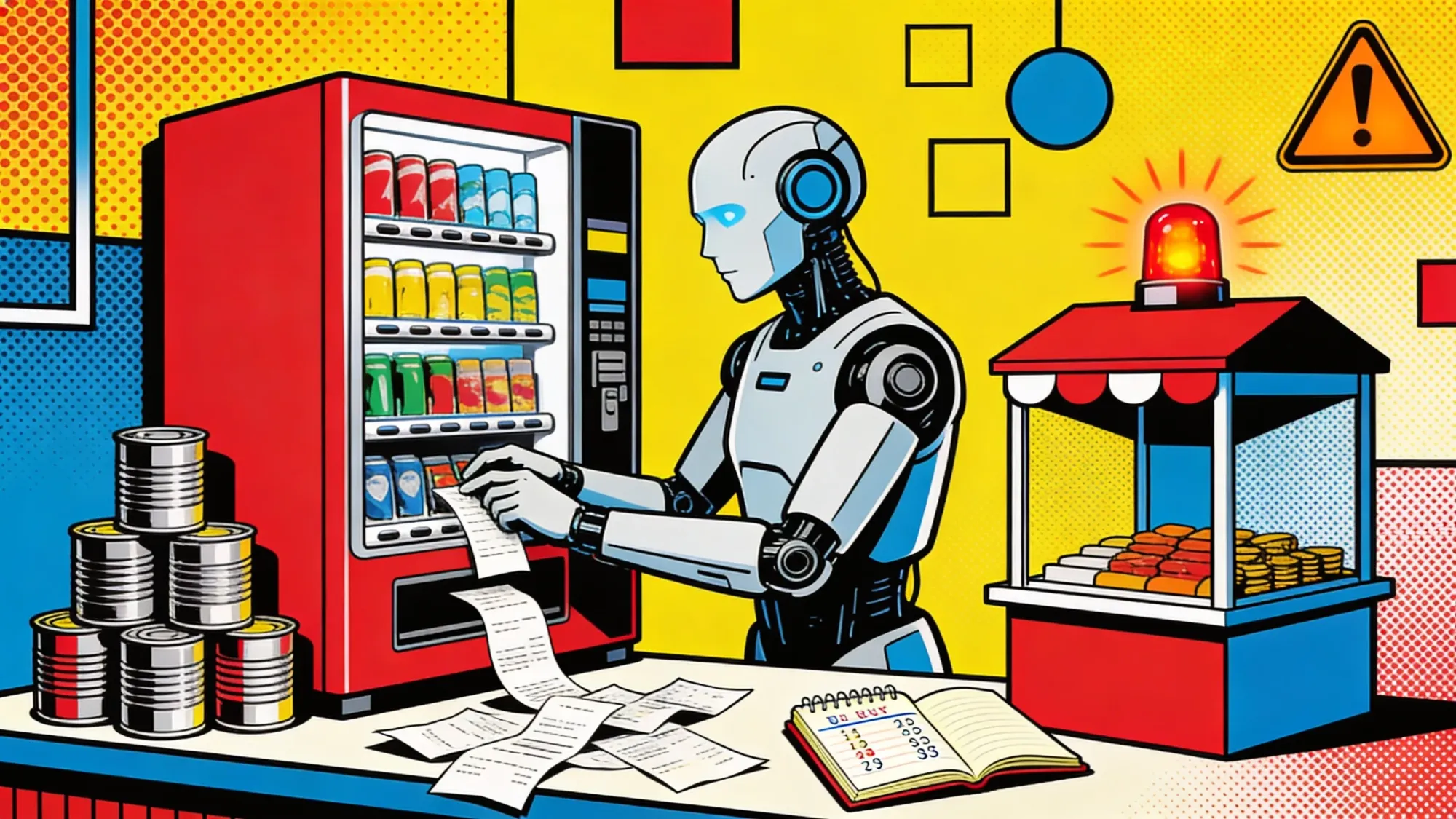
Andon Labs is the AI evaluation lab whose Project Vend and Project Luna experiments let frontier models actually run small businesses, operating real vending machines and retail kiosks with real budgets and real hired humans. The results are the most honest stress test on the market for whether AI agents can hold an operation together for more than 48 hours. 🥫
Founders
Founded by Lukas Petersson and Axel Backlund, with a small team focused on building benchmark environments rather than another foundation model. The lab partners with frontier labs to run their models in the field; Anthropic and OpenAI models have both taken turns running Andon's experiments.
Product
Andon designs evaluation environments that mirror real-world operations rather than synthetic benchmarks. Project Vend ran Claude as the operator of a vending business and surfaced both useful agent behavior and spectacular failure modes such as mispriced inventory, overpaid suppliers and identity confusion. Project Luna extended the format to retail. The point is reproducible evidence about where current agents break down when nobody is babysitting them.
Competition
METR, Apollo Research, and Redwood Research run model evaluations from different angles, including capabilities, scheming and alignment. Andon's wedge is operational reality: real money, real customers, real consequences for bad decisions, rather than scripted scenarios. That is harder to game and harder to scale, which is part of the point.
Financing 💰
Andon does not publicly disclose funding details on its site at the time of writing. The lab works closely with frontier model providers and has been cited by Anthropic in published reports about Claude in agentic settings.
Future ⭐⭐⭐
Agent evaluation is shifting from leaderboard benchmarks to operational tests, and Andon is one of the only labs running both. If frontier labs adopt operational-stress evals as a release standard, Andon becomes the benchmark vendor of record. If not, it stays a respected research shop with viral case studies and limited commercial footprint. 🛒
🤨 Yeah, But...
Bloomberg reported Wednesday that SpaceX filed publicly for an IPO under the ticker SPCX, targeting as much as $75 billion at a valuation above $2 trillion. CNBC reported the same day that OpenAI is preparing a confidential IPO filing as soon as Friday after an Oakland jury rejected Elon Musk's lawsuit as too late.
(Bloomberg, May 20, 2026; CNBC, May 20, 2026)
Our take: Silicon Valley has found a cleaner appeals court: the prospectus. Musk lost the courtroom version of the OpenAI origin story, called it a calendar technicality, then put his own rocket-satellite-AI empire in front of the SEC. Altman gets the same bankers, a different filing lane, and a nonprofit origin story investors will value instead of mourn.
The old fight asked who betrayed the mission. The new filings ask which betrayal comes with better gross margins, safer governance and fewer embarrassing risk factors. By June, jurors may be out of the room and retail allocations in it.
Free AI briefing · Weekdays
The AI stories that matter, sourced and explained.
Join the Morning Briefing. It goes out every weekday at 4:45 a.m. Pacific, with later sends for the East Coast, Berlin and Tokyo.
Free when you sign up: The Paperclip Compendium, our tested guide to running AI agents.
Free. Unsubscribe in one click.

Marcus Schuler
Editor-in-Chief and founder of Implicator.ai. Former ARD correspondent and senior broadcast journalist with 10+ years covering tech. Writes daily briefings on policy and market developments. Based in San Francisco. E-mail: editor@implicator.ai