IMPLICATOR
San Francisco | Friday, May 22, 2026
Washington has a model-review problem and David Sacks just found the pressure point. A draft order gave agencies up to 90 days of pre-release access to frontier systems. Industry wanted 14. Trump now frames the delay as China speed, which is the cleanest way to turn safety into drag.
Spotify is making the same bet in a different room: keep the private thing inside the account that already owns the habit. Calendar briefs, personal podcasts, saved audio, one library.
And in GitHub's trend line, the answer is smaller and local. The hot repos pull agents, retrieval and speech back onto machines users control.
Stay curious,
Marcus Schuler
Know someone drowning in AI noise? Forward this briefing. They can subscribe free here.
David Sacks Turns Trump AI Review Into 90-Day China Fight

David Sacks turned a voluntary AI safety review into a shipping-speed fight. The draft gave agencies up to 90 days of pre-release model access. Industry wanted 14.
Trump delayed the signing and framed the issue through China. That matters because the draft text tried to say what the review was not: licensing, permitting or preclearance. Sacks and other tech allies argued that a voluntary process could become a release gate by habit.
The pressure point is Anthropic's Mythos, a restricted cyber model that made the government's first-access appetite less theoretical. Banks, utilities and agencies want warning before cyber-capable systems leave controlled programs. Labs hear delay.
Why This Matters:
- A short review window favors model labs; a longer one gives security agencies time to test frontier cyber risks before release.
- The next draft will show whether Washington can ask for safety access without creating a de facto permit regime.
Reality Check
What's confirmed: The draft allowed 14 to 90 days of pre-release access; Trump postponed the signing after industry pushback.
What's implied (not proven): Model review becomes a China-speed liability.
What could go wrong: Labs refuse meaningful access, or review quietly becomes mandatory.
What to watch next: The cap on days, and whether NSA or Treasury keeps a defined role.

The One Number
184% - Zoom's year-over-year growth in paid AI Companion users in the latest quarter. The comparison matters because Zoom is not selling a standalone chatbot. It is attaching AI to meetings, contact center work and notes, then asking existing customers to pay for it.
Spotify Adds Private AI Podcasts as Personal Audio Moves Into Its Library
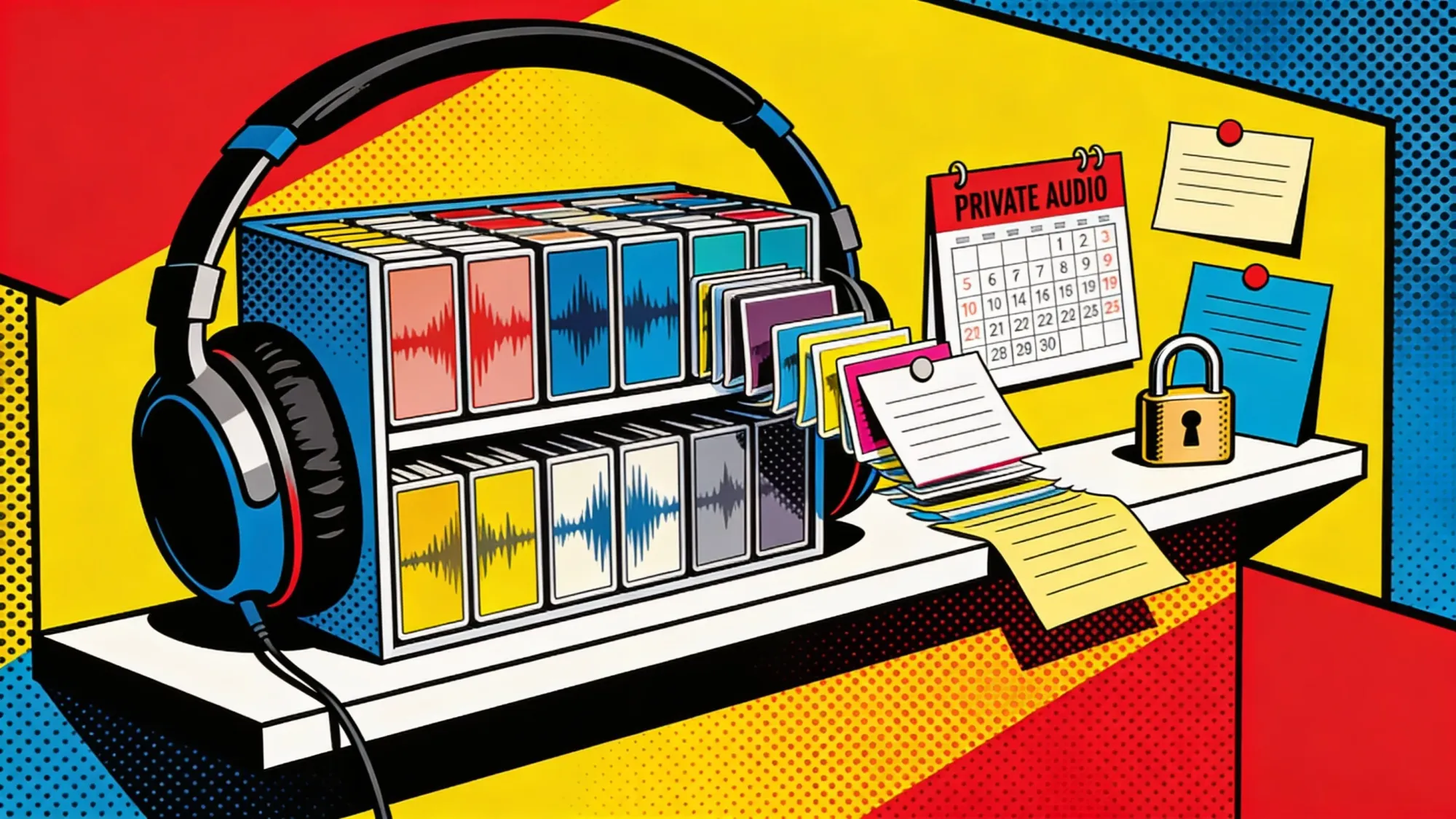
Spotify wants generated audio to live where listeners already press play. Studio can turn email, calendar, notes and listening history into private podcasts saved to the library.
The investor-day pitch is not just "AI podcasts." It is account gravity. Studio opens as a preview for select users in more than 20 markets, while Personal Podcasts arrives for eligible U.S. Premium users next month with monthly credits and paid top-ups.
Google made the format familiar with NotebookLM; Spotify owns the habit loop. Its library already spans music, podcasts and audiobooks for 761 million monthly active users and 293 million Premium subscribers. The hard part is trust, which is why podcast verification badges arrived in the same week.
Why This Matters:
- Spotify is turning personal context into audio inventory, not launching another standalone AI app.
- Verification and impersonation rules become product infrastructure once synthetic voices sit beside real shows.

AI Image of the Day

Prompt: Photorealistic cinematic low-angle shot from inside a miniature world, looking upward at a confident tween girl leaning into frame like a giant towering over a tiny city. She reaches both hands down into the miniature environment. Her expression is calm, focused, and slightly mischievous, creating a playful "giant in a tiny world" feeling. Bright blue sky with soft clouds overhead, vivid candy-colored miniature set pieces, exaggerated perspective, and immersive wide-angle lens distortion. The scene feels energetic, surreal, playful, and fashion-forward with bold colors, cinematic realism, and a stylized commercial aesthetic. --chaos 10 --ar 3:4 --profile xx9a8la --v 8.1
Repo Radar Finds Local AI Tools Pulling Agents Back Onto User Hardware
The week's fastest-rising GitHub projects share a theme: run more AI on hardware users control. That is the counternarrative to every cloud-agent pitch.
openhuman added more than 17,000 stars over seven days with a Rust desktop agent wired into Gmail, GitHub, Notion, Slack and Google Calendar. LEANN cuts vector-index storage by 97% by recomputing embeddings on demand. supertonic handles on-device speech across 31 languages.
The trade-off is not romantic. Local agents still ask for dangerous OAuth scopes, local search still burns compute, and enterprise MCP control planes bring license questions. But the direction is clear: privacy, cost and breach anxiety are pulling AI workloads back toward the user's machine.
Why This Matters:
- The best open-source AI tooling is moving from demo wrappers to ownership: local agents, private retrieval and self-hosted voice.
- Security teams now have to govern desktop agents with the same seriousness they apply to cloud apps.

🧰 AI Toolbox
How to Run a Clean Standup or Client Meeting Without a Notetaker Bot in the Room with Spinach AI
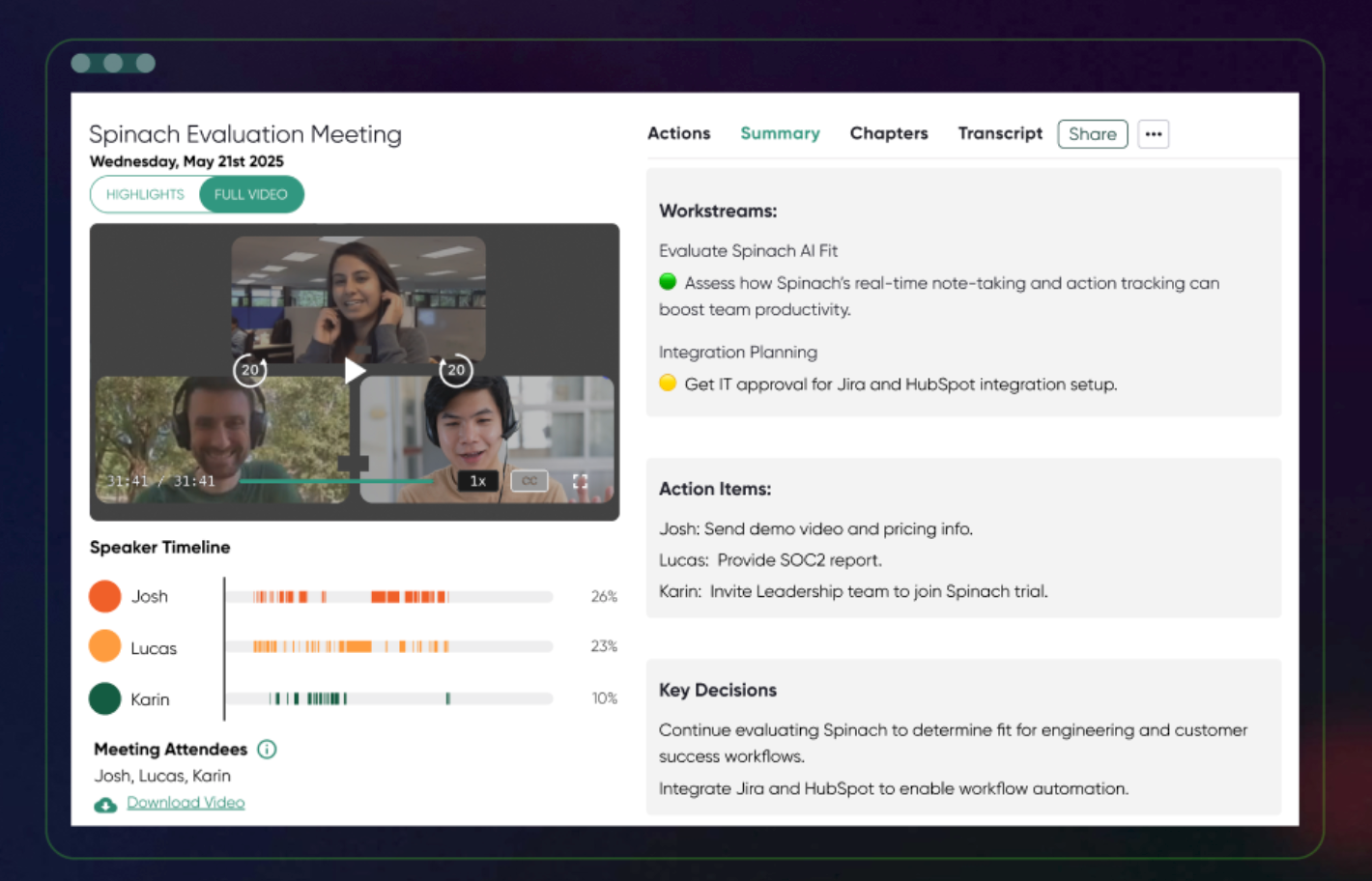
Spinach AI is a meeting assistant that captures decisions, action items, and structured summaries from calls, then routes them into Jira, Linear, Asana, Slack, or other workflow tools. The useful part is not another transcript. It is decision cleanup after messy team conversations. Recent updates add MCP support so Claude and ChatGPT can query meeting history, plus bot-free capture for calls where a visible third participant would be awkward.
Tutorial:
- Sign up at spinach.ai and connect Google Calendar or Microsoft Outlook
- Choose your capture mode: full bot, audio plus transcript only, or transcript-only for discreet capture
- Join a standup, sprint review, or client call. Spinach detects the meeting type and applies the right template
- Review the summary after the call and check the auto-detected decisions and action items
- Push tickets directly to Jira, Linear, or Asana with owners and due dates already filled in
- Connect Spinach to Claude or ChatGPT through MCP so your LLM can answer questions like "What did engineering commit to last week?"
- Use Spinach Search to query past meetings when a decision has disappeared into Slack fog
URL: spinach.ai
What To Watch Next
|
||
|
||
|
💡 5-Minute Skill: Turn an AI Vendor Demo Into a Pilot With Kill Criteria
Friday, 10:04 a.m. The vendor demo looked great, mostly because no one asked what happens when it fails. Before procurement turns the highlight reel into a contract, make the model build a pilot that can die honestly.
Your raw input:
Tool: AI agent for sales research and CRM updates. Claim: saves reps 5 hours a week. Users: 12 account executives. Systems: Salesforce, Gmail, Gong. Risk: bad notes, private customer data, fake account facts. Pilot window: 14 days. Need: test plan with success metrics and stop rules.
The prompt:
Act like a skeptical AI pilot owner. Turn this vendor demo into a 14-day pilot plan. Include the hypothesis, user cohort, control group, data the tool may access, data it may not access, success metrics, review owner, failure modes, and kill criteria. Separate what the vendor claims from what we can measure. No procurement language.
The output:
Pilot goal: prove whether reps save time without polluting CRM. Cohort: 12 reps, 20 accounts each; control group keeps the current workflow. Metrics: minutes saved, accepted edits, bad-field rate, manager review time, privacy exceptions. Stop rule: kill the pilot if bad-field rate exceeds 3% twice or managers spend more time correcting than they save.
Why this works:
Demos ask whether the tool can work. Pilots ask whether it works here, with your mess, under review. This prompt forces baseline, owner, metric and stop rule before a vendor's favorite success story becomes your budget request.
What to use:
Claude is best when you paste a long vendor deck, security notes and internal constraints. ChatGPT is faster for turning the final plan into a one-page pilot brief. Gemini helps if you need web context on the vendor. Keep "kill criteria" in the prompt. Without it, every test becomes a success story with nicer formatting.
📖 AI Alphabet
|
L
|
📖 AI Alphabet Latency Latency is the delay between sending a request and getting a response. In AI products, lower latency usually makes the system feel smarter and more usable, even when the model itself is unchanged. |
AI & Tech News
TeamPCP Hits More Than 500 Software Projects in Supply-Chain Spree
WIRED reported that the TeamPCP group admitted to a GitHub breach while running 20 waves of software supply-chain attacks. Security researchers say more than 500 open-source and proprietary projects were compromised, turning developer trust into the attack surface.
US Takes Equity Stakes in Quantum Firms With $2B Grant Push
CNBC reported that Washington is structuring about $2 billion in quantum-computing grants as equity stakes. D-Wave, Rigetti and other quantum names rallied on the news, but the larger signal is industrial policy moving from subsidies to ownership.
Meta, Broadcom and Chip Partners Fund $125M UCLA Semiconductor Hub
Meta, Broadcom, Applied Materials, GlobalFoundries and Synopsys are backing a $125 million semiconductor research hub at UCLA. The project targets AI chips, advanced manufacturing and packaging, giving domestic chip strategy another university pipeline.
Waymo Suspends Freeway Robotaxi Rides for Safety Fixes
Reuters reported that Waymo paused fully autonomous freeway rides and Atlanta operations while it updates software for construction zones and flooded roads. The move is a useful reminder that autonomy progress still depends on ugly edge cases, not demo miles.
Cursor Reaches $3B Annualized Sales Rate Ahead of SpaceX Deal
Bloomberg reported that Cursor hit a $3 billion annualized revenue run rate in late April. The AI coding platform also has more than 3,000 enterprise customers paying at least $100,000 a year, which explains the strategic gravity around SpaceX.
Lenovo Profit Jumps 479% as PC Sales and AI Servers Lift Quarter
Reuters reported that Lenovo's quarterly profit rose 479% to $521 million, well above expectations. Strong PC demand helped, but the strategic read is Lenovo leaning further into AI servers and higher-margin infrastructure.
ElevenLabs Pushes Into Audiobooks With ElevenReader Subscription
Bloomberg reported that ElevenLabs is launching an audiobook subscription with 200,000 human-voiced titles. The AI voice startup is entering territory already contested by Audible, Spotify and publishers who now have to price human narration against synthetic audio.
Adobe, Canva and CapCut Plug Editing Tools Into Gemini
PCMag reported that Adobe, Canva and CapCut are bringing creative editing integrations into Google's Gemini app. The move makes Gemini less of a prompt box and more of a handoff layer for image and video workflows.
Zoom Raises Forecast as Paid AI Companion Users Jump 184%
Bloomberg reported that Zoom topped sales expectations after product expansion, helped by 184% growth in paid AI Companion users. The company is trying to prove meeting AI works better as an add-on to existing workflows than as a separate chatbot.
Nintendo Targets 20M Switch 2 Units for First Production Year
Techmeme surfaced reporting that Nintendo told suppliers to prepare about 20 million Switch 2 units by March 2027. That is above the public sales outlook and suggests Nintendo is planning for stronger hardware demand than it is advertising.
🚀 AI Profiles: The Companies Defining Tomorrow
Safe Superintelligence is Ilya Sutskever's neolab, founded after he left OpenAI in 2024 to build what he calls a "straight-shot" path to safe superintelligence with no intermediate products. The lab is one of the most valuable companies in the world without a single shipping product, on the strength of Sutskever's name and a bet that frontier scaling is hitting a wall. 🧪
Founders
Founded in June 2024 by Ilya Sutskever, former OpenAI co-founder and chief scientist, Daniel Gross, former Y Combinator partner and Apple AI lead, and Daniel Levy, formerly of OpenAI. Sutskever's departure followed his role in OpenAI's brief 2023 board crisis and his public re-evaluation of how frontier AI should be built.
Product
SSI has no product. The pitch is research-only: build one safe superintelligence on a single unified roadmap rather than ship intermediate models that pressure-test commercialization shortcuts. The company has said it will not release anything until the goal is reached, which is either disciplined or impossibly patient depending on the investor.
Competition
The peer set is small and self-selected: Anthropic, OpenAI, Google DeepMind, Thinking Machines Lab, and Ineffable Intelligence. Each has a different theory of how to get to AGI safely and a different position on whether you ship along the way. SSI is the strictest "no products" stance in the group.
Financing 💰
SSI has raised reported rounds at valuations climbing from $5 billion in 2024 to $32 billion in mid-2025, with backers including Greenoaks, Andreessen Horowitz, Sequoia, DST Global, and Lightspeed. The company employs a small team relative to peers and operates from offices in Palo Alto and Tel Aviv.
Future ⭐⭐⭐
SSI's bet is that the next breakthrough is architectural, not scale-driven, and that staying out of the product treadmill lets the team work on the harder problem. The risk is that "no products, ever, until it's safe" stops being credible after another two years and a $32 billion mark. If Sutskever is right about the next paradigm, SSI is the most valuable research lab in the world. If wrong, it is the most expensive one. 🧠
🤨 Yeah, But...
The Verge reported that the Take It Down Act went into effect on May 19, requiring online platforms to remove reported nonconsensual intimate imagery within 48 hours or risk penalties. The law targets deepfake abuse, but critics warn the notice system could be abused for censorship or malicious takedowns. (The Verge, May 20, 2026)
Our take: Congress found the one tech policy that sounds impossible to oppose: take down sexual abuse images quickly. Good. Then it handed the internet a fast-removal button and asked everyone to behave normally, which is not a phrase that belongs near the internet. The law treats speed as proof of seriousness, but speed is also how bad systems skip judgment. Platforms now get 48 hours to decide whether a report protects a victim, silences an enemy, buries evidence, or just creates paperwork with moral lighting. The noble version is obvious. The exploit version is already filling out the form.
Free AI briefing · Weekdays
The AI stories that matter, sourced and explained.
Join the Morning Briefing. It goes out every weekday at 4:45 a.m. Pacific, with later sends for the East Coast, Berlin and Tokyo.
Free when you sign up: The Paperclip Compendium, our tested guide to running AI agents.
Free. Unsubscribe in one click.

Marcus Schuler
Editor-in-Chief and founder of Implicator.ai. Former ARD correspondent and senior broadcast journalist with 10+ years covering tech. Writes daily briefings on policy and market developments. Based in San Francisco. E-mail: editor@implicator.ai