IMPLICATOR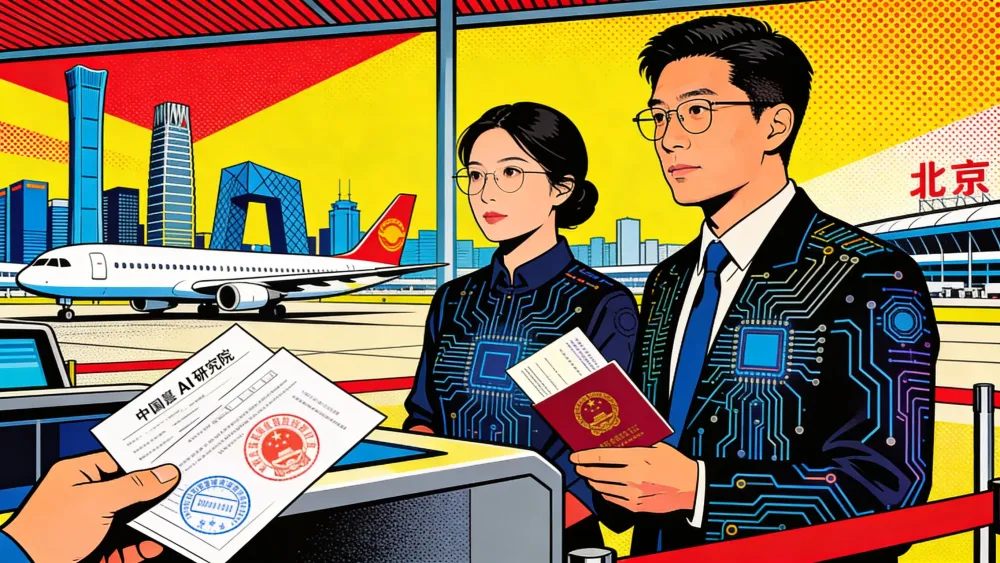
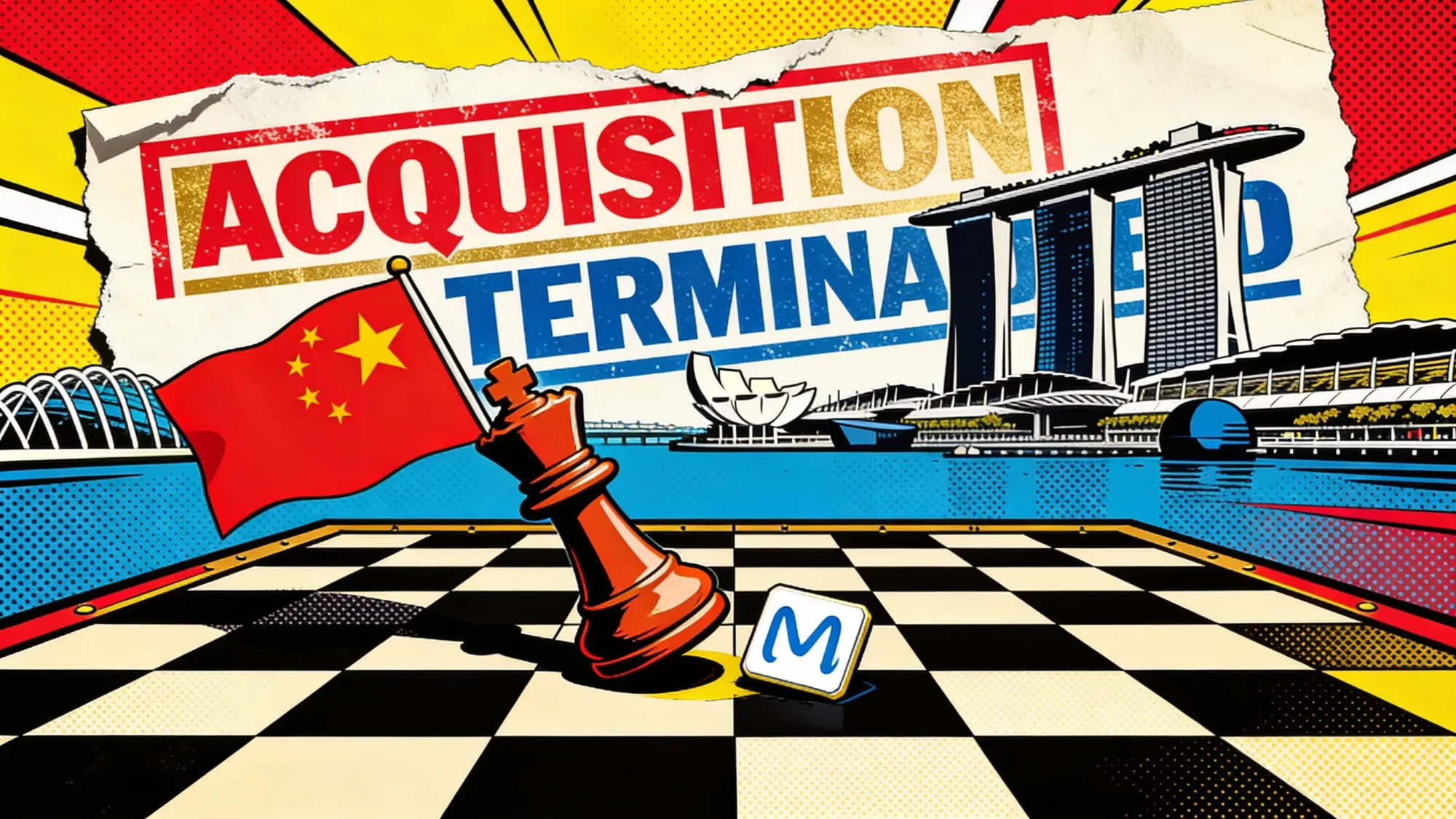
Xiao Hong and Ji Yichao answered a March summons to a National Development and Reform Commission meeting in Beijing, according to the Financial Times. Manus, the agent startup they co-founded, had already been acquired by Meta for about $2 billion, after a $75 million Benchmark-led round valued it at $500 million. After the meeting, two people told the FT, regulators said the Singapore-based executives could move inside China while the review continued but could not leave the country.
Bloomberg's May 26 report puts that case in a broader policy frame, while noting that the latest travel-approval plan is not necessarily linked to Manus. Bloomberg reported Tuesday that authorities are extending overseas travel approval rules to top AI workers at private firms including Alibaba and DeepSeek, judging people by strategic value rather than job title. Beijing's AI strategy is shifting from import controls to jurisdictional controls: capital, technology and key personnel have to remain reachable by the state as China reduces dependence on U.S. chips.
Key Takeaways
- Beijing is extending AI travel approval rules from DeepSeek toward private firms such as Alibaba.
- Manus turned talent mobility into a regulatory signal after Meta's $2 billion acquisition.
- China is pairing capital controls with campus recruiting for scarce AI PhDs.
- U.S. distillation accusations make Chinese AI researchers geopolitical assets.
AI-generated summary, reviewed by an editor. More on our AI guidelines.
Where approval replaced notice
In China, state-owned enterprises are known to hold passports for senior executives and Party officials, and Beijing has long imposed travel restrictions on key personnel in sensitive fields. Bloomberg described the private-sector change as unusual because some startup founders, researchers and executives have been told they need approval before overseas travel. Some private-sector AI workers had previously reported overseas plans without needing permission.
The Wall Street Journal reported in February 2025 that Chinese authorities told top AI founders and researchers to avoid U.S. travel. Officials feared leakage of confidential information, U.S. acquisition of valuable technology, and executives being detained as bargaining chips, the Journal reported.
DeepSeek built its reputation on open weights and public model access. The Decoder reported in March 2025 that employees working on models had to surrender passports and could not travel freely abroad.
Xiaomeng Lu of Eurasia Group gave the cleanest version of Beijing's message to the Journal: "The initial signal is: Stay here, don't run away." Joshua Chu, a lawyer and co-chair of the Hong Kong Web3 Association, put the same shift in terms of state logic: "the logic of keeping human capital 'in' is starting to win out over the logic of letting ideas and people flow freely."
Capital got the same treatment
The money side escalated in April. The Implicator covered the first exit bans after Xiao and Ji were questioned over possible foreign direct investment reporting issues. On April 27, Reuters reported that the NDRC ordered the parties to withdraw the Meta transaction, saying it would "prohibit foreign investment in Manus in accordance with laws and regulations."
That was the deal side. The funding side followed. Bloomberg reported that Moonshot AI and StepFun were told to reject U.S.-origin capital in funding rounds without approval, while ByteDance faced similar restrictions on secondary share sales to U.S. investors. Moonshot was seeking as much as $1 billion at about an $18 billion valuation. StepFun was considering a $500 million Hong Kong float while unwinding overseas entities.
Get the AI power map before it moves
Strategic AI news from San Francisco. No hype, no "AI will change everything" throat clearing. Just what moved, who won, and why it matters. Daily at 6am PST.
No spam. Unsubscribe anytime.
Meta's answer was narrow. "The transaction complied fully with applicable law," a spokesperson told Fortune. Manus staff, according to Reuters, had already moved into Meta's Singapore offices.
The recruiting pitch now cuts both ways
In April, Huawei bundled PhD students at Nanyang Technological University onto buses for technical talks at its Buona Vista research center. At National University of Singapore, it ran a Mandarin-language career talk for AI algorithms, large language models and cybersecurity roles.
The money explains the urgency. The Business Times reported that average annual compensation for strong master's and PhD hires has risen to about 1.5 million yuan, up from about 1 million yuan a year earlier. Jason Yang, a headhunter who recruits AI talent for Alibaba and ByteDance, said top PhD candidates can receive between 3 million and 5 million yuan. "Salaries are rising because companies are vying to snatch the top graduates," he said. Huawei told the paper it plans to increase campus recruitment in Singapore this year, citing the adaptability, bilingual skills and global outlook of Singapore-trained graduates.
Students queued for foldable umbrellas and soft toys at a Trip.com campus fair at NTU the same afternoon Huawei was recruiting nearby. Chinese firms are paying more to recruit Singapore-trained AI talent, sometimes for China-based roles and sometimes for Singapore teams, even as Beijing makes overseas travel harder for selected AI workers at home. One NTU PhD student told The Business Times that the Manus affair had made the AI industry feel "overly politicised," though most peers would still consider returning.
What V4 put on paper
DeepSeek V4 helps explain why both governments now care about the people behind the models, even though the travel restrictions predate V4 and are not sourced to that release. The Council on Foreign Relations assessment said DeepSeek's own paper concedes that V4 "trails state-of-the-art frontier models by approximately 3 to 6 months," close to a broader estimate of a roughly seven-month U.S. lead. CFR also said the model is optimized for inference on Huawei Ascend chips, while citing U.S. claims that training may still have depended on restricted Nvidia hardware. The model offers a one-million-token context window, but CFR said DeepSeek cannot yet serve V4 Pro to most customers because of chip shortages.
Reuters separately reported that a State Department cable ordered diplomats to warn foreign governments about "concerns over adversaries' extraction and distillation of US A.I. models." The cable named DeepSeek, Moonshot AI and MiniMax. China's embassy in Washington called the allegations "groundless" and "deliberate attacks on China's development and progress in the AI industry."
The Journal's report ended with Foreign Minister Wang Yi saying China would welcome foreign participation at its own AI summit. A year later, Bloomberg left the administrative test unresolved: how many workers are listed, which roles qualify and what approval process applies. The next public documents are likely to be funding approvals, Hong Kong IPO filings, or disclosures from firms explaining whether an overseas investor can still participate. For founders, the passport is now part of that paperwork.
Frequently Asked Questions
What did Bloomberg report about China's AI travel curbs?
Bloomberg reported that Chinese authorities are requiring selected AI professionals at private firms, including Alibaba and DeepSeek, to seek approval before overseas travel.
How is Manus connected to the travel restrictions?
Bloomberg said the latest plan is not necessarily linked to Manus, but the Meta-Manus review showed Beijing using exit bans and deal scrutiny around AI talent and intellectual property.
What happened at DeepSeek?
The Decoder reported in March 2025 that DeepSeek employees working on AI models had to surrender passports and could not travel freely abroad.
Why does Singapore matter in this story?
Manus relocated to Singapore before Meta acquired it, while Chinese companies are also recruiting Singapore-trained AI graduates for roles in China and local teams.
How does DeepSeek V4 fit into the analysis?
DeepSeek V4 shows why both governments care about AI workers. CFR says the model trails top U.S. systems by 3 to 6 months but runs inference on Huawei Ascend chips.
AI-generated summary, reviewed by an editor. More on our AI guidelines.
Free AI briefing · Weekdays
The AI stories that matter, sourced and explained.
Join the Morning Briefing. It goes out every weekday at 4:45 a.m. Pacific, with later sends for the East Coast, Berlin and Tokyo.
Free when you sign up: The Paperclip Compendium, our tested guide to running AI agents.
Free. Unsubscribe in one click.

Marcus Schuler
Editor-in-Chief and founder of Implicator.ai. Former ARD correspondent and senior broadcast journalist with 10+ years covering tech. Writes daily briefings on policy and market developments. Based in San Francisco. E-mail: editor@implicator.ai